Skip to main content Skip to footer
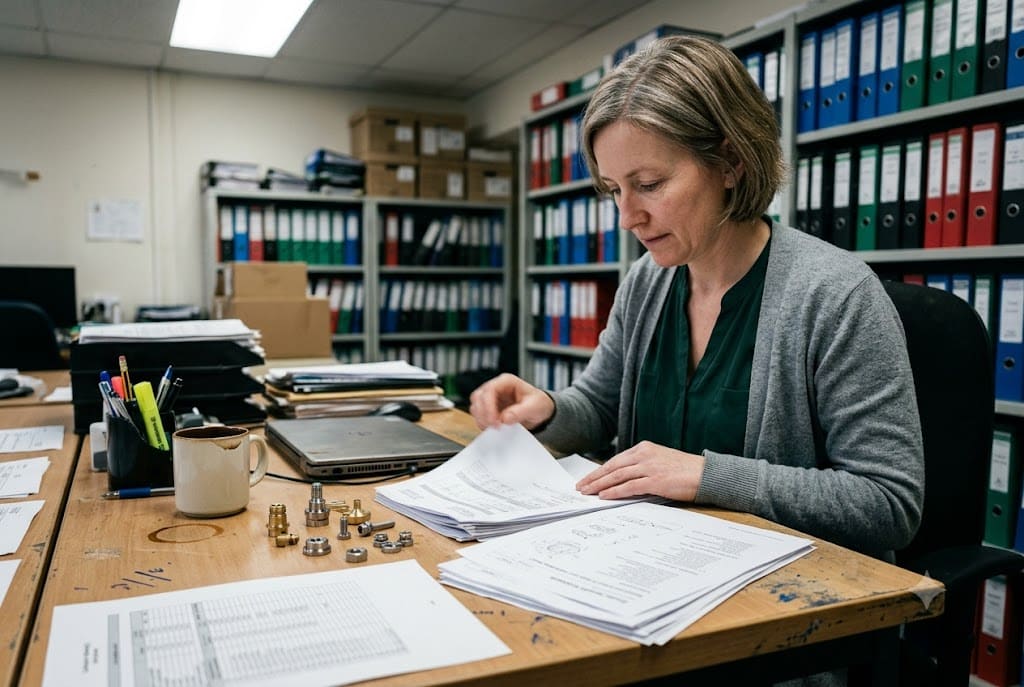
Every year, our team processes hundreds of tooling orders from clients in the US and Canada. We see the same problem repeat: a buyer approves a mold quote, production begins, and then surprise charges appear. Those charges could have been avoided.
A die casting tooling charge from a Chinese supplier typically covers cavity and core insert machining, the mold base and frame, standard hardware components, DFM engineering, mold flow simulation, and one round of T1 trial shots. However, items such as trimming fixtures, surface texturing, and ongoing maintenance are usually excluded from the base quote and must be negotiated separately.
Understanding this breakdown protects your budget and gives you leverage when comparing suppliers. Read on for a section-by-section breakdown.
Should I Expect Mold Design, Steel, Machining, and Trial Costs in My Tooling Quote?
When we review tooling quotes on behalf of our clients, the first thing we check is whether these four core items are itemized. Missing even one of them is a red flag.
Yes, a well-structured tooling quote should explicitly include mold design and DFM analysis, cavity and core insert machining in specified tool steel, standard mold hardware, and at least one T1 trial with a dimensional inspection report. If any of these are absent, the quote is incomplete.
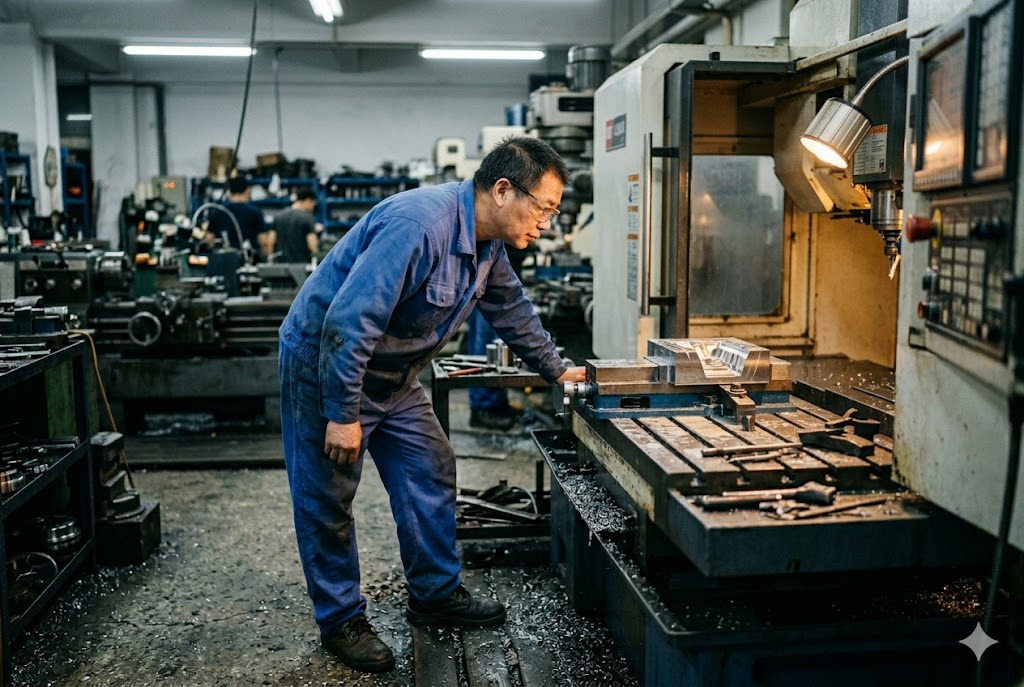
Cavity and Core Insert Machining
This is the largest single cost in any tooling invoice. Cutting your part geometry into hardened H13 or SKD61 tool steel 1 requires CNC milling, EDM (electrical discharge machining), and surface grinding. This work typically accounts for 40–60% of the total tooling cost.
The reason it is so expensive is precision. Die casting 2 tolerances are tight. The cavity must hold its dimensions across thousands of shots at high pressure and temperature. Cheap machining means early wear, flash defects, and dimensional drift.
The Mold Base and Frame
The mold base is the structural housing. It holds the cavity inserts, ejector plates, cooling circuits, and guide pillars in exact alignment. Common steel grades for mold bases are S50C and P20.
Some Chinese suppliers reuse standard mold base frames across multiple projects to reduce cost. This is not always a problem — but you need to confirm the steel grade and frame standard before you approve the quote. Ask your supplier directly.
| Component | Common Material | Typical Cost Share |
|---|---|---|
| Cavity & Core Inserts | H13 / SKD61 hardened steel | 40–60% |
| Mold Base & Frame | S50C / P20 steel | 15–25% |
| Standard Hardware | Ejector pins, sprue bushings | 5–10% |
| DFM Engineering | Engineering labor | 5–15% |
| T1 Trial & Inspection | Machinist & QC labor | 10–15% |
DFM Engineering and Mold Flow Simulation
DFM (Design for Manufacturability) engineering 3 is the step where your 3D CAD file is reviewed for draft angles, wall thickness uniformity, parting line placement, and undercut issues. A reputable Chinese supplier does this before cutting any steel.
Some suppliers absorb this cost into the tooling charge. Others invoice it separately at $500–$2,000 depending on part complexity. Either way, pay for it explicitly. DFM errors discovered after steel is cut are expensive.
Mold flow simulation 4 is a related step. Software predicts how molten metal fills the cavity, where porosity and shrinkage voids may form, and how cooling channels should be routed. Suppliers who skip simulation pass those problems on to you as defective T1 samples and rework iterations.
T1 Trial Shots and First-Article Inspection
A well-structured tooling charge includes one round of T1 trial shots. The supplier runs the first production trial, measures sample parts against your drawing, and provides a dimensional inspection report 5.
The critical detail: most Chinese suppliers quote tooling assuming only one trial round. If T2 or T3 iterations are needed due to dimensional nonconformances, expect additional charges unless your contract explicitly states that all trials needed to achieve drawing conformance are included.
| Trial Round | Included in Standard Quote? | Typical Extra Cost if Not |
|---|---|---|
| T1 (first shots + inspection) | Usually yes | N/A |
| T2 (first correction round) | Sometimes | $500–$2,000 |
| T3+ (further corrections) | Rarely | $500–$3,000 per round |
Get this in writing before you sign anything.
What Extra Tooling Items May Not Be Included Unless I Ask?
Our sourcing team visits supplier factories regularly. One pattern we see consistently: buyers approve tooling quotes without asking about secondary tooling and surface treatments. Those line items show up later as unexpected invoices.
Extra items that are frequently excluded from a base die casting tooling quote include trimming and de-gating fixtures, mold surface texturing and polishing, cavity nitriding or surface treatment, and any trial rounds beyond T1. These items can add $1,000–$10,000 or more to your total NRE budget depending on part complexity.
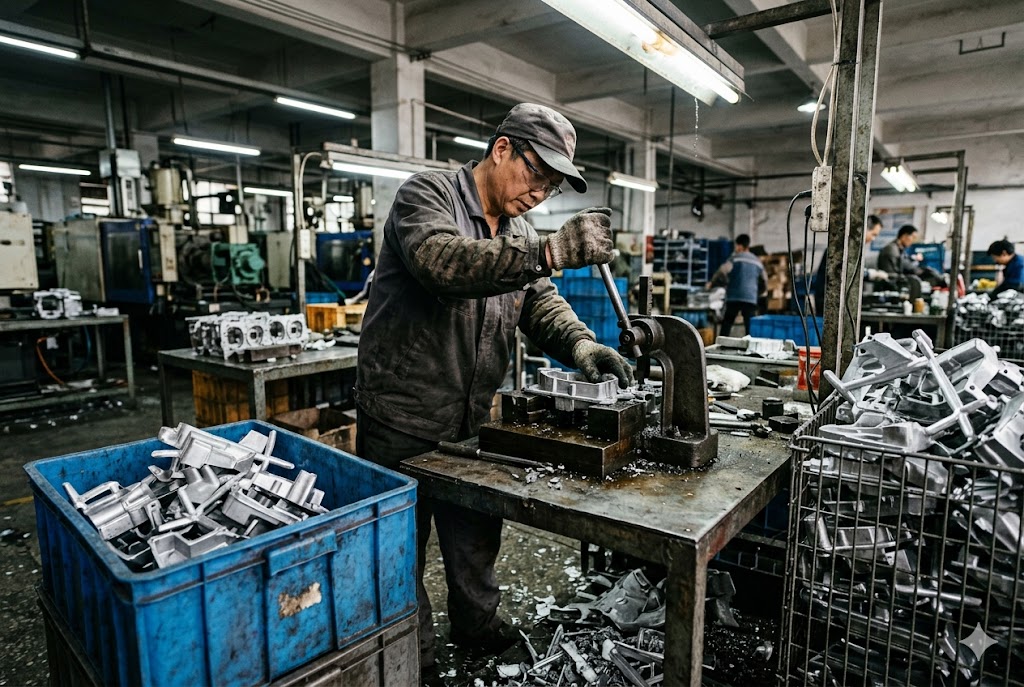
Trimming and De-Gating Fixtures
Every die casting part comes out of the mold with a runner system, overflow biscuit, and flash still attached. These must be removed. The tool that does this is called a trimming or clipping fixture.
Without a proper clipping fixture, de-gating is done by hand. Manual de-gating produces inconsistent results. It leaves witness marks and dimensional variation at gate locations. For precision parts, this is not acceptable.
Trimming fixtures are almost always quoted separately from the die casting mold itself. Budget for them separately. Include them in your total NRE (non-recurring engineering) 6 cost calculation from the start.
Surface Texturing, Polishing, and Surface Treatment
The cavity surface finish affects the appearance and release characteristics of every part that comes out of the mold. If your part requires:
- A specific surface roughness (Ra value)
- A branded texture or grain pattern
- Protective nitriding 7 to extend tool life
...then you will pay extra. These charges are rarely in the base tooling quote. They can range from a few hundred to several thousand dollars depending on cavity surface area and specification complexity.
Nitriding, in particular, is worth asking about. It hardens the cavity surface and significantly extends tool life. For production volumes above 50,000 shots, the cost is almost always justified.
| Extra Tooling Item | Typical Cost Range | Usually in Base Quote? |
|---|---|---|
| Trimming / De-Gating Fixture | $1,500–$8,000 | No |
| Surface Polishing (specific Ra) | $300–$2,000 | No |
| Branded Texture / Grain | $500–$3,000 | No |
| Cavity Nitriding Treatment | $400–$1,500 | No |
| T2/T3 Trial Rounds | $500–$3,000 each | No |
Ongoing Maintenance and Repair
This is the item that catches the most buyers off guard. Tooling maintenance — cavity refurbishment, ejector pin replacement, cooling circuit cleaning, and weld repairs after heat checking — all occur during the production life of the mold.
Almost no supplier includes ongoing maintenance in the upfront tooling charge. You need to negotiate this as a separate contractual commitment. Specifically, clarify in writing:
- Who is responsible for maintenance costs?
- What is the expected tool life (in shots) before major refurbishment?
- What happens to the mold if you move production to a different supplier?
Tool ownership and maintenance responsibility are two of the most important contractual details in any die casting sourcing relationship. Do not assume. Ask.
How Can I Compare Tooling Quotes from Different Suppliers More Accurately?
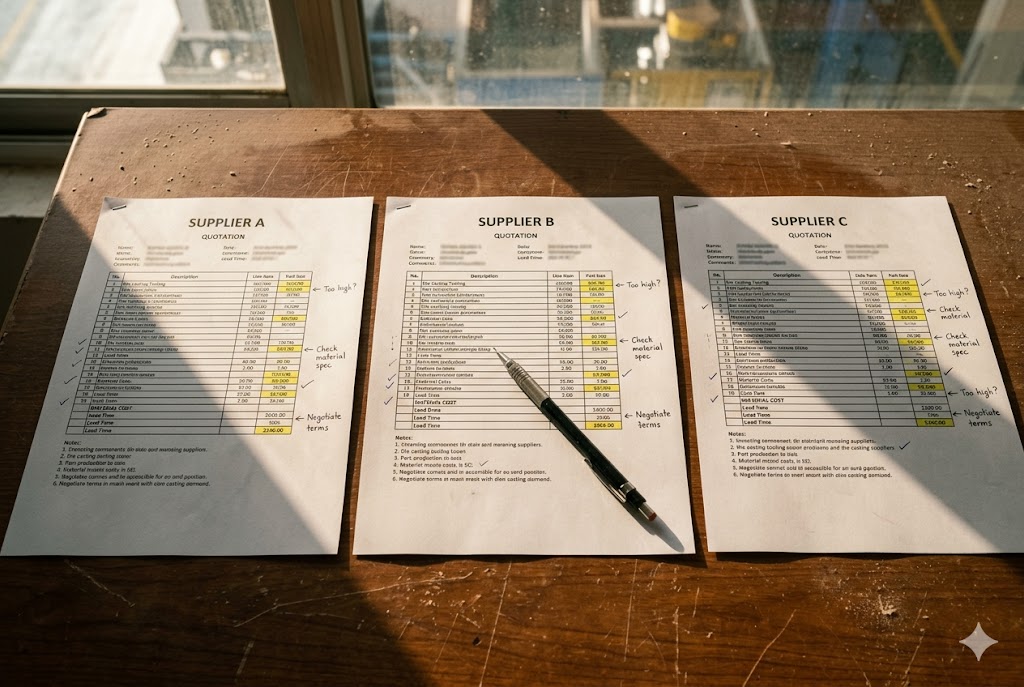
When our clients send us three or four tooling quotes to review, they often look wildly different. One supplier quotes $4,000, another quotes $18,000. Without a structured comparison framework, choosing the cheapest quote feels logical. It rarely is.
To compare tooling quotes accurately, normalize each quote against a standard checklist that includes steel grade, included trial rounds, secondary tooling items, and maintenance terms. A quote that appears cheaper may exclude critical line items. The true cost comparison must include all NRE charges, not just the headline mold price.
Build a Normalized Comparison Table
The most reliable method is to ask every supplier to quote against the same itemized scope. Send them a standard tooling RFQ checklist 8. If they refuse or cannot itemize their quote, that tells you something important about their process maturity.
A basic normalization table looks like this:
| Quote Item | Supplier A | Supplier B | Supplier C |
|---|---|---|---|
| Cavity & Core Machining | Included | Included | Included |
| Mold Base Steel Grade | H13 | S50C | Not specified |
| DFM Engineering | Included | Extra $800 | Not offered |
| Mold Flow Simulation | Included | Not included | Not included |
| T1 Trial + Inspection | Included | Included | Included |
| T2 Trial (if needed) | Included | Extra $1,200 | Not stated |
| Trimming Fixture | Extra $3,500 | Included | Not quoted |
| Surface Nitriding | Extra $900 | Extra $700 | Not quoted |
| Total NRE (normalized) | $22,400 | $21,700 | Unknown |
Supplier C, despite potentially having the lowest headline price, cannot be evaluated. That is the correct answer — do not approve an incomplete quote.
Check Steel Grade as a Proxy for Quality
The steel grade specified for the cavity inserts is one of the clearest indicators of tool quality. H13 and SKD61 are industry-standard hardened tool steels for die casting. A supplier using P20 or unspecified "tool steel" for cavity inserts is almost certainly cutting costs in ways that will affect tool life.
Ask directly: "What steel grade are you using for the cavity and core inserts?" If they cannot answer immediately, request it in writing before approving the quote.
Watch for Amortized Tooling Schemes
A supplier offering a tooling price of $2,000–$4,000 for a complex part that should realistically cost $15,000–$30,000 to tool properly is not giving you a deal. They are almost certainly planning to recover the shortfall through:
- Inflated per-piece prices over the production run
- Priority de-prioritization if you seek competitive quotes from other suppliers
- Lower-grade steel that fails early, forcing you to re-tool
The amortized tooling model is common in China. It is not inherently dishonest, but it creates dependency. Once your mold is built to recover at a specific piece price, switching suppliers becomes expensive.
What Should I Clarify Before I Accept My Supplier's Mold Charge?
Before our team recommends a supplier to any client, we run through a standard pre-approval checklist. These are the questions that protect you from the most common tooling disputes.
Before accepting a die casting tooling charge, clarify the cavity steel grade, how many trial rounds are included, who owns the mold, what triggers additional charges, and who is responsible for ongoing maintenance. Getting these answers in writing before approval is the single most effective way to prevent tooling disputes.

The Pre-Approval Clarification Checklist
Work through each of these items with your supplier before signing:
1. Steel Grade Specification
Ask: "What steel grade are you using for the cavity inserts, core inserts, and mold base?" Acceptable answers for cavity inserts: H13, SKD61. Acceptable for mold base: S50C, P20. If they cannot answer or say "standard tool steel," push back.
2. Included Trial Rounds
Ask: "How many trial rounds are included in this tooling charge, and what happens if we need more to achieve drawing conformance?" Get the answer in writing. Ideally, the contract should state that the supplier is responsible for all trials needed to achieve dimensional conformance to your drawing.
3. Mold Ownership
Ask: "Who owns the mold?" In most legitimate tooling agreements, the mold belongs to the buyer after full payment. However, some Chinese suppliers retain de facto control by keeping the mold in their facility and refusing to release it if you move production elsewhere. Clarify ownership and transferability 9 explicitly.
4. Trigger Points for Additional Charges
Ask: "What changes or decisions on my end would trigger additional tooling charges?" Common triggers include:
- Design changes after DFM approval
- Material changes that require gate or cooling modifications
- Adding features not in the original drawing
5. Maintenance and Repair Responsibility
Ask: "Who pays for cavity refurbishment, ejector pin replacement, and heat-check weld repairs during the production life of the mold?" This should be documented in the contract. For high-volume production (100,000+ shots), maintenance costs can be significant.
6. Tool Life Expectation
Ask: "What is the expected tool life for this mold in shots?" A properly built H13 die casting mold should last 100,000–500,000 shots depending on part geometry and alloy. A P20 or lower-grade mold may last only 20,000–50,000 shots. Knowing this helps you calculate the true cost per part over the production life.
What to Do If the Supplier Resists Answering
A professional, capable supplier will answer all of these questions without hesitation. Resistance usually means one of three things: they are using substandard materials, they plan to recover costs elsewhere, or they have not thought through their own process.
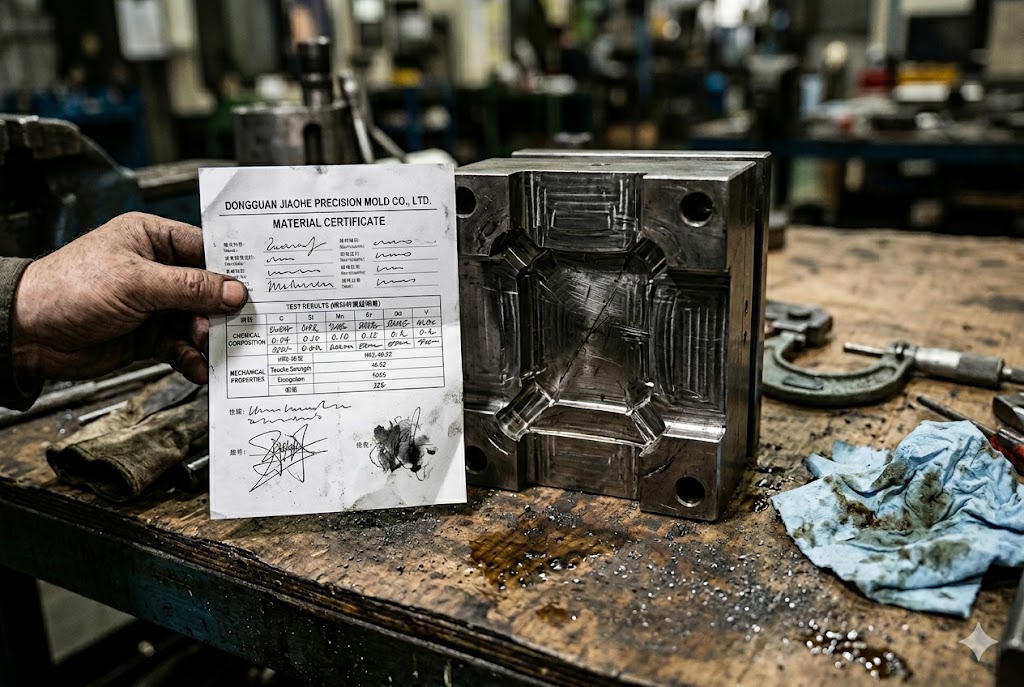
None of those are acceptable. A supplier who cannot or will not provide a steel grade certificate 10 and a written trial policy is not ready to be your tooling partner.
Conclusion
Tooling charges are more complex than a single headline number. Know what is included, ask for the rest in writing, normalize quotes across suppliers, and clarify ownership and maintenance before you sign. That process protects your budget and your production schedule.
Footnotes
1. Overview of H13 tool steel properties, grades, and die casting applications. ↩︎
2. Comprehensive guide to the die casting process, materials, and mold requirements. ↩︎
3. Die casting DFM principles: draft angles, wall thickness, and design optimization. ↩︎
4. How casting simulation software predicts shrinkage porosity before production begins. ↩︎
5. First Article Inspection (FAI) explained: process, dimensional reports, and supplier validation. ↩︎
6. What NRE costs cover for importers: tooling, fixtures, prototyping, and setup charges. ↩︎
7. Nitriding treatment explained: process types, benefits, and extended tool life. ↩︎
8. Xometry's die casting design tips and RFQ checklist for buyers and engineers. ↩︎
9. Why mold ownership agreements matter when manufacturing in China and how to enforce them. ↩︎
10. Dynacast's beginner guide to die cast design, material selection, and supplier validation. ↩︎