Skip to main content Skip to footer
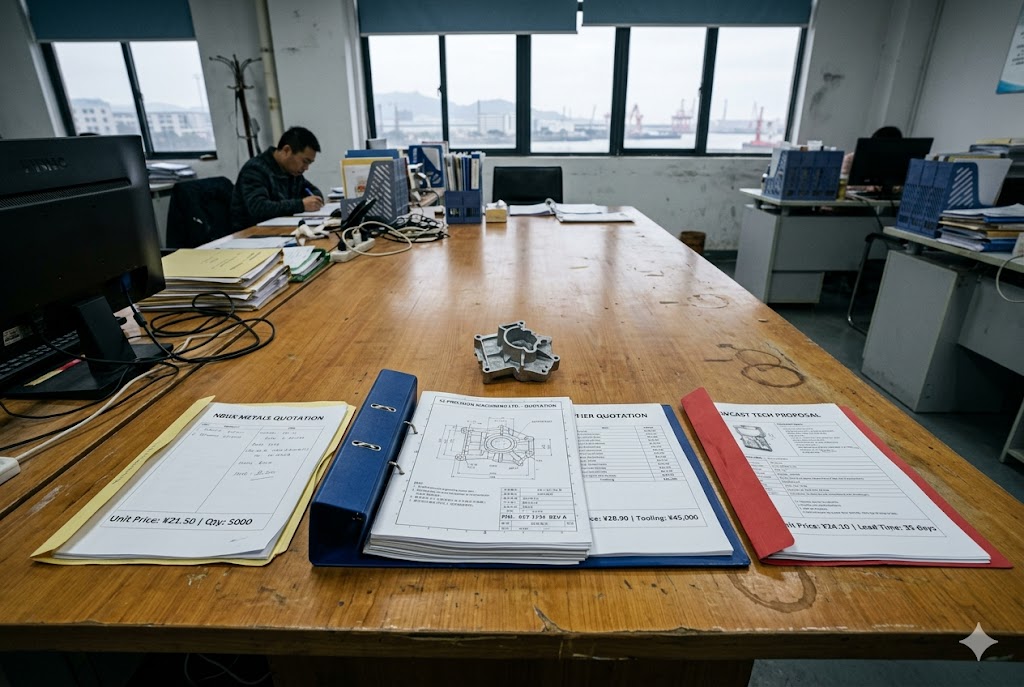
We see it every week: a purchasing manager sends us the same die cast part drawing 1, and three Chinese suppliers send back three wildly different tooling numbers. The gap is not a rounding error — it can be $3,000 versus $18,000 for an identical cavity. That range creates real confusion and real risk.
Tooling quotes for custom die cast parts vary so much because suppliers make different silent assumptions about steel grade, cavity count, slide design, trial scope, and intended shot life — none of which appear on your drawing. A low quote often reflects a stripped-down specification, not a better price for the same tool.
Understanding what drives each variable helps you compare quotes on equal terms. Here is how to read the numbers before you commit.
Does Different Mold Design Quality Explain Why One Tooling Quote Is Much Lower Than Another?
Our engineering team reviews die cast tool designs daily. Poor mold design is one of the most common reasons a client's program runs into trouble six months after tooling is approved — and the warning signs are almost always visible in the original quote.
Yes, mold design quality is a major driver of price differences. A supplier who skips DFM analysis, mold flow simulation, or proper slide engineering will quote less upfront but produce a tool that underperforms, warps, or fails early — shifting cost and delay onto your production schedule.
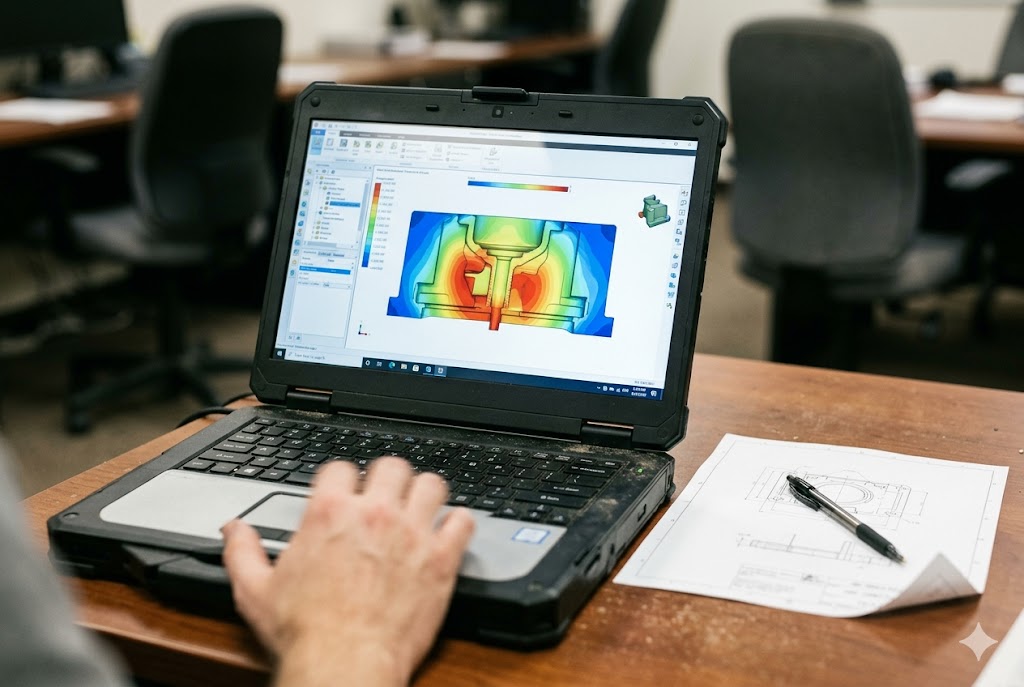
What DFM and Simulation Actually Cost — and Why Some Suppliers Skip Them
Design for Manufacturability 2 (DFM) is an engineering review of your part geometry before the tool is built. A thorough DFM catches wall thickness problems, unfillable thin sections, poor draft angles, and feature placements that force unnecessary slide mechanisms. Mold flow simulation 3 uses software to model how molten metal moves through the cavity, predicting cold shuts, porosity zones, and shrinkage locations.
Both services cost real engineering hours. A supplier who includes them in the tooling quote is spending 15–40 hours of an engineer's time before a single piece of steel is cut. A supplier who skips them quotes a lower number but transfers the cost of discovering those problems onto you — through rejected T1 samples, tool rework invoices, and delayed production release.
How Parting Line and Slide Decisions Change the Price
One of the largest hidden variables in a tooling quote is how the supplier's engineers handle undercuts and side features. An undercut is any part geometry that prevents the casting from being pulled straight out of the mold. There are three common solutions:
| Approach | Cost Impact | Trade-off |
|---|---|---|
| Redesign parting line to eliminate undercut | Low tooling cost | Requires DFM iteration with buyer |
| Add a mechanical slide mechanism | +$1,500–$8,000 per slide | Correct approach for complex geometry |
| Machine the feature post-cast | Low tooling cost | Increases piece price significantly |
If two suppliers look at the same drawing and one designs around the undercut while the other quotes a slide, their tooling numbers will be thousands of dollars apart — and neither quote is wrong, but they represent different manufacturing approaches with different downstream costs.
The Scope Difference Nobody Writes Down
The most common source of large quote gaps is not steel grade or slide count. It is scope. Here is what a full tooling scope includes versus a stripped-down one:
| Item | Full Scope | Stripped Scope |
|---|---|---|
| DFM engineering review | Included | Not included |
| Mold flow simulation | Included | Not included |
| Cavity machining | Included | Included |
| Standard mold base | Included | Included |
| Surface polishing to specified finish | Included | Basic only |
| T1 trial shots | 2 rounds included | 1 round, extra charged |
| Dimensional report (CMM) | Included | Not included |
| Trimming/clipping tool | Included | Quoted separately |
A supplier quoting only the items in the right column can show a number 40–60% lower than one quoting a complete scope. When the additional invoices arrive later, the final cost often exceeds the higher original quote.
How Do Cavity Count, Steel Grade, and Expected Life Affect My Tooling Price?
When we place tooling orders with our manufacturing partners in China and Vietnam, steel grade and cavity architecture are the two specification decisions that move the budget more than anything else. Most overseas buyers never specify either one, so suppliers fill the gap however their margin requires.
Cavity count, steel grade, and designed shot life are the three largest cost levers in die cast tooling. A single-cavity tool in domestic Chinese steel designed for 80,000 shots can cost one-fifth of a two-cavity tool in imported H13 built for 500,000 shots — even for the same part geometry.

Steel Grade: The Single Biggest Driver of Quote Variation
Tool steel 4 selection determines how long a die lasts and how consistently it produces dimensionally accurate parts. Here is a straightforward comparison of the grades suppliers commonly use:
| Steel Grade | Origin | Typical Hardness | Expected Shot Life | Relative Cost |
|---|---|---|---|---|
| 4Cr5MoSiV (domestic) | China | 44–48 HRC | 50,000–80,000 shots | Low |
| H13 (imported) | USA / Europe | 44–50 HRC | 200,000–300,000 shots | Medium-High |
| SKD61 | Japan | 44–50 HRC | 200,000–300,000 shots | Medium-High |
| DIEVAR / Orvar Supreme | Sweden | 44–52 HRC | 400,000–500,000+ shots | High |
The domestic Chinese equivalent of H13 tool steel 5 is cheaper because raw material costs less and domestic supply chains are shorter. It is not fraudulent steel — it performs adequately for short runs or prototype tools. But it is significantly softer at operating temperature and more susceptible to thermal fatigue cracking 6 after repeated heat-cool cycles. For a part you plan to produce for five to ten years, specifying domestic steel in the RFQ is an expensive false economy.
How Cavity Count Changes the Math
A single-cavity tool produces one part per shot cycle. A two-cavity tool produces two. The tooling cost for a two-cavity die is not simply double — the mold base, hot runner or runner system, and support components are shared — but it is substantially higher, typically 60–80% more than a single-cavity build.
Some suppliers default to single-cavity to keep the quote low. Others default to two-cavity to show a better projected piece price. If your annual volume is low, a single-cavity tool is correct. If you are ordering 50,000+ parts per year, a two-cavity tool reduces piece price enough to recover the tooling premium within one production run. Neither supplier is wrong, but they are quoting different production architectures.
Shot Life and Heat Treatment
A tool designed for 500,000 shots requires thicker cavity walls, high-quality heat treatment, and often surface nitriding or PVD coating on core and cavity faces. These processes add cost at the tooling stage but dramatically extend die life. A supplier skipping these steps quotes less now but delivers a tool that begins showing dimensional drift or surface cracking within the first year of production.
Always ask for the specified shot life in writing before accepting a tooling quote. If the supplier cannot state it, they have not designed to any life target.
Can a Cheap Tooling Quote Create Higher Risk for My Production Later?
We have managed situations where a client approved a low tooling quote, ran 20,000 production shots, and then watched the die begin cracking and producing out-of-tolerance parts. Replacing or repairing that tool mid-program — while their downstream customers waited for parts — cost far more than the savings from the original quote difference.
Yes, a cheap tooling quote creates measurable production risk. Underbuilt dies fail earlier, produce dimensional drift sooner, and require unplanned repair or replacement that disrupts production schedules and generates far higher costs than the original tooling savings.
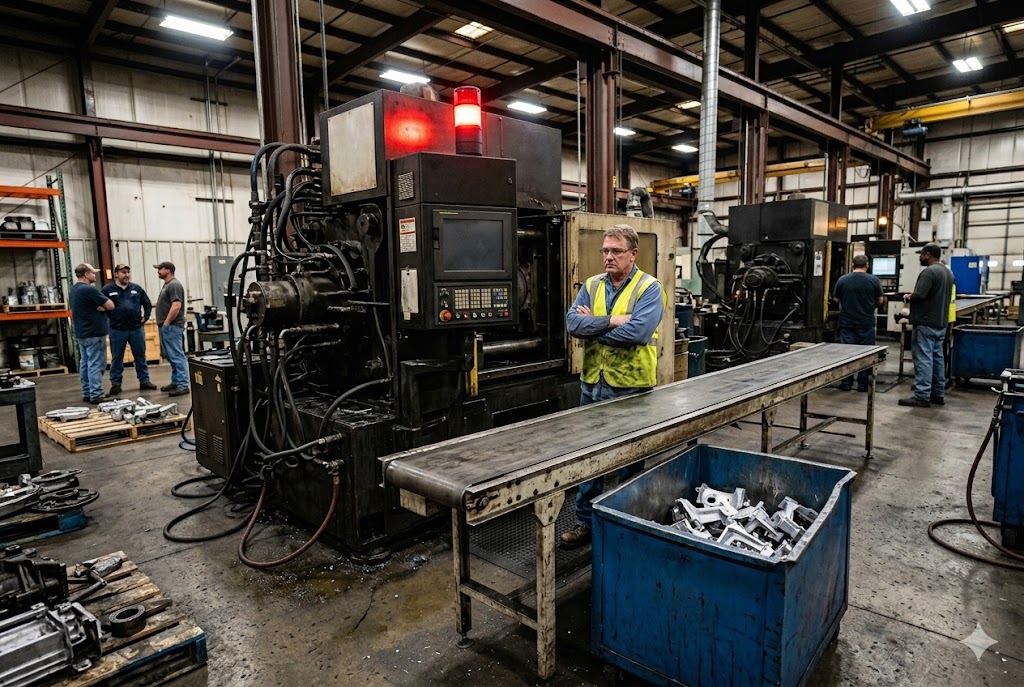
The Lock-In Problem
Many Chinese die casters deliberately underquote tooling to win a new customer. The business logic is straightforward: once your tool exists at their facility, moving it requires shipping a heavy steel die, re-qualifying at a new supplier, running new T1 trials, and updating your approved supplier list. That process takes months and costs money. The supplier knows this.
A supplier who quotes $4,000 for a tool that genuinely costs $12,000 to build correctly is not making a mistake. They are making a bet — that you will stay long enough for them to recover margin on the production piece price, or that the friction of moving will keep you captive even if quality problems emerge.
Mid-Program Failure Costs
When a die fails mid-program, the costs are not limited to tool repair. Common casting defects 7 such as porosity and cold shuts can emerge as a worn die loses dimensional control. Consider what actually happens:
- Production stops while the die is pulled and inspected
- Parts already cast may be dimensionally out of specification
- Your downstream customer may face a line stoppage
- Emergency tool repair typically costs more than scheduled maintenance
- A new tool may require four to ten weeks to build, trial, and approve
Those downstream costs — production stoppages, expedited freight, customer penalties — never appear on any tooling invoice. But they are economically inseparable from the original decision to accept a cheap tooling quote.
How to Estimate Should-Cost Before You Compare Quotes
A rough should-cost model protects you from implausible quotes. The key inputs are cavity size (projected steel block dimensions), steel weight, machining hours for cavity complexity, and number of slides. A single-cavity tool for a palm-sized part in H13 steel with two slides genuinely costs $8,000–$14,000 to build properly in coastal China. A quote of $3,500 for that tool is not a bargain — it is a signal that something in the specification has been omitted or downgraded.
You do not need to be a toolmaker to run this check. Ask your supplier to show you their tool design drawing, the steel purchase receipt, and the machining hours estimate. A supplier unwilling to share these items on request is a supplier you should treat with caution.
What Questions Should I Ask Before I Choose Between Low and High Tooling Quotes?
After years of placing tooling orders across dozens of Chinese and Vietnamese foundries on behalf of our clients, we have built a standard set of questions that reliably separate a solid quote from a risky one. Most buyers never ask them.
Before selecting a tooling quote, ask every supplier to specify steel grade, designed shot life, cavity count rationale, what trials and inspection reports are included, and whether they own their toolroom. Suppliers who cannot answer clearly are quoting without a complete specification.

The Core Questions to Ask Every Supplier
These questions require specific, written answers — not verbal assurances:
1. What tool steel grade are you specifying, and can you provide the material certificate?
This eliminates the silent domestic-versus-imported steel swap immediately. A credible supplier answers with a grade name and offers a mill certificate on request.
2. What is the designed shot life for this tool?
Any number below 150,000 shots on a part you plan to produce for more than two years deserves scrutiny. Ask what heat treatment and surface treatment processes are included to achieve that life.
3. How many cavities are you quoting, and why?
Ask the supplier to justify the cavity count against your stated annual volume. This question also reveals whether they read your RFQ carefully or just quoted a standard configuration.
4. Does your quote include DFM review and mold flow simulation?
If the answer is no, ask what the cost is to add them. If the supplier argues they are unnecessary for your part, that is a red flag — especially for parts with thin walls, long flow paths, or significant undercuts.
5. How many T1 trial rounds are included, and what documentation do you provide?
A single trial round with no dimensional report transfers all discovery risk to you. A complete scope includes at least one formal trial with a coordinate measuring machine 8 (CMM)-based first article inspection report 9 signed off against your drawing tolerances.
6. Do you own your toolroom, or do you subcontract die construction?
A foundry with in-house CNC machining, electrical discharge machining 10 (EDM), and toolmakers maintains direct engineering accountability and typically produces more consistent tools. A foundry that subcontracts the die adds a markup and loses direct control over fit and alignment during build.
A Simple Comparison Framework
Use this structure to normalize quotes before you make a decision:
| Evaluation Criteria | Supplier A | Supplier B | Supplier C |
|---|---|---|---|
| Tool steel grade specified | |||
| Designed shot life | |||
| Cavity count | |||
| DFM included? | |||
| Mold flow simulation included? | |||
| Number of T1 trials included | |||
| CMM report included? | |||
| In-house toolroom? | |||
| Tooling quote (USD) |
Fill in one column per supplier. A lower total in the bottom row that leaves most cells blank is not a better deal — it is an incomplete specification.
Conclusion
Tooling quote variation is not random. It reflects real differences in steel, scope, design assumptions, and supplier strategy. Asking the right questions before you approve a quote is the only way to compare numbers that are actually comparable.
Footnotes
1. Wikipedia overview of the die casting process and tooling fundamentals. ↩︎
2. How Design for Manufacturability principles reduce tooling cost and defects. ↩︎
3. Explanation of mold flow analysis for predicting fill, porosity, and shrinkage. ↩︎
4. Properties and classification of tool steels used in die construction. ↩︎
5. Composition and performance characteristics of H13 hot-work tool steel. ↩︎
6. How thermal fatigue causes cracking in dies subjected to repeated heat cycles. ↩︎
7. Common casting defects including porosity, cold shuts, and shrinkage causes. ↩︎
8. How coordinate measuring machines verify dimensional accuracy of cast parts. ↩︎
9. First article inspection process and documentation requirements for new tooling. ↩︎
10. Electrical discharge machining used for precision cavity and core finishing. ↩︎