Skip to main content Skip to footer
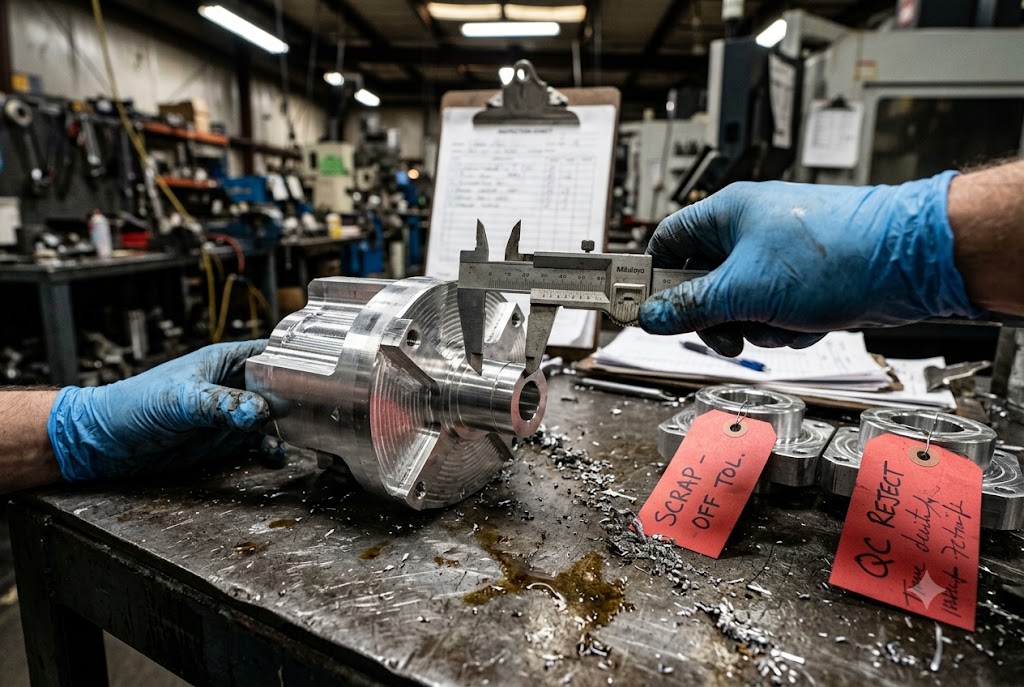
We have seen it happen too many times on our end: a buyer approves a quote, the factory starts cutting material, and three weeks later everyone is arguing over a scrap batch that could have been caught in a 20-minute drawing review. That problem is real, it is expensive, and it is almost always preventable.
Requiring DFM feedback from CNC suppliers before production is not optional for complex parts. It is the most reliable way to catch tolerance stack-ups, unmachineable geometries, and over-specified features before material is cut. A design change on a digital model costs almost nothing. The same change after a scrap batch costs the full unit price times order quantity, plus rework and re-shipping.
Once you understand what DFM feedback actually is and what it tells you about your supplier, the question stops being "should I require it?" and starts being "how do I make it a contractual gate?"
What Is DFM and Why Does It Matter?
Every week our engineering team reviews drawings from new clients, and the pattern is consistent: the parts that cause the most trouble in production are rarely the ones with the most complex shapes.
DFM stands for Design for Manufacturability. It is the process of reviewing a part design before production to identify features that are difficult or costly to machine. A proper DFM review checks wall thickness, internal corner radii, tolerance specifications, surface finish requirements, and fixturing options against the actual capabilities of the shop floor.

Why DFM Is More Than a Pre-Production Formality
DFM is not a courtesy service. It is an engineering checkpoint. When a supplier reads your drawing and flags specific features at risk, that tells you two things at once: they have actually read the drawing, and they have the engineering knowledge to assess it.
A supplier who sends back only a price without any questions on a drawing with 0.01 mm tolerances, deep pockets, and thin walls has either not assigned an engineer to your RFQ, or they plan to attempt the part as-drawn and discover problems during production. At that point, the schedule impact and cost dispute land entirely on you.
What a Good DFM Report Looks Like
Here is what you should expect in a written DFM response:
| Feature Type | What a Good DFM Report Flags | Why It Matters |
|---|---|---|
| Internal corner radii | Radii smaller than available tooling | Forces custom tooling or EDM 1, adds cost and lead time |
| Wall thickness | Walls thinner than 0.8–1.0 mm on aluminum | Vibration during machining causes chatter and scrap |
| Tolerance specification | Sub-0.02 mm on non-mating faces | Drives inspection cost without functional benefit |
| Deep pockets | Depth-to-width ratio above 4:1 | Tool deflection causes dimensional drift |
| Surface treatment conflicts | Bore tolerance vs. anodize or plating spec | Plating can close a bore below its minimum functional dimension |
A real DFM report references specific features by balloon number or dimension callout. It explains the risk in plain language. And it proposes a concrete alternative — not just a problem statement.
The Financial Case Is Asymmetric
Design changes made to a digital model before production 2 cost almost nothing. The same change after a batch is scrapped costs the full unit price multiplied by order quantity. Add rework, re-inspection, and re-shipping on an ocean freight cycle, and a single avoidable scrap event can eliminate the entire margin on an order.
The math is simple. The discipline to enforce DFM as a gate is harder. Most buyers skip it under schedule pressure. That is exactly when it matters most.
How Can DFM Reduce Cost and Improve Manufacturability?
Our project managers track one metric above almost all others during the quoting stage: how detailed is the DFM response?
DFM reduces cost by identifying over-specified tolerances, difficult geometries, and inefficient fixturing plans before a single cut is made. When a supplier flags that a ±0.01 mm tolerance on a non-mating face is unnecessary, relaxing it can reduce part cost by 25–40% on that feature alone without affecting function.
Tolerances Are the Biggest Cost Driver Most Buyers Overlook
Tight tolerances are not free. Every feature held to a close tolerance requires a slower feed rate, more frequent tool changes, additional inspection steps, and often a dedicated setup. When that tolerance exists on a surface that does not mate with anything, it is pure cost with no functional return.
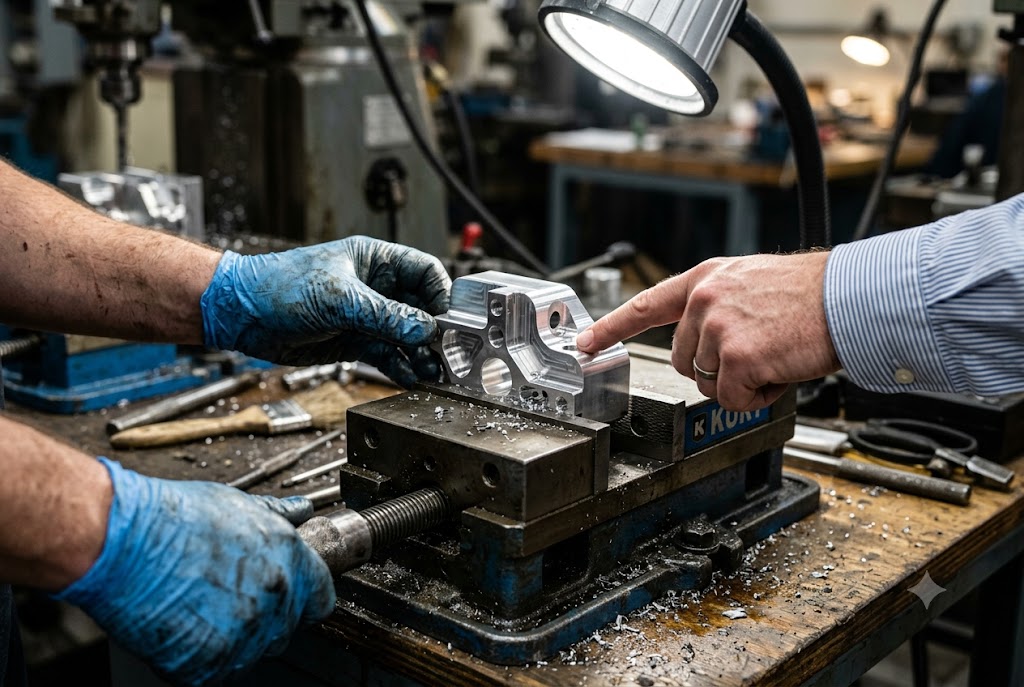
A good DFM conversation surfaces this directly. The supplier asks: "This face is called out at ±0.01 mm but it appears to be a clearance surface. Can we open this to ±0.05 mm?" That question, if you can verify the change against your assembly tolerance stack-up 3 and say yes, is worth real money.
Fixturing Strategy Affects Dimensional Consistency
Here is something most buyers do not think about during the design stage: the supplier's fixturing plan determines whether a critical feature is machined in one setup or two. Every time a part is unclamped and repositioned, repositioning error is introduced. That error is systematic — it affects every part in the batch the same way — and it is not captured anywhere on the drawing.
Use the DFM stage to ask directly: "How do you plan to fixture this part for the critical datum surface?" If the answer is a second setup, push for single-setup machining. The conversation costs nothing. The error it prevents can cost everything.
| Fixturing Approach | Repositioning Error Risk | Recommended For |
|---|---|---|
| Single setup, all critical features | None | Parts with tight datums or GD&T callouts 4 |
| Two setups, non-critical second op | Low | Parts where second-op features have loose tolerances |
| Multiple setups, no datum strategy | High | Avoid for precision parts |
Surface Treatment Conflicts Are Nearly Invisible on Paper
One of the most common and most expensive DFM failure modes in our experience involves post-machining surface treatments. A drawing specifies a bore at a minimum diameter. The same drawing specifies anodizing or nickel plating 5. The coating adds material to the bore wall and closes it below its functional minimum.
This conflict is nearly invisible when you are reviewing the drawing as a flat document. An experienced process engineer reviewing the complete manufacturing sequence — machining, then treatment — catches it immediately. That is exactly the kind of feedback you are paying for when you require a written DFM report.
When to Treat DFM Suggestions as Engineering Decisions
A DFM suggestion to relax a tolerance is not a negotiation tactic. It is an engineering input. Treat it that way. Verify the proposed change against your assembly tolerance stack-up. If the stack-up allows it, accept the change and document it. If it does not, explain why and hold the tolerance — but now you and your supplier both understand exactly why that number is on the drawing.
What Kind of Feedback Should I Expect?
When we onboard a new supplier for a client's project, we always send a test RFQ with a moderately complex part and watch what comes back.
A qualified CNC supplier should return written DFM feedback that identifies specific at-risk features by drawing callout, explains the manufacturing risk in plain language, and proposes a concrete alternative. Vague feedback or no feedback at all is a signal that no engineer reviewed the drawing.

The Difference Between Useful and Useless DFM Feedback
Not all DFM feedback is equal. Here is how to tell the difference quickly:
| Feedback Type | Example | What It Tells You |
|---|---|---|
| Specific and actionable | "Wall at Section A-A is 0.6 mm. Recommend increasing to 1.0 mm to prevent chatter." | Engineer read the drawing and assessed the risk |
| Vague and generic | "Some tolerances may be difficult." | No engineer reviewed it, or they lack the knowledge to be specific |
| No feedback at all | Price only, no questions | High risk — do not approve production |
| Questions without solutions | "Can you change the tolerance?" | Junior engineer, needs follow-up to be useful |
Require Feedback in Writing, Tied to a Drawing Revision Number
Verbal DFM feedback communicated over WeChat or a phone call with a sales contact is not binding. It is not traceable to the specific drawing revision you sent. And it cannot be referenced in a non-conformance dispute 6 six weeks later when the parts arrive out of tolerance.
Require the DFM response in writing and in English. Ask the supplier to reference your drawing revision number in the document. This creates a documented agreement about what was flagged, what was accepted, and what was changed — before production starts.
What to Do When You Receive a DFM Report
When the written DFM report arrives, work through it feature by feature:
- Identify which suggestions affect function and which affect cost only.
- Verify any proposed tolerance changes against your assembly stack-up.
- Accept, reject, or modify each suggestion in writing.
- Issue a revised drawing if any changes are approved, with an updated revision number.
- Confirm the supplier has received and acknowledged the revised drawing before approving production.
This process takes time. Build it into your project schedule. A DFM review that is not scheduled will not happen.
Should I Compare DFM Suggestions from Multiple Suppliers?
When we run a competitive RFQ for a client on a complex part, we use the DFM responses as an evaluation layer — not just the prices.
Comparing DFM feedback from multiple suppliers reveals differences in engineering depth, process capability, and risk awareness that price alone cannot show. A supplier who identifies three specific at-risk features that others missed is demonstrating exactly the kind of competence you need managing your production run.

DFM Quality Is the Best Proxy for Engineering Competence at the Quoting Stage
You cannot visit every supplier's shop floor during an RFQ. You cannot audit their CMM equipment or interview their process engineers. But you can read their DFM reports 7 side by side and see immediately who has assigned an engineer to your drawing and who has not.
A supplier who returns a detailed written DFM report identifying specific features at risk has demonstrably read and understood your drawing. A supplier who returns only a price has not. That difference matters more than a 10% price gap, because the supplier who skips the DFM review is the one who will call you three weeks into production with a problem.
How to Run a Structured DFM Comparison
When collecting DFM feedback from multiple suppliers, use a simple scoring framework:
| Evaluation Criterion | What to Look For | Weight |
|---|---|---|
| Feature identification | Does the report name specific features with callout references? | High |
| Risk explanation | Does it explain why each feature is at risk in plain language? | High |
| Proposed alternative | Does it offer a concrete solution, not just a problem statement? | High |
| Surface treatment awareness | Does it address post-machining treatment conflicts? | Medium |
| Fixturing strategy | Does it discuss setup plan for critical datums? | Medium |
| Revision number reference | Is the feedback tied to your specific drawing revision? | High |
Use DFM as a Selection Gate, Not Just Evaluation Data
Label your prototype-stage RFQs explicitly with "DFM feedback requested" and note that design flexibility exists. Chinese suppliers who do not receive this instruction will machine to the drawing as submitted — even when a 0.5 mm fillet increase 8 would eliminate a significant scrap risk. Proposing unsolicited design changes is not standard practice in most Chinese shops without explicit invitation.
Build DFM sign-off as a mandatory milestone in your project Gantt chart, before the material procurement date. A delay at the DFM stage automatically becomes a visible delay to machining start. That visibility creates schedule accountability for both parties and makes the downstream consequence of skipping the review immediately apparent.
Suppliers who provide no DFM feedback on genuinely complex parts with thin walls, deep pocketing, or sub-0.02 mm tolerances 9 are a red flag regardless of price. The absence of questions on such a drawing is not a sign of capability. It is a sign of risk.
Conclusion
Require DFM feedback in writing before every production run on complex parts. Use it to evaluate suppliers, verify tolerance changes, and build a documented record. The review costs time. Skipping it costs orders. For a practical starting point, review Protolabs' DFM design toolkit 10 to benchmark the kinds of features a rigorous pre-production review should cover.
Footnotes
1. Overview of EDM as an alternative process for internal corners that standard milling cannot achieve. ↩︎
2. Complete engineering guide showing how DFM implementation can reduce manufacturing costs by 15–40%. ↩︎
3. Explains how tolerance stack-up analysis predicts cumulative part variation before production begins. ↩︎
4. Introductory guide to GD&T symbols and how they define allowable feature variation on drawings. ↩︎
5. Engineering guide on how anodizing grows inward into bores and reduces diameter below functional minimums. ↩︎
6. Explains how formal non-conformance reports create enforceable supplier accountability workflows. ↩︎
7. Guide to applying DFM principles across CNC machining, including automated manufacturability feedback tools. ↩︎
8. DFM guidelines covering internal corner radii, thin walls, and narrow features in CNC design. ↩︎
9. Analysis of how L/D ratio drives tool deflection costs and machining instability in deep-pocket features. ↩︎
10. Protolabs' DFM toolkit covering tolerances, holes, thin walls, threads, and deep features in machined parts. ↩︎