Skip to main content Skip to footer
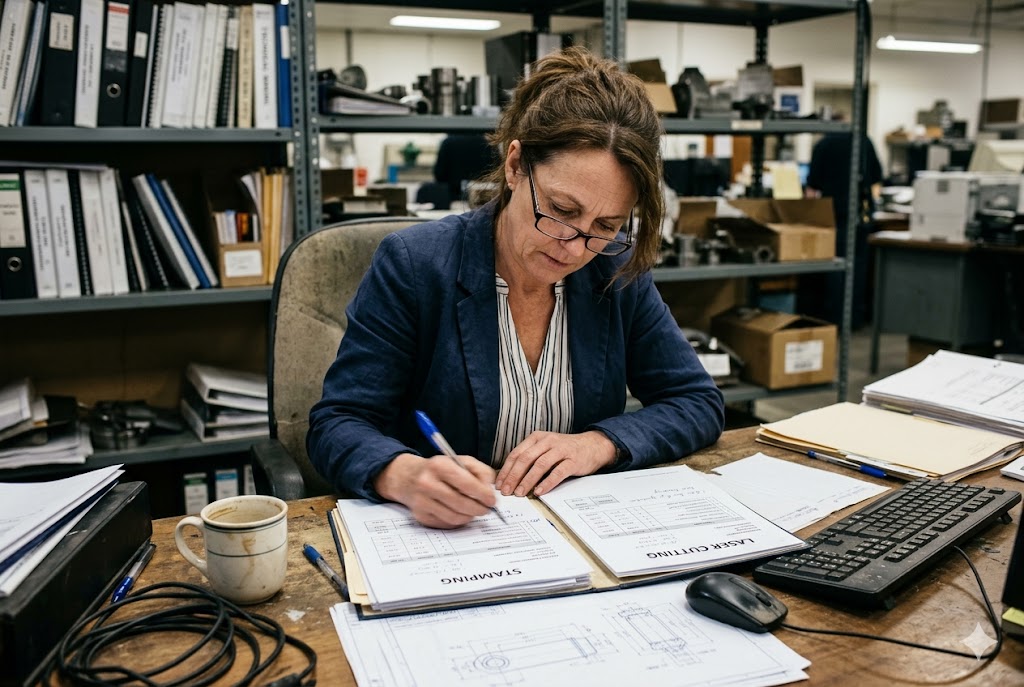
We see this question come up on almost every new project inquiry we handle. Clients send us drawings and ask for a price — but the real question underneath is: which process should I even be quoting?
The right answer depends on three things: your annual volume, your design stability, and your tolerance requirements. Stamping becomes cheaper than laser cutting at roughly 5,000–10,000 parts per year for most steel components, but it requires $5,000–$50,000 in upfront tooling and 2–4 weeks of die build time before you see a single part.
Both processes can hold tight tolerances. Both can work with stainless steel, mild steel, and aluminum. The decision comes down to cost structure and flexibility — and getting it wrong costs real money.
When Is Stamping Cheaper Than Laser Cutting for My Part Quantity?
Most suppliers default to laser cutting vs metal stamping 1 analysis for small orders. We have seen this happen dozens of times when reviewing quotes our clients bring to us. The vendor avoids tooling risk, and the client never sees the real cost comparison.
Stamping becomes cheaper than laser cutting once your annual volume reaches roughly 5,000–10,000 pieces for a standard steel enclosure or bracket. At 10,000 pieces, a part that costs $40 each by laser cutting can fall below $10 each by stamping — but only after tooling is paid for.
How the Cost Math Actually Works
Laser cutting charges you mostly by machine time and material. Each part takes roughly the same time to cut whether you make 10 or 10,000. Your per-piece cost stays flat.
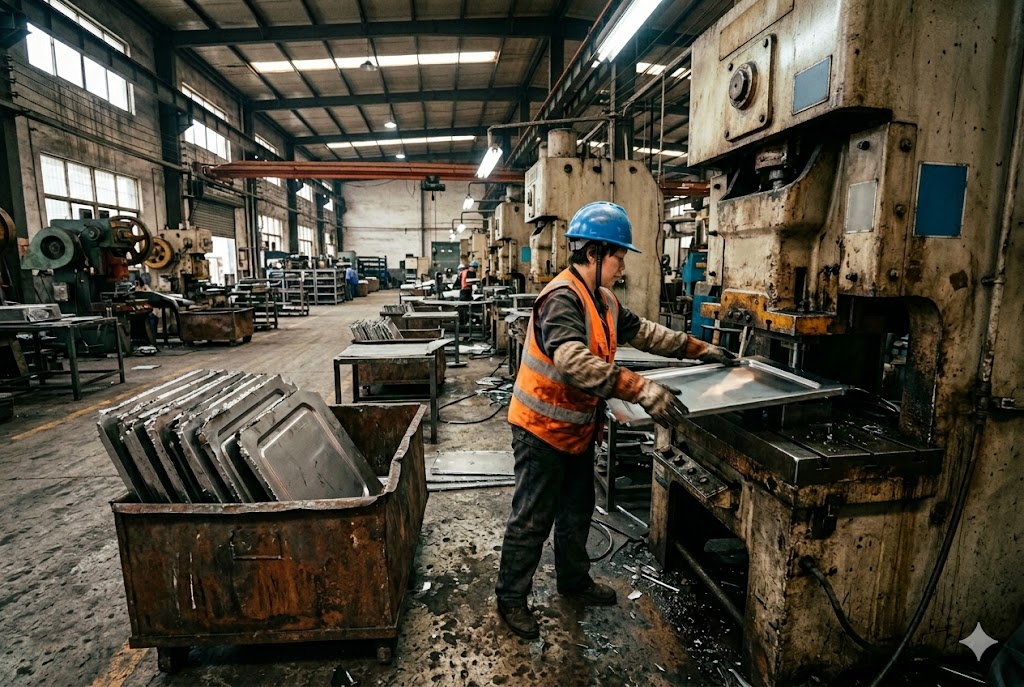
Stamping is the opposite. You pay a large tooling cost up front — the die — and then a very low unit price per stroke after that. The tooling cost gets divided across every part you produce. The more parts you make, the smaller that tooling share becomes.
Here is a simplified example for a 1.5 mm stainless steel enclosure panel:
| Quantity | Laser Cut Unit Price | Stamp Unit Price | Tooling Cost | Stamping Total Cost |
|---|---|---|---|---|
| 500 | $40 | N/A | $8,000 | Not viable |
| 2,000 | $40 | $22 | $8,000 | $52,000 |
| 5,000 | $38 | $14 | $8,000 | $78,000 |
| 10,000 | $37 | $9 | $8,000 | $98,000 |
| 20,000 | $36 | $7 | $8,000 | $148,000 |
At 2,000 pieces, laser cutting total cost is $80,000 versus stamping's $52,000 — but laser cutting has no tooling risk. At 10,000 pieces, stamping saves roughly $270,000 over laser cutting across the run.
The Break-Even Point Is Not Fixed
Break-even varies by part geometry, material thickness, and tooling complexity. A simple flat bracket has lower tooling cost than a multi-feature housing with embossed logos and pilot holes. Always ask your supplier to calculate a specific break-even for your drawing — not a generic rule of thumb.
What Chinese Suppliers Often Do Not Tell You
When we request quotes from Chinese fabricators on behalf of our clients, we ask for stamping and laser cutting prices simultaneously on the same drawing. Suppliers often default to recommending laser cutting for orders under 5,000 pieces because it avoids their tooling investment risk. Getting a stamping quote forces them to show you their actual tooling cost and unit economics. Then you have a real number to compare.
How Does Part Volume Affect Whether I Should Invest in Tooling?
Volume is the single biggest factor in the tooling decision. But volume alone is not enough. You also need to think about when that volume happens and whether your forecast is reliable.
Invest in stamping tooling when your annual volume 2 exceeds 5,000–10,000 pieces, your design is stable, and you have at least 2–3 years of expected production ahead. Below that threshold, or when demand is unpredictable, tooling investment rarely pays back fast enough to justify the risk.

Tooling Cost Ranges by Complexity
Not all stamping dies cost the same. A single-operation blanking die for a flat bracket is far cheaper than a progressive die 3 for a multi-feature housing with formed flanges, embossed features, and tapped holes.
| Die Type | Typical Cost Range | Best For |
|---|---|---|
| Simple blanking die | $2,000–$8,000 | Flat cutouts, simple outlines |
| Single-stage forming die | $5,000–$15,000 | Brackets with one or two bends |
| Compound die 4 | $10,000–$25,000 | Parts needing simultaneous punch and cut |
| Progressive die | $20,000–$60,000 | High-volume complex parts, multi-feature |
Lead Time Is Part of the Cost
Tooling takes time. In the US or Europe, die build typically takes 4–8 weeks. At competitive Chinese die shops we work with directly, that compresses to 2–4 weeks. But that lead time still adds to your project timeline.
If your customer needs first production parts in six weeks, and tooling alone takes four, you have two weeks left for production and shipping — which is often not enough. Laser cutting, which has zero tooling lead time, may be the only viable option regardless of unit cost.
Die Life and Maintenance Matter
A production die build time 5 and ongoing die life are closely related concerns. Standard tool steel dies run 200,000–500,000 strokes before significant maintenance is needed. H13 or equivalent hardened tool steel extends life further. If you are projecting multi-year production, the die will need maintenance or regrinding — which costs money and causes production gaps.
We always specify die life in strokes and tooling steel grade in our purchase agreements with suppliers. Without those terms in writing, you have no basis for claiming warranty when edge quality degrades at 150,000 strokes on a die sold as a 500,000-stroke tool.
Tooling Ownership: A Critical Contract Point
In China specifically, tooling ownership 6 language in your purchase order matters enormously. Many suppliers treat the die as factory property by default. If you want to move production to a second supplier — or if the first supplier closes — you need the die. Without explicit ownership language, you may lose your tooling investment entirely.
We include tooling ownership, steel grade, stroke life, and storage conditions in every contract we place on behalf of our clients. It is not optional.
Which Process Gives Me Better Flexibility When My Drawing May Change Later?
Design changes are expensive — but how expensive depends entirely on which process you are running when the change happens.
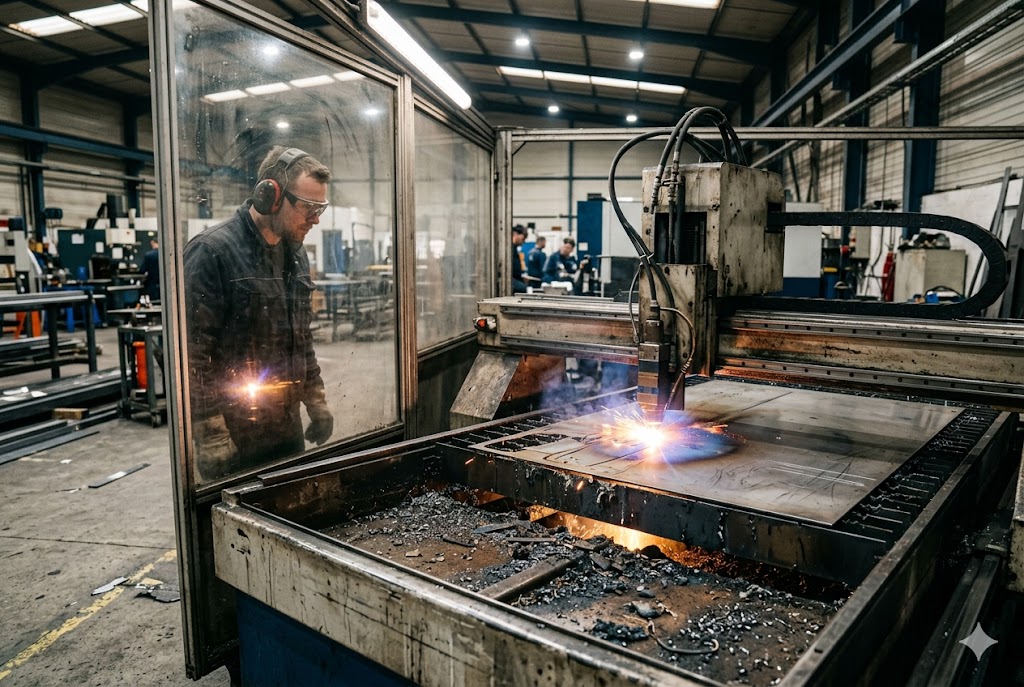
Laser cutting is the clear winner for design flexibility 7. A geometry change requires only a CAD file update and a new cutting program — typically one to two days with no additional tooling cost. A stamping die change after the tool is cut can cost $3,000–$15,000 in rework and reset your lead time by two to four weeks.
Why Laser Cutting Handles Change Well
Laser cutting is software-driven. The machine follows a DXF or CAD-generated toolpath. Change the file, reload the program, run a new first article. There is no physical tooling to modify.
This makes laser cutting the correct choice for:
- Parts still in design or regulatory review
- Development builds and prototypes
- Projects with multiple customer variants
- Low-volume parts with frequent revision cycles
Why Stamping Does Not Handle Change Well
A stamping die is a precision steel tool shaped exactly to your part geometry. If a hole moves 3 mm, the die needs a new punch. If a flange angle changes, the forming insert must be recut. These are not minor adjustments.
Here is what a mid-project design change typically costs in stamping:
| Change Type | Rework Cost Estimate | Lead Time Impact |
|---|---|---|
| Add or move a hole | $500–$2,000 | 1–2 weeks |
| Change flange height or angle | $2,000–$6,000 | 2–3 weeks |
| Resize overall part outline | $5,000–$15,000 | 3–5 weeks |
| Major geometry redesign | Scrap and rebuild die | 4–8 weeks |
The Hybrid Strategy
Our team often recommends a two-phase approach for clients who expect design changes early but high volume later. Use laser cutting through development and early production. Lock the design after regulatory approval or customer sign-off. Then commission stamping tooling for the production run.
This approach requires careful planning. You must verify that the stamped production parts match your laser-cut approval samples dimensionally. You need a new First Article Inspection 8 at the process transition. And you need to manage handoff between two processes — either two vendors or a dual-process supplier.
It adds coordination overhead, but it eliminates the risk of scrapping $20,000 in tooling because a drawing changed during development.
When to Lock the Design Before Ordering Tooling
We tell our clients: do not order stamping tooling until you have a signed-off drawing with revision control, a stable material specification, and at least one approved first article from a laser-cut prototype. If any of those three are missing, you are taking on tooling risk before your design is ready to support it.
How Can I Balance Tooling Cost, Unit Price, and Tolerance in My Sourcing Decision?
This is the practical question every purchasing manager needs to answer before issuing a final PO. You have to balance three variables that pull in different directions.
Balance tooling cost, unit price, and tolerance by first confirming your required tolerance against each process's capability, then calculating total cost of ownership at your projected volume over two to three years, and finally requesting simultaneous RFQ quotes for both processes on the same drawing so you have a real crossover number — not a supplier's preference.

Tolerance Capability by Process
Both processes can produce precise parts. But their tolerance mechanisms are different, and so are their failure modes.
Laser cutting holds ±0.1 mm throughout the production run. There is no tool wear because the laser is not in contact with the material. Edge quality stays consistent from part one to part ten thousand.
Stamping holds ±0.025–0.3 mm depending on die design and material. When the die is freshly tuned, tolerances are tight. As stroke count accumulates, die wear gradually opens up dimensions — especially on sheared edges. Without maintenance intervals built into your quality plan, you may not catch this drift until you are deep into a production run.
Thermal Effects and Edge Quality
Laser cutting introduces a Heat Affected Zone (HAZ) 9 at the cut edge. The metal adjacent to the cut is briefly exposed to high heat. This can affect fatigue strength in stress-critical zones and cause oxidation that reduces coating adhesion. For structural brackets under cyclic load, or cosmetic parts with tight surface finish requirements, this matters.
Stamping introduces no thermal effects but creates work hardening 10 along sheared edges. Local material properties change in that zone. For parts with close-tolerance holes used as bearing surfaces or precision fits, edge condition from stamping must be evaluated against your functional requirements.
Neither process is automatically better. You need to evaluate both against your actual part function — not just the dimensional drawing.
Hidden Costs That Change the Real Number
Apparent unit price is not total part cost. Both processes carry secondary operations that add 20–40% to your apparent cost if not accounted for upfront.
Secondary operations to assess:
- Deburring: Laser-cut edges often have HAZ slag. Stamped edges have burr. Both need treatment.
- Edge breaking: Cosmetic faces may need consistent chamfer or radius on all edges.
- Surface finish: Ra targets for sealing faces or mating surfaces add grinding or brushing steps.
- Coating adhesion: HAZ oxidation on laser-cut edges can reduce powder coat or anodize adhesion. Pre-treatment may be required.
Factor these into your cost comparison before choosing a process. We build secondary operation costs into every quote we collect — otherwise the comparison is misleading.
Your RFQ Strategy
When you issue an RFQ for a stamping-vs-laser trade study, ask suppliers to quote both processes on the same drawing package. Ask each supplier to state their break-even quantity assumption explicitly. Compare total cost of ownership — tooling plus unit price at your volume — not unit price alone.
A supplier who quotes only one process is showing you their preference, not your best option.
Conclusion
Choose stamping when volume is high, design is locked, and long-term unit cost matters. Choose laser cutting when volume is low, design may change, or lead time is short. Always compare both processes on the same drawing before committing.
Footnotes
1. Side-by-side comparison of laser cutting and metal stamping for custom sheet metal applications. ↩︎
2. How annual production volume shapes the decision between metal stamping and laser cutting. ↩︎
3. What progressive die stamping is, how it works, and how much tooling costs. ↩︎
4. Comprehensive guide to progressive and compound die types and their production use cases. ↩︎
5. Overview of sheet metal stamping process, die lead times, and production planning factors. ↩︎
6. Why total cost of ownership, including tooling rights, matters in B2B manufacturing sourcing. ↩︎
7. How laser cutting and stamping are used together in real-world sheet metal fabrication workflows. ↩︎
8. What First Article Inspection is and why it is required at manufacturing process transitions. ↩︎
9. What the heat-affected zone is in laser cutting and how to minimize its effects on parts. ↩︎
10. How die clearance and shearing mechanics create work hardening in stamped metal edges. ↩︎