Skip to main content Skip to footer
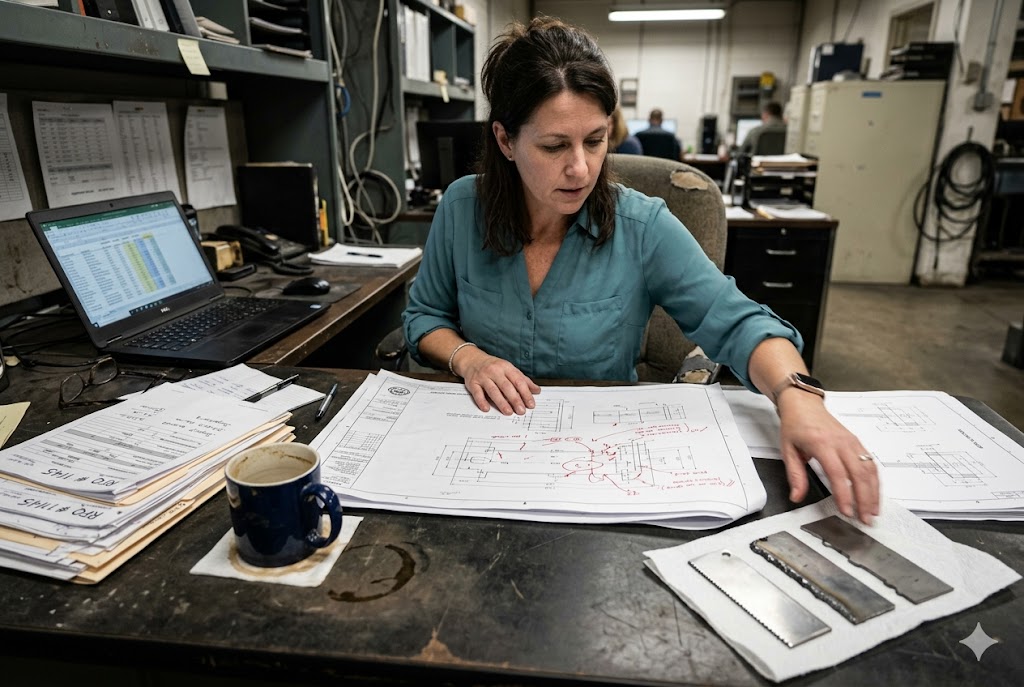
Every month, our team reviews dozens of RFQs for sheet metal parts. We see the same mistake again and again — buyers pick a cutting process based on habit, not on what the part actually needs. That leads to rejected parts, surprise costs, and delayed shipments.
Laser cutting, plasma cutting, and waterjet cutting each serve a different purpose. Laser suits thin sheet metal with tight tolerances. Plasma suits thick conductive metals where speed and low cost matter. Waterjet suits any material where heat damage must be completely avoided. The right choice depends on your material, thickness, tolerance, and downstream process.
Once you understand the core differences, the decision becomes straightforward. Let us walk you through each process.
How Do I Decide Which Cutting Process Fits My Material and Tolerance Needs?
When clients send us drawings, our sourcing team checks three things first: material type, material thickness, and the tightest tolerance on the print. These three data points alone eliminate one or two processes before we even contact a supplier.
The correct cutting process depends on your material type, thickness, and required tolerance. Laser handles thin metals precisely. Plasma cuts thick conductive metals fast. Waterjet cuts almost any material — metal, composite, stone, or rubber — and introduces zero heat, making it the only safe option when thermal distortion would cause rejection.
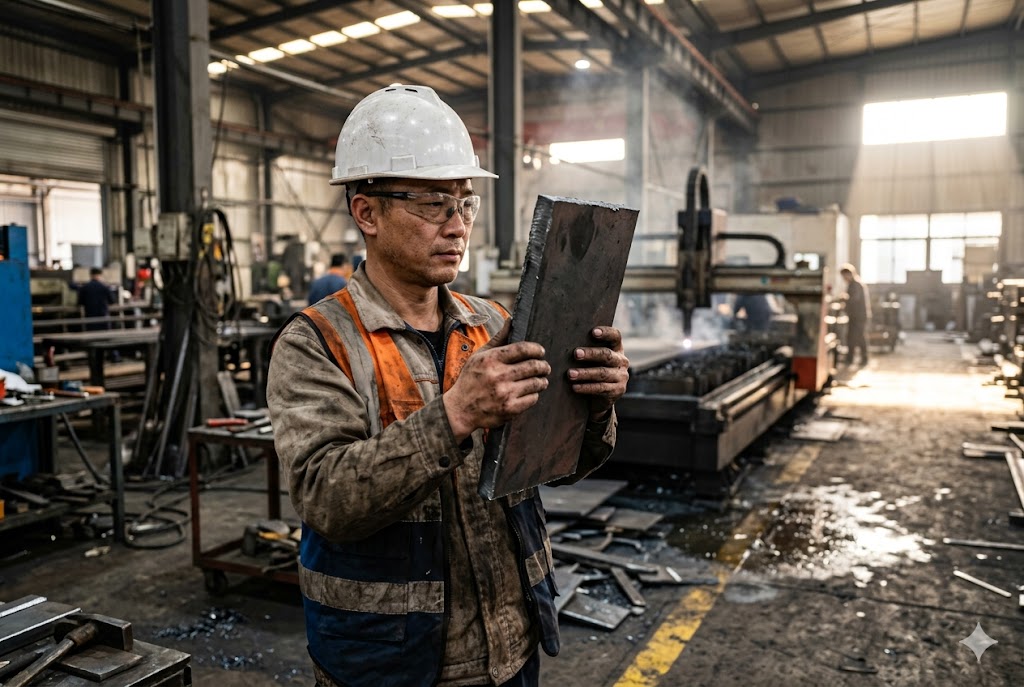
Material Type Comes First
Plasma cutting only works on electrically conductive metals. That means carbon steel, stainless steel, aluminum, and copper are all valid. But if your part is a composite panel, a rubber gasket, a ceramic component, or a carbon fiber bracket, plasma is immediately off the table.
Laser handles most metals well. Modern fiber lasers 1 — which most competitive Chinese fabricators now run — also cut reflective metals like copper and brass reliably. Older CO2 lasers struggled with those materials and risked beam back-reflection damage. If you are sourcing from China, ask your supplier whether they run a fiber laser or a CO2 machine. This one question tells you a lot about their equipment tier.
Waterjet cutting 2 cuts virtually anything. Metal, stone, glass, rubber, ceramics, composites — none of these cause a problem. If your order includes a mix of materials, waterjet is often the only process that handles the full range.
Thickness Drives the Next Decision
| Material Thickness | Recommended Process | Reason |
|---|---|---|
| Under 6 mm | Laser | Fast, precise, clean edge |
| 6 mm – 25 mm | Laser or Plasma | Depends on tolerance requirement |
| Over 25 mm | Plasma or Waterjet | Laser struggles to penetrate |
| Any thickness, heat-sensitive | Waterjet | Zero heat-affected zone |
Laser cutting performs best on thin-gauge sheet metal. It produces sharp corners, fine detail, and smooth edges that often need no secondary finishing. As thickness increases, laser speed drops and operating cost rises. At around 25 mm and above on steel, laser machines start to struggle.
Plasma steps in at that thickness range. It cuts fast and keeps cost low. The tradeoff is edge quality and a heat-affected zone (HAZ) 3 of 1–3 mm. That HAZ matters if the part goes straight to welding — oxidized plasma-cut edges on stainless steel contaminate the weld zone unless the edge is mechanically dressed first. That extra labor step can erase plasma's initial cost advantage on precision assemblies.
Tolerance Is the Final Filter
Waterjet introduces no heat, so there is no thermal expansion, no warping, and no micro-cracking. This makes it the most dimensionally accurate of the three processes. If your part has tight hole patterns or slots close to part edges — especially where the hole-to-edge distance is less than 1.5 times the material thickness — waterjet is the correct choice even at higher per-piece cost.
Laser is second in accuracy. Plasma is the least precise because its large HAZ can cause warping, particularly on thinner stock where heat has less mass to dissipate into.
Why Can the Cutting Method Change My Price, Edge Quality, and Production Speed?
Our operations team tracks actual production data across our supplier network. The cost difference between processes is not small — and it is not just the machine rate. It includes post-processing labor, consumable costs, scrap rate, and how many parts fit per sheet.
The cutting method directly affects three cost drivers: machine operating rate, edge quality after cutting, and how much secondary work the part needs before it moves to the next operation. Plasma is cheapest per hour but often requires grinding or dressing. Waterjet carries the highest operating cost due to abrasive consumption. Laser sits between the two and becomes most cost-effective for clean, high-volume runs on thin material.
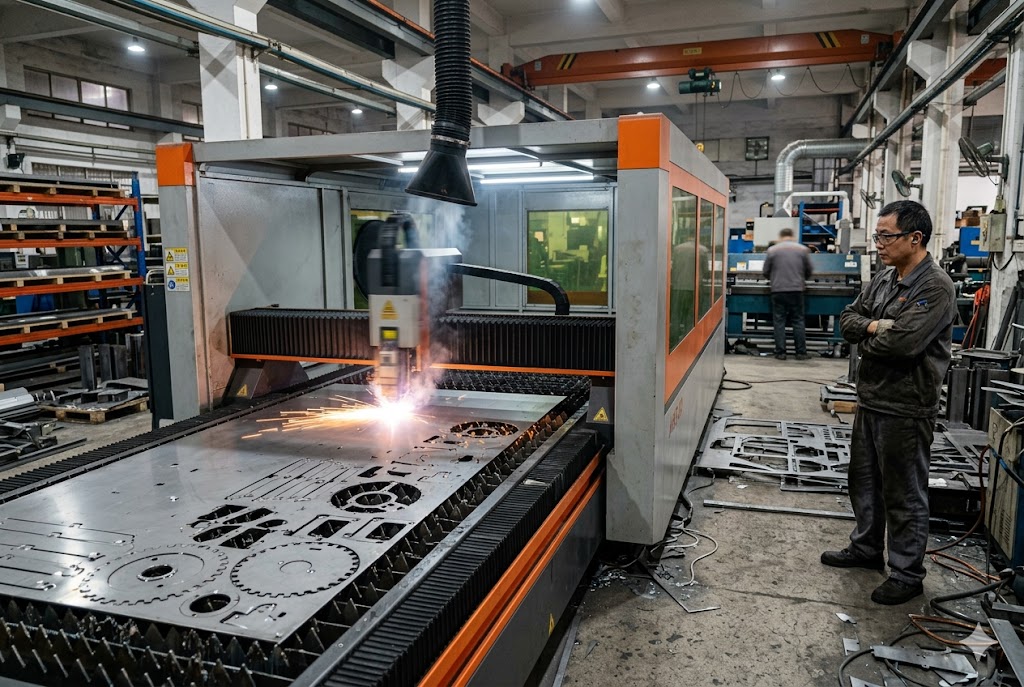
Machine Cost Is Only Part of the Picture
Plasma cutting machines 4 have low operating costs. The consumables — nozzles and electrodes — are inexpensive and widely available. This is why plasma dominates in heavy fabrication shops cutting structural steel.
Waterjet carries the highest operating cost of the three. The abrasive — typically garnet 5 — is consumed continuously and is not cheap. On a high-pressure waterjet system, abrasive alone can account for a significant share of the per-hour operating cost. Slow cutting speeds on thick material add to that.
Laser sits between the two. The machine itself is expensive to purchase, but operating costs per part are moderate. At high volumes on thin sheet metal, laser's speed advantage makes it the lowest cost-per-part option.
Edge Quality Changes Your Post-Processing Budget
| Process | Typical Surface Roughness (Ra) | Heat-Affected Zone | Common Post-Processing Need |
|---|---|---|---|
| Fiber Laser | Ra 1.6–6.3 µm | Minimal (< 0.5 mm) | Often none on thin sheet |
| Plasma | Ra 12–25 µm | 1–3 mm | Grinding before welding |
| Waterjet | Ra 1.6–3.2 µm | Zero | Minimal to none |
These numbers matter on the shop floor. A plasma-cut edge going into a precision weld assembly needs mechanical dressing. That step adds labor time and cost that does not appear on the cutting line item in the supplier's quote. When you compare quotes across processes, ask what post-processing is included in the price and what is quoted separately.
Production Speed Varies Dramatically by Thickness
On thin material — say, 3 mm carbon steel — laser cutting is fast. A modern 6 kW fiber laser can cut at several meters per minute with clean results. Plasma on the same thickness is not much faster and produces a worse edge. Laser wins on thin sheet.
Flip to 30 mm steel plate. Plasma cuts at roughly 1.5 meters per minute and still produces a usable part, albeit with a rough edge and significant HAZ. Waterjet on the same thickness runs approximately 10 times slower. But waterjet produces zero HAZ — a critical distinction for titanium, Inconel 6, thick aluminum, and composites where heat changes material properties.
Speed matters for lead time. If your order is 500 pieces of 4 mm mild steel brackets, laser cutting is almost certainly the fastest route through the shop. If it is 20 pieces of 40 mm titanium plates, waterjet may be the only viable process, and the slower speed is a fixed constraint, not a supplier shortcoming.
Which Cutting Process Is Best If I Care Most About Surface Finish and Minimal Heat Damage?
This is the question we hear most from clients sourcing aerospace brackets, medical device components, and precision fluid system parts. The answer depends on how much heat the material can tolerate and what surface finish the downstream process requires.
If surface finish and heat damage are your top priorities, waterjet is the correct choice — it produces zero heat-affected zone and a smooth cut face. For thin sheet metal where some minor heat input is acceptable, fiber laser cutting delivers the next best surface finish and is significantly faster. Plasma should not be chosen when surface finish or heat sensitivity is the primary concern.
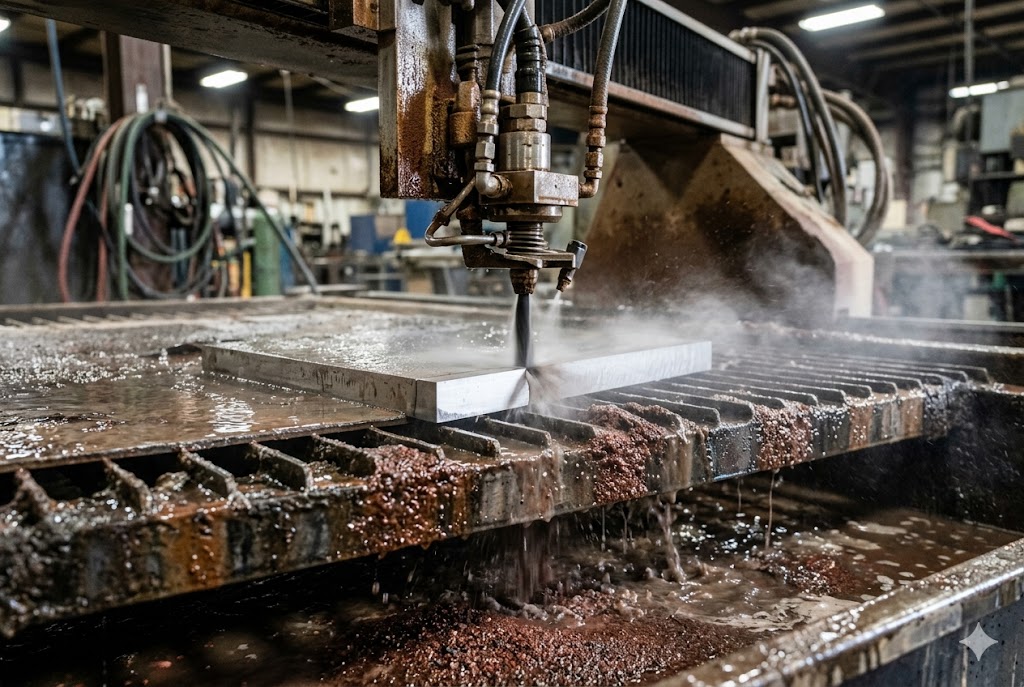
What Happens to Material at the Cut Face
Every thermal cutting process — laser and plasma both — puts heat into the material at the point of cut. That heat does three things: it changes the microstructure of the metal in the HAZ, it can cause warping due to differential expansion and contraction, and it leaves an oxide layer on the cut face that must be addressed before certain secondary operations.
Waterjet puts no heat into the part at all. The cutting action is purely mechanical — high-pressure water carrying abrasive particles erodes the material. The result is a cut face with no HAZ, no oxide layer, and no change to the base material's mechanical properties. For titanium and Inconel specifically, this matters enormously. Those alloys are used precisely because of their mechanical properties, and heat can alter those properties in the HAZ.
When Laser Is a Practical Alternative
For most sheet metal work under 12 mm, fiber laser cutting produces an excellent surface finish — typically Ra 1.6 to 6.3 µm — with a minimal HAZ of less than 0.5 mm. In practical terms, laser-cut stainless steel sheet at 3 mm often needs no edge finishing before powder coating 7 or passivation 8.
The caveat is material sensitivity. Hardened tool steels, certain titanium grades, and composites can develop micro-cracks or property changes in the laser HAZ. For those materials, waterjet remains the correct choice regardless of the cost premium.
Equipment Tier Determines Actual Outcome
When sourcing from China, the machine brand and wattage determine what surface finish you will actually receive — not just the process label. A supplier running a 6 kW Trumpf or Bystronic fiber laser will hold tighter tolerances and produce a better edge finish than one running a 2 kW domestic-brand machine.
| Equipment Tier | Typical Positional Accuracy | Edge Finish (Ra) |
|---|---|---|
| Premium fiber laser (Trumpf, Bystronic, TRUMPF, Amada) 6+ kW | ±0.1 mm | Ra 1.6–3.2 µm |
| Mid-range fiber laser 3–4 kW | ±0.15–0.2 mm | Ra 3.2–6.3 µm |
| Entry-level domestic laser 2 kW | ±0.3 mm | Ra 6.3–12 µm |
| Plasma (any tier, 30 mm steel) | ±0.5–1.0 mm | Ra 12–25 µm |
| Waterjet (tilt-compensated head) | ±0.1 mm | Ra 1.6–3.2 µm |
Both quotes on your RFQ might say "laser cutting." Ask your supplier for the machine brand and wattage. That one question tells you whether you are comparing equivalent capabilities or very different outcomes.
What Should I Ask My Supplier Before Approving a Cutting Method for Mass Production?
After two decades of managing supply chains for custom mechanical parts, our project managers have learned that the questions you ask before production approval matter more than the questions you ask after a rejection. Most quality problems are predictable if you ask the right things upfront.
Before approving a cutting method for mass production, ask your supplier to confirm: the machine type, brand, and wattage or pressure; the expected positional tolerance they will hold; whether post-cut edge dressing is included; how they handle the heat-affected zone for secondary operations like welding; and whether they have cut the same material and thickness before at this tolerance level.
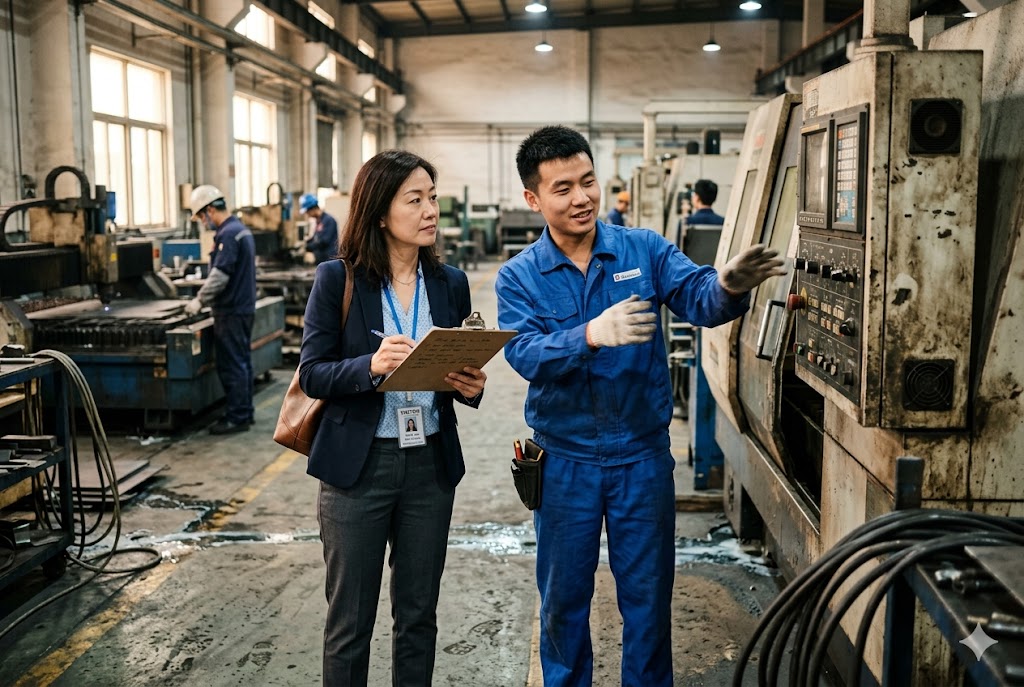
The Five Questions That Protect Your Order
Most purchasing managers focus on price and lead time. Those matter. But five technical questions — asked before you approve the cutting method — protect you from the expensive problems that happen mid-production or at incoming inspection.
Question 1: What machine are you running, and what is the wattage or cutting pressure?
This is the most important single question for laser cutting. As discussed above, machine tier determines achievable tolerance. Do not accept a vague answer like "we have a modern laser." Ask for the brand name, model, and rated power. For waterjet, ask whether the head is tilt-compensated — this directly affects kerf taper accuracy on thick material.
Question 2: What positional tolerance do you guarantee on this material and thickness?
Ask for a specific number in millimeters. A reliable supplier will give you one. If the answer is vague, that is information too.
Question 3: Is edge dressing or deburring included in your quote?
For plasma cutting especially, edge dressing is often not included as a default. If your parts go to welding or tight-fit assembly, you need to know exactly what condition the edges will be in and what labor is included.
Question 4: Have you run this material and thickness combination before at this tolerance?
First-article runs on unfamiliar material combinations carry real risk. If your supplier has not cut 15 mm duplex stainless steel 9 at ±0.15 mm before, that is relevant to your risk assessment. An honest supplier will tell you. Ask for sample parts or a first-article inspection plan 10 before committing to full volume.
Question 5: How do you handle the HAZ for parts going to welding or plating?
If your part will be welded after cutting, the supplier needs a plan for the HAZ — whether that means specifying laser over plasma, or requiring mechanical dressing of plasma-cut edges. If the part will be plated, HAZ oxide layers can interfere with adhesion. Get confirmation of the process sequence in writing.
What to Include in Your RFQ
A well-structured RFQ gets better responses and protects you if a dispute arises later. Include the following for any cutting project:
- Material specification and grade (not just "stainless steel" — specify 304, 316, 2205, etc.)
- Thickness in millimeters
- Tightest tolerance on the drawing (dimension and geometric)
- Downstream operations the cut part will undergo (welding, bending, plating, anodizing)
- Required edge condition (as-cut, deburred, ground, or ground and polished)
- Preferred cutting process if you have one, or open to supplier recommendation
When you provide this information upfront, a competent supplier can confirm the correct process and flag any concerns before production starts — not after.
Conclusion
Laser, plasma, and waterjet cutting each fill a specific role. Match the process to your material, thickness, tolerance, and downstream operations — then ask your supplier the right technical questions before production starts. That sequence prevents most problems before they happen.
Footnotes
1. Guide to selecting the right industrial fiber laser machine by rated power and capability. ↩︎
2. OMAX overview of how abrasive waterjet cutting systems work and what materials they cut. ↩︎
3. TWI explains the heat-affected zone and how it impacts base material microstructure. ↩︎
4. ESAB technical explanation of plasma cutter arc physics, consumables, and gas pressure. ↩︎
5. OMAX article on why garnet dominates as the abrasive of choice in waterjet cutting operations. ↩︎
6. AZoM overview of Inconel 718 nickel superalloy properties, strength range, and aerospace use. ↩︎
7. Products Finishing guide to the powder coating process, from pretreatment through electrostatic application. ↩︎
8. Products Finishing explanation of stainless steel passivation and how it forms a corrosion-resistant surface layer. ↩︎
9. Outokumpu overview of duplex stainless steel grades, including 2205, their strength and corrosion properties. ↩︎
10. Quality Magazine primer on first article inspection — what it is, when it's required, and how it works. ↩︎