Skip to main content Skip to footer
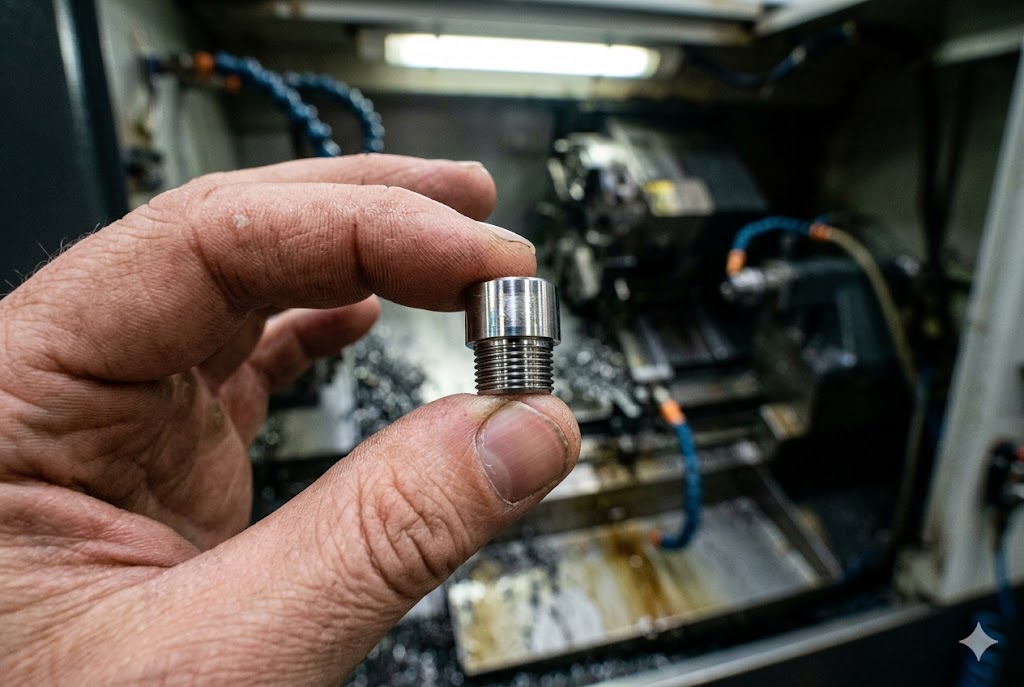
Every time a client sends us a drawing calling out Ti-6Al-4V, our production team pauses — not because we can't machine it, but because most buyers don't understand why the quote comes back so high.
Ti-6Al-4V is one of the most difficult and expensive alloys to run on a Swiss-type CNC lathe. Its low thermal conductivity, aggressive work-hardening, and chip control challenges combine to push per-piece costs to approximately 6× that of free-machining steel — and that number climbs fast when tolerances are tight.
The good news is that these costs are predictable and manageable — if you work with a factory that understands the material. Here is what you need to know before placing an order.
Why Does Titanium Alloy Machining Require Lower Cutting Speeds and More Frequent Tool Changes?
Buyers sometimes push back on long lead times for titanium parts. We get it — but the physics of this alloy leave no room for shortcuts.
Ti-6Al-4V must stay below 90 m/min (300 SFM). The alloy conducts heat at one-seventh the rate of aluminum, trapping heat at the cutting edge instead of letting it escape through the chip. The result: thermal failure, diffusion wear, and built-up edge — the root causes of short tool life.
Heat Is the Root Problem
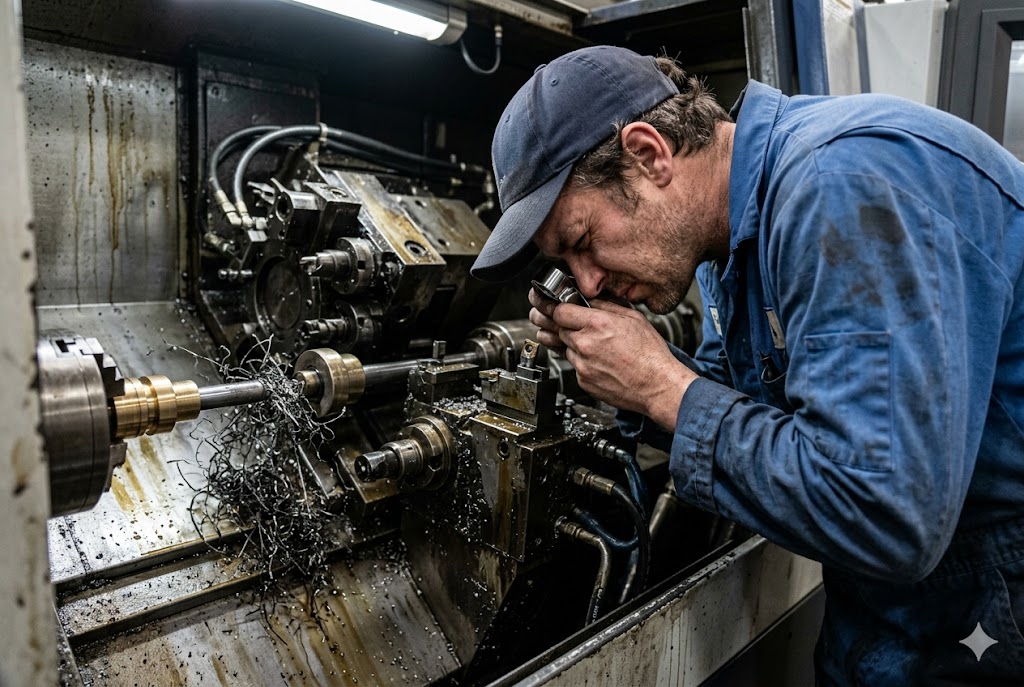
Most metals shed heat through the chip. Aluminum does this so well that cutting speeds above 2,500 m/min are routine. Titanium cannot. As documented in machinability research on Ti-6Al-4V 1, low thermal conductivity impedes heat transfer out of the cutting zone, concentrating extreme temperatures at the tool-chip interface. This softens the insert binder, promotes diffusion wear, and welds workpiece material onto the cutting edge — a phenomenon known as built-up edge. When it breaks away, it pulls insert material with it. The tool is now damaged, and the next cut generates even more heat. It is a fast-moving failure cycle.
Our engineers track insert life carefully on Ti-6Al-4V Swiss jobs. A carbide insert that runs 200–300 parts on 303 stainless may last only 30–60 parts on Ti-6Al-4V at comparable geometry. That multiplier is built into every quote we issue for this material.
Work-Hardening Makes Undercutting Dangerous
Ti-6Al-4V has a strong tendency to work-harden. If the feed rate drops too low, the tool rubs rather than cuts. Rubbing generates heat without removing material efficiently. The surface work-hardens in real time, making the next pass even harder to machine.
To avoid this, our process engineers set a minimum chip thickness of approximately 0.003" (0.076 mm). The tool must be always cutting, never skating. This sounds simple, but maintaining that minimum feed across all the micro-features typical of Swiss turned parts — undercuts, cross-holes, fine threads — requires careful parameter planning for each feature.
Tool Change Intervals on a Swiss Machine
On a Swiss lathe, tool changes carry extra disruption. The machine is often running 10–20 tools simultaneously in a tight envelope. Swapping an insert means stopping the spindle, re-touching the tool, and re-verifying offsets before restarting. On a high-volume stainless job, you might change tools twice per shift. On Ti-6Al-4V, tool changes can occur every 30–90 minutes depending on part complexity and diameter.
| Material | Typical Cutting Speed | Relative Tool Life vs. Ti-6Al-4V | Notes |
|---|---|---|---|
| 6061 Aluminum | 2,500+ m/min | 10–15× longer | Excellent heat dissipation |
| 303 Stainless | 150–250 m/min | 5–8× longer | Work-hardens but less severely |
| 316L Stainless | 100–180 m/min | 3–5× longer | Lower sulfur, harder to machine than 303 |
| Ti-6Al-4V | ≤90 m/min | Baseline (1×) | Heat concentration drives all limits |
| Ti CP Grade 2 | ≤80 m/min | ~0.8× | Softer but similar thermal issues |
This table explains why titanium jobs take longer to quote, longer to set up, and longer to run. Every parameter decision has a consequence.
How Much More Expensive Is Swiss CNC Machining of Ti-6Al-4V Compared to 316L Stainless Steel?
Clients usually expect titanium to cost more. What surprises them is how much more, and where the cost actually comes from.
Swiss CNC machining of Ti-6Al-4V typically costs 3–5× more per piece than equivalent 316L stainless steel parts when all factors are included: raw material price, longer cycle times, higher tooling consumption, and increased process overhead such as high-pressure coolant maintenance and guide bushing replacement.
Breaking Down the Cost Stack
The cost premium is not a single line item. It comes from at least five independent sources that compound on each other.
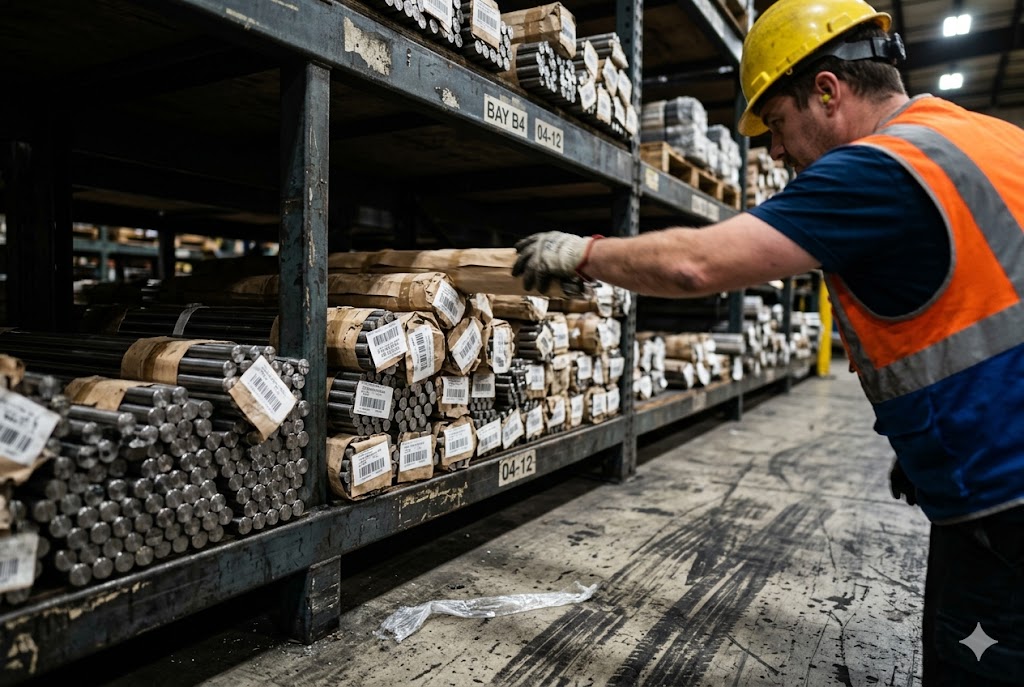
Raw material. Precision-ground Ti-6Al-4V bar stock in Swiss collet sizes (typically 1–32 mm diameter, close diameter tolerance) costs 4–8× more per pound than 303 stainless steel and roughly 3–5× more than 316L. This is before a single chip is made. The bar must be ground to tight diameter tolerance because Swiss lathes rely on the bar feeding through a guide bushing — oversized or out-of-round bar causes feeding problems and part rejection. As one Swiss machining guide on guide bushing tolerances 2 explains, titanium stock in particular must be ground because it tends to be inconsistent and somewhat out of round.
Cycle time. Lower cutting speeds mean longer machine time per part. A part that takes 90 seconds in 316L may take 4–6 minutes in Ti-6Al-4V. At the same machine hourly rate, that time difference directly multiplies the machining cost per piece.
Tooling consumption. As discussed in the previous section, insert life drops by 3–8× compared to 316L. Carbide inserts for titanium machining are not cheap, and frequent changes add labor time as well.
Coolant system overhead. Ti-6Al-4V Swiss turning requires high-pressure coolant (HPC) delivered through the tool at 1,000+ PSI 3. This is not optional — it is a process requirement. Factories without through-tool HPC capability cannot quote this material responsibly. HPC systems require maintenance, filtration, and pressure monitoring. That overhead is factored into machine hour rates at well-equipped shops.
Guide bushing wear. Titanium is abrasive. It degrades the guide bushing in a Swiss lathe faster than steel or aluminum. More frequent bushing inspection and replacement is a hidden but real cost that reputable factories include in their overhead — and that low-cost shops often ignore until it shows up as dimensional drift in the middle of a production run.
The 6× Factor vs. Free-Machining Steel
When benchmarked against 12L14 free-machining steel — the baseline for Swiss turning economics — Ti-6Al-4V carries an all-in machining cost factor of approximately 6×. Compared specifically to 316L stainless, the factor is lower (3–5×) because 316L is itself more expensive and slower to machine than free-machining steel.
| Cost Driver | 316L Stainless | Ti-6Al-4V | Premium Factor |
|---|---|---|---|
| Raw material (precision ground bar, per kg) | ~$8–12 | ~$35–60 | 3–5× |
| Typical cutting speed | 100–180 m/min | ≤90 m/min | 0.5–0.9× speed |
| Relative cycle time per part | 1× | 3–6× | Higher |
| Insert changes per 100 parts | 0.5–1 | 3–6 | 4–8× tooling cost |
| HPC system required? | Recommended | Mandatory | Added overhead |
| Guide bushing wear rate | Normal | Elevated | Hidden cost |
These numbers are ranges, not guarantees. Part geometry matters enormously. A simple straight-turned pin in Ti-6Al-4V is far less costly than a complex multi-feature part with internal bores, threads, and cross-holes. But the ranges above give buyers a realistic starting point for budget planning before requesting formal quotes.
What Tool Materials and Coatings Do Chinese Factories Use for Titanium Swiss-Turned Parts?
This is a question we encourage every buyer to ask their Chinese supplier directly — because the answer reveals a great deal about that factory's actual experience with titanium.
For Ti-6Al-4V Swiss turning, uncoated or AlTiN-coated micro-grain carbide is the correct tooling choice. Standard TiN and TiCN coatings — common on stainless and steel jobs — are counterproductive here. Titanium's chemical affinity for titanium-based coatings accelerates diffusion wear and built-up edge, shortening insert life rather than extending it.
Why Coating Chemistry Matters for Titanium
It seems logical that TiN (titanium nitride) coating would work well on titanium parts. In practice, the opposite is true. Titanium the alloy has a very high chemical affinity for titanium the element in the coating. At the elevated temperatures generated at the tool-chip interface during machining, this affinity drives a diffusion reaction — workpiece material bonds to the coating, builds up, and tears away with coating fragments attached. The insert fails faster, not slower, than an uncoated tool.
The same problem applies to TiCN (titanium carbonitride). Both of these coatings are excellent for steel and stainless work. They are the wrong choice for titanium.
Recommended Tooling for Ti-6Al-4V
Uncoated micro-grain carbide is the baseline recommendation. The fine grain structure gives the cutting edge toughness and sharpness. Without a reactive coating, diffusion wear is minimized. Tool life is still shorter than on stainless, but it is predictable and manageable.
AlTiN (aluminum titanium nitride) is the preferred coated option. As described in the Wikipedia entry on titanium aluminium nitride coatings 4, AlTiN exhibits intense oxidation resistance starting at approximately 800 °C — roughly 300 °C higher than TiN — because the high aluminum content creates an aluminum oxide surface layer that acts as a thermal barrier. AlTiN is the standard choice in our factory for Ti-6Al-4V production runs where a coated insert offers any benefit over uncoated.
PCD (polycrystalline diamond) inserts can be used for specific finishing operations but are generally not cost-effective for Swiss turning geometries and are rarely necessary except in very high-volume applications.
What to Ask Your Supplier
If a Chinese factory quotes Ti-6Al-4V Swiss parts without specifying tooling, ask directly: what insert grade and coating are you running? If the answer is TiN or TiCN, that is a process flag. It does not mean the factory cannot machine titanium, but it suggests they may be adapting a stainless setup rather than running a purpose-built titanium process.
| Coating / Grade | Suitable for Ti-6Al-4V? | Reason |
|---|---|---|
| Uncoated micro-grain carbide | ✔ Yes — preferred | No diffusion reaction; predictable tool life |
| AlTiN coating | ✔ Yes — good option | Al₂O₃ barrier at temp; thermal insulation |
| TiN coating | ✘ No | High Ti affinity → accelerated diffusion wear |
| TiCN coating | ✘ No | Same chemical affinity problem as TiN |
| PCD | Situational | Finishing only; not typical for Swiss geometry |
| Cermet | Not recommended | Poor toughness at interrupted cuts |
Chip Control: The Swiss-Specific Challenge
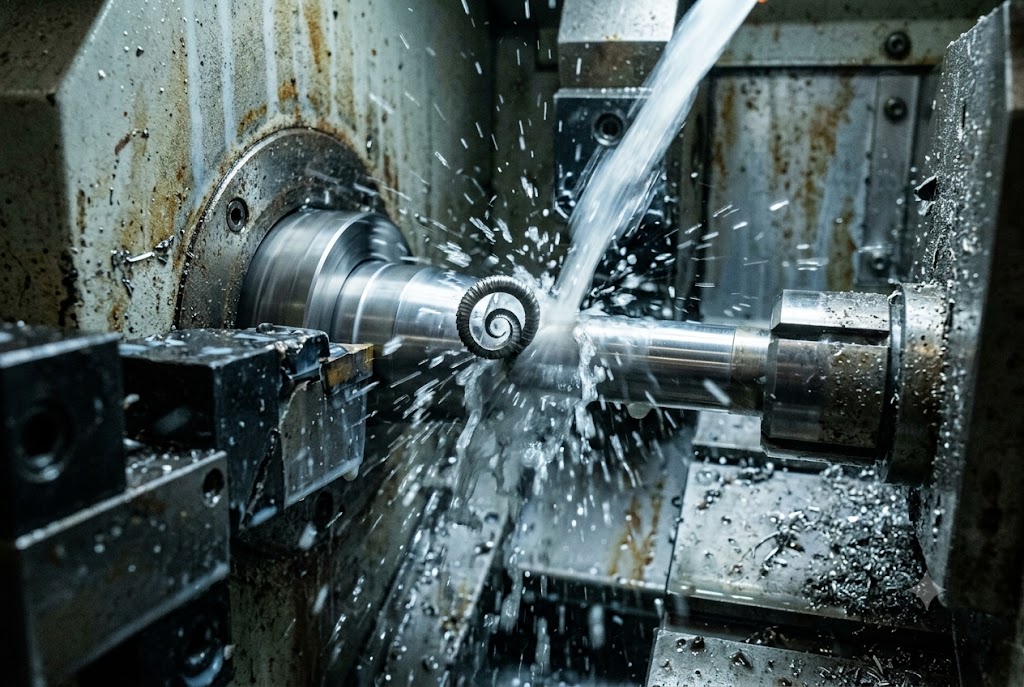
Tooling choice also affects chip morphology. Ti-6Al-4V produces long, stringy, tough chips that easily form bird's-nest tangles around the workpiece and tooling in the confined Swiss machine envelope. These tangles damage part surfaces, jam sub-spindle collets, and cause unplanned downtime.
The correct chip form target is a tight "6" or "9" curl that breaks cleanly. Achieving this requires a combination of aggressive feed rates (to maintain chip thickness above the minimum), appropriate insert chip-breaker geometry, and high-pressure coolant aimed precisely at the chip formation zone 5. Factories without active chip control protocols on Ti-6Al-4V will see unacceptable scrap rates on complex Swiss parts.
Can Chinese Factories Meet the Strict Titanium Machining Standards Required for Medical Implants?
This is the question that separates a general sourcing conversation from a serious qualification discussion. Our answer is: some can, most cannot, and the difference is entirely in documentation and process controls — not machining skill alone.
Chinese factories can machine Ti-6Al-4V to medical implant tolerances. The barrier is traceability, not machining skill. Suppliers must provide mill test reports confirming AMS 4928 / ASTM B348 Gr5 compliance from a VAR-melted heat — documentation that Chinese GB/T 2965 TC4 bar cannot reliably provide for Western OEM quality systems.
Dimensional Capability Is Achievable
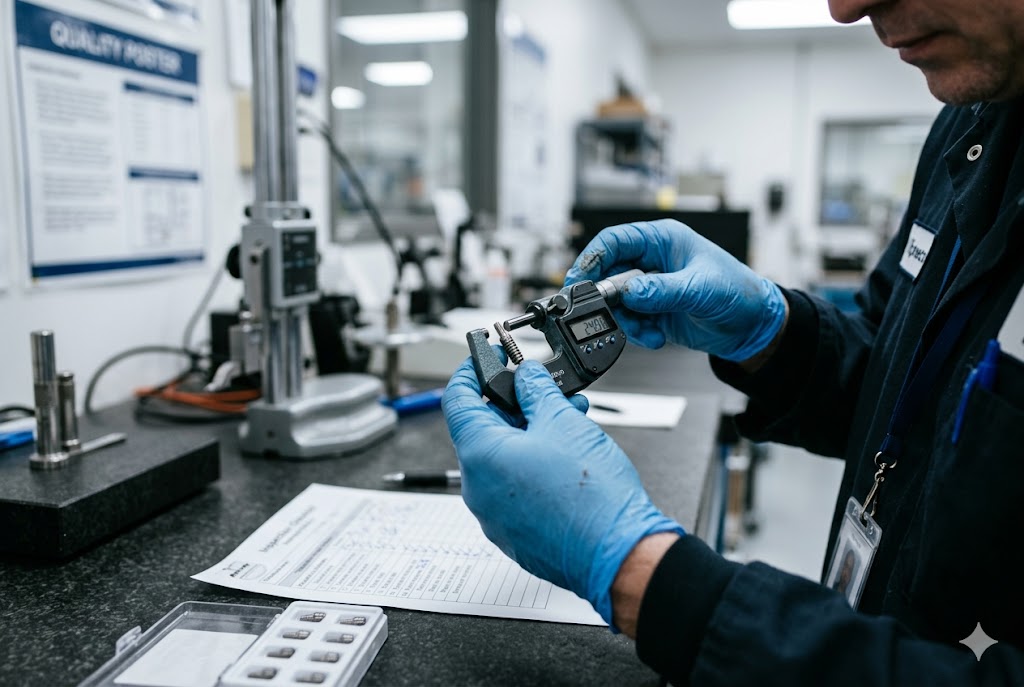
Swiss-type CNC lathes in qualified Chinese factories can routinely achieve ±0.005 mm (±0.0002") on turned diameters, Ra 0.4–0.8 µm surface finish on titanium, and thread accuracy conforming to ISO 965 standards. The machines are capable. The issue is not the lathe — it is everything surrounding the lathe.
Material Traceability Is the Real Barrier
Medical device OEMs require titanium bar stock to be traceable to a specific melt heat, produced by vacuum arc remelting (VAR) 6, and certified to AMS 4928 7 or ASTM B348 Grade 5 8. These certifications require third-party mill test reports with full chemistry analysis and mechanical property data.
Chinese domestically produced GB/T 2965 TC4 bar is nominally the same alloy composition as Ti-6Al-4V. But the melt practice, chemistry tolerances, and inspection documentation are not equivalent to AMS 4928 requirements. For general industrial use, TC4 bar is fine. For medical implants or aerospace structural parts traceable to a Western OEM quality plan, it is not acceptable — not because of the chemistry alone, but because the documentation chain cannot satisfy audit requirements.
What Qualified Chinese Suppliers Do Differently
The Chinese factories we partner with for medical-adjacent titanium work do the following:
- Source bar stock from qualified Western or Japanese mill origins (ATI, VSMPO, Timet, Kobe Steel) with full COC and MTR documentation
- Verify bar lot chemistry against AMS 4928 composition and mechanical property requirements 9 before releasing to production
- Maintain traceability from bar heat number through to finished part shipping lot
- Run first article inspection (FAI) reports with dimensional data, surface finish measurements, and material verification on every new part number
The Substitution Risk Is Real
There is a specific risk when sourcing Ti-6Al-4V Swiss parts from China without tight material controls: unintentional or intentional substitution of domestic TC4 bar for certified AMS 4928 material. This substitution may not affect appearance or short-term dimensional compliance, but it breaks the audit trail and can introduce microstructural variability affecting fatigue life — a critical issue for implants and aerospace hardware.
Our sourcing process always requires mill test reports from an approved heat origin as a delivery document, not an optional supplement. If a supplier cannot produce this documentation before shipment, the parts do not ship.
| Requirement | General Industrial Use | Medical / Aerospace Use |
|---|---|---|
| Bar standard | GB/T 2965 TC4 acceptable | AMS 4928 / ASTM B348 Gr5 mandatory |
| Melt practice | Standard or EBM | VAR (vacuum arc remelting) required |
| MTR / COC | Recommended | Mandatory; must include full chemistry + mechanicals |
| Heat traceability | Not always required | Required through to finished part lot |
| Source origin | Domestic Chinese mills acceptable | Western or qualified Japanese mill preferred |
| First Article Inspection | Situational | Mandatory on every new part number |
Our Recommendation for Medical Buyers
If your end-use is a medical device or Class III implant, qualify the factory on its documentation system first. Ask for a sample MTR from a recent titanium job. Ask which mill the bar came from. Ask for their FAI report format. The guide bushing and process controls 10 on a Swiss lathe can hold the tolerance — what you are really auditing is whether the documentation chain is airtight. If those documents are clear, traceable, and match Western OEM expectations, the factory's machining capability is likely sufficient. If the documentation is unclear or the bar origin is unspecified, that is the actual risk — not whether their Swiss lathes can hold the tolerance.
Conclusion
Ti-6Al-4V is a premium material that demands a premium process. Lower cutting speeds, mandatory high-pressure coolant, specific tooling chemistry, and strict material documentation are not negotiable. Buyers who understand these requirements choose suppliers who have mastered them — and avoid costly surprises mid-production.
Footnotes
1. Peer-reviewed research on why Ti-6Al-4V's low thermal conductivity concentrates heat at the cutting zone, accelerating tool wear. ↩︎
2. Industry guide explaining why titanium bar stock must be centerless ground for reliable Swiss lathe guide bushing performance. ↩︎
3. Technical overview of why 1,000+ PSI high-pressure coolant is the industry standard for titanium machining, not an optional upgrade. ↩︎
4. Wikipedia entry detailing AlTiN coating chemistry, oxidation resistance threshold, and superiority over TiN for high-temperature cutting applications. ↩︎
5. Harvey Performance resource on chip evacuation strategies for titanium, including the role of high-pressure coolant in preventing chip recutting. ↩︎
6. Wikipedia overview of the vacuum arc remelting (VAR) process and its critical role in achieving homogeneity for aerospace and medical titanium alloys. ↩︎
7. SAE International page for AMS 4928, the primary aerospace specification for Ti-6Al-4V bars, wire, and forgings in the annealed condition. ↩︎
8. Titanium.com reference page for ASTM B348, the standard specification governing titanium and titanium alloy bars and billets including Grade 5. ↩︎
9. Detailed technical reference covering AMS 4928 composition limits, mechanical property requirements, and MTR documentation expectations for procurement. ↩︎
10. Metal Cutting Corporation guide explaining how the Swiss lathe guide bushing eliminates deflection to achieve precision on small-diameter, high-aspect-ratio parts. ↩︎