Skip to main content Skip to footer

Every week, our sourcing team reviews dozens of CNC quotes sent to clients. We see the same problem repeat itself: buyers approve a quote, then get hit with charges they never saw coming — tooling fees, inspection costs, tariff stacks, and broker bills that quietly balloon the total.
A CNC machining quote from China typically includes raw material cost, machine time, setup and programming fees, and basic packaging. However, surface finishing, inspection documentation, tooling for custom cutters, freight, import duties, and customs broker fees are often quoted separately or omitted entirely — and together they can add 40–120% on top of the base part price.
Understanding each cost layer before you approve a quote is not optional. It is the difference between a profitable import order and a costly surprise at the port.
How Can I Tell Which Costs Are Included in My CNC Quote?
When a new quote lands in our inbox, the first thing we do is read every line carefully — not just the unit price. Vague quotes that show only a total per-part figure are almost always incomplete, and chasing down the missing pieces wastes everyone's time.
A CNC quote that clearly lists raw material grade, machine hours, setup fees, finishing, and packaging line by line is almost always more complete than one showing only a unit price. If any of these line items are missing, ask the supplier to itemize them before you respond — silence on a line item usually means it will appear later as an extra charge.

The Core Line Items Every CNC Quote Should Show
A well-structured CNC quote will cover at minimum four areas: material, machine time, setup, and packaging. Here is what each one means in practice.
Raw Material Cost
Material is almost always the biggest single driver of part price. The alloy grade, billet size, and scrap volume all affect cost. Aluminum 6061 vs. 7075 1 is the most common comparison buyers encounter: 6061 is the most affordable structural alloy, while 7075 costs roughly 30–50% more. Stainless steel 316L can cost three to five times more than 6061 per kilogram. Titanium Grade 5 (Ti-6Al-4V) can cost ten times more. When you receive a quote, confirm the exact alloy and specification. A supplier quoting "stainless steel" without specifying 303, 304, or 316L is leaving the door open to substitute a cheaper grade after approval.
Machine Time
Machine time is charged at an hourly rate and multiplied by the cycle time per part. In China, 3-axis CNC milling typically runs $15–$30 per hour at mid-tier factories. 4-axis work rises to $30–$50 per hour. 5-axis simultaneous machining can reach $60–$80 per hour. Complex geometry — thin walls, deep pockets, tight tolerances — all extend cycle time and raise the machine-time portion of your quote.
| Operation Type | Typical China Factory Rate (USD/hr) |
|---|---|
| 3-axis CNC milling | $15 – $30 |
| 4-axis CNC milling | $30 – $50 |
| 5-axis simultaneous | $60 – $80 |
| CNC turning (lathe) | $12 – $25 |
| EDM (wire or sinker) | $20 – $45 |
Setup and CAM Programming
Setup fees cover fixture design, toolpath programming in CAM software, and trial cuts before production begins. On prototype or low-volume orders (fewer than 50 parts), setup can represent 20–40% of the total quoted price. As order quantity grows, this cost is amortized — meaning it gets smaller per part. Always ask: "Is the setup fee a one-time charge or included in the unit price?" The answer will tell you how the supplier has structured the quote.
Packaging
Standard export packaging (foam, cardboard, wooden crates for heavy parts) is usually included in Chinese factory quotes. Ask specifically if your parts require custom foam inserts, anti-rust VCI poly bags 2, or humidity indicators. These are add-ons and are rarely included by default.
A Quick Checklist Before You Reply to Any Quote
Before sending your purchase order, run through this list:
| Line Item | Included? | Notes |
|---|---|---|
| Raw material (alloy + grade) | Confirm | Ask for material cert |
| Machine time (3/4/5-axis) | Confirm | Check cycle time assumptions |
| Setup and programming | Confirm | One-time or amortized? |
| Surface finishing | Often extra | See next section |
| Inspection / QC documentation | Often extra | CMM? COC? FAIR? |
| Custom tooling | Often extra | Form cutters, EDM electrodes |
| Packaging | Usually included | Confirm for sensitive parts |
| Freight and insurance | Depends on Incoterms | Check EXW vs FOB vs DAP |
| Import duties and tariffs | Almost never included | Critical — see later section |
Should I Ask If Tooling, Inspection, and Packaging Are Quoted Separately?
Yes — always. In our experience managing CNC projects across dozens of factories in China and Vietnam, these three cost areas cause more post-approval disputes than any other. A supplier that quotes tooling, inspection, and packaging as part of the unit price is giving you a different product than one who strips them out.
Tooling for standard cutters is usually absorbed into the machine rate, but custom form cutters, carbide profiles, and EDM electrodes are nearly always a separate one-time charge. Full CMM inspection reports, First Article Inspection packages, and material certifications are add-ons that typically cost $30–$200 per project and must be requested explicitly in writing before the order is placed.
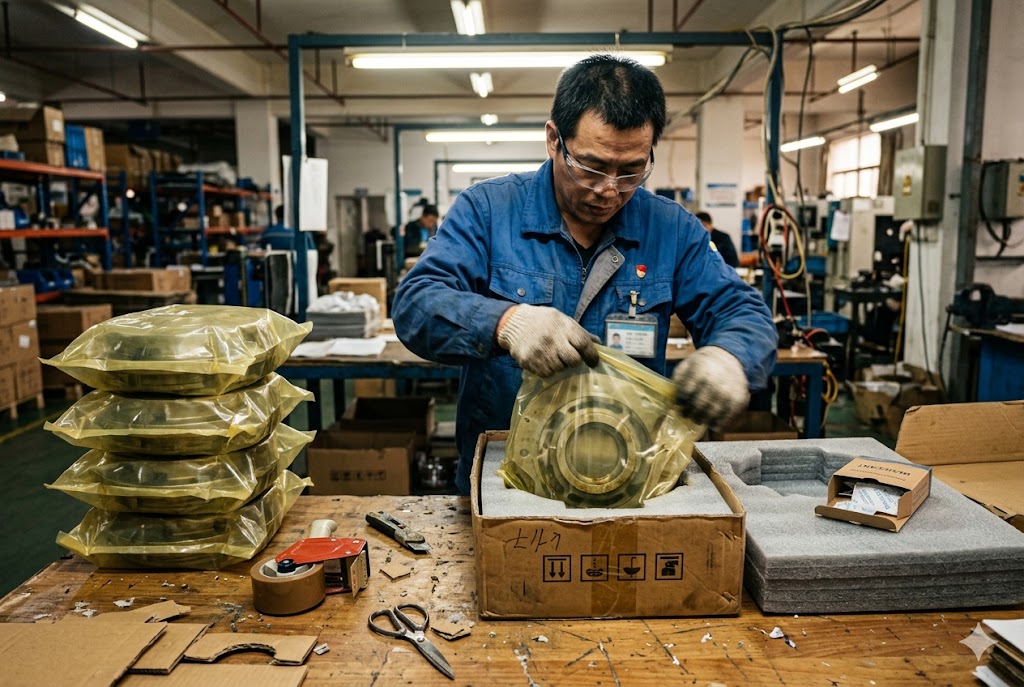
Tooling Costs: Standard vs. Custom
Standard tooling — end mills, drills, taps, turning inserts — is consumable. Chinese factories stock these in bulk and absorb the cost into their hourly machine rate. You are not usually billed a separate line item for a standard 6mm end mill.
Custom tooling is a different story. If your part requires a form cutter with a specific radius profile, a carbide step drill ground to a custom diameter, or an EDM electrode shaped to match a complex cavity, that tooling must be manufactured or ordered before production can start. This is a genuine one-time cost, and a reputable supplier will list it clearly. Common custom tooling charges range from $50 to $800 depending on complexity.
Inspection and Quality Documentation
This is one of the most overlooked cost areas in CNC importing. Standard factory inspection means a technician checks key dimensions with calipers and a micrometer. That is often included in the quote. But if you need any of the following, you must request them in writing and expect an additional charge:
| QC Document Type | Typical Additional Cost |
|---|---|
| Full CMM dimensional report 3 | $80 – $200 per project |
| First Article Inspection (FAIR/AS9102) 4 | $100 – $300 per project |
| Material Test Report (MTR / mill cert) | $30 – $80 per heat |
| Certificate of Conformance (COC) | $20 – $50 per order |
| Surface roughness report (Ra/Rz) | $30 – $60 per project |
If your downstream customer — a manufacturer or OEM — requires these documents, you need to specify them at the RFQ stage, not after the parts are produced. Asking for a CMM report after parts are shipped is too late and too expensive.
Packaging: Standard vs. Specialized
Most Chinese CNC suppliers include basic export-grade cardboard boxing and bubble wrap in their quoted price. This is fine for robust steel or aluminum parts in non-critical applications. But for precision parts with tight surface finish requirements, thin-walled components that scratch easily, or parts that will sit in a humid container for 30 days crossing the Pacific, standard packaging is not enough.
Ask about:
- VCI (Volatile Corrosion Inhibitor) poly bags for steel parts
- Custom foam inserts for optical or precision-ground surfaces
- Desiccant packets and humidity indicators for long ocean transit
- Individual part tagging or barcode labeling
These are always add-ons. Budget $0.20–$2.50 per part depending on requirements.
Design-for-Manufacturability Revision Cycles
One more hidden cost worth flagging here: DFM revision cycles. If your CAD files are incomplete — missing tolerances, ambiguous surface finish callouts, or conflicting 2D/3D data — the factory will come back with questions. Multiple revision rounds delay your quote approval and, in some cases, trigger a requote. Submitting fully toleranced 2D drawings with GD&T callouts 5 alongside 3D STEP files at the RFQ stage eliminates most of these delays and protects your pricing.
How Do Shipping Terms Change My Total Quoted Cost?
Incoterms are not just legal jargon. They directly control which party pays for each leg of the shipment and, just as importantly, which party is responsible if something goes wrong. We walk every new client through this conversation before they approve a supplier's first quote, because the difference between EXW and DAP on a $20,000 order can easily be $3,000–$6,000 in unexpected freight and clearance costs.
The Incoterms term on your CNC quote determines which costs the supplier includes versus which costs shift to you. EXW excludes all freight, export clearance, and insurance. FOB includes export clearance and loading. CIF adds freight and marine insurance to the destination port. DAP and DDP go further, covering inland delivery and — for DDP only — import duties and taxes on your behalf.
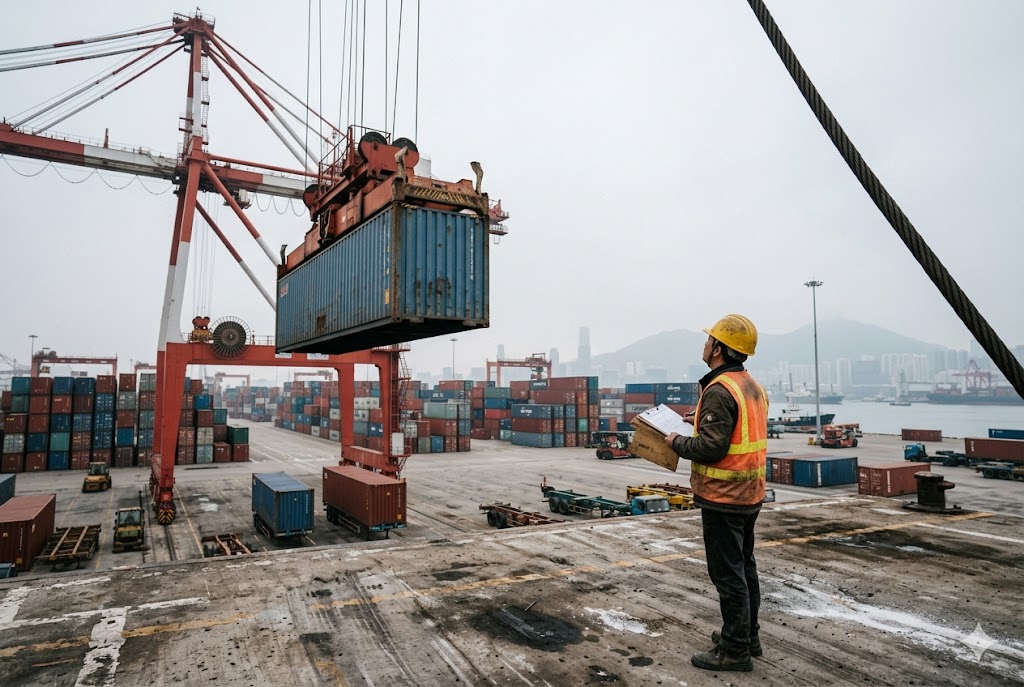
The Five Incoterms You Will Encounter Most Often
Most Chinese CNC suppliers quote EXW or FOB. Some trade companies and sourcing agents quote CIF or DAP. DDP is rare from factories directly but is sometimes offered by freight forwarders or trading companies. The Incoterms 2020 rules 6 published by the International Chamber of Commerce govern how these terms are interpreted in commercial contracts.
| Incoterm | Supplier Covers | Buyer Covers |
|---|---|---|
| EXW (Ex Works) | Nothing (packs goods at factory gate) | All freight, export docs, import, duties |
| FOB (Free On Board) | Export clearance + loading at port | Ocean freight, insurance, import, duties |
| CIF (Cost Insurance Freight) | Ocean freight + marine insurance to destination port | Import customs clearance, duties, inland delivery |
| DAP (Delivered At Place) | All freight to named destination | Import duties and taxes, customs clearance |
| DDP (Delivered Duty Paid) | Everything including import duties and delivery | Nothing |
Why EXW Quotes Look Cheapest But Often Are Not
EXW quotes show the lowest number because they exclude everything after the factory gate. When you add a China-side forwarder pickup ($80–$200), export customs clearance ($100–$200), ocean freight ($300–$1,200 for an LCL shipment), marine insurance (0.3–0.5% of cargo value), US port handling and destination charges ($200–$400), customs broker fee ($200–$400), and import duties (see next section), the total freight and compliance cost on a small-to-medium CNC order often exceeds $1,500–$2,500.
When DDP Makes Sense
DDP simplifies your cash flow and removes freight and duty risk. However, DDP quotes from Chinese suppliers embed their freight cost estimates — which may not reflect current spot rates — and they control the choice of carrier and forwarder. You lose visibility and control. For high-volume, recurring orders, negotiate FOB and manage your own freight. For one-time prototype orders where simplicity matters more than cost optimization, DDP or DAP is a reasonable choice.
Rush Production and Lead Time Surcharges
Shipping terms also interact with lead time. If you need parts in 10 days instead of 25, air freight replaces ocean freight. Air freight from China to the US typically costs 5–8 times more than ocean LCL freight per kilogram. On a 50 kg shipment, that swing can be $1,500–$3,000 in freight alone. Ask every supplier to quote standard lead time and expedited lead time separately so you can see the actual surcharge rather than an embedded premium in the unit price.
What Hidden Charges Should I Clarify Before I Approve the Quote?
This is where importers lose the most money. The charges below are not fraudulent — they are legitimate costs that most Chinese factories simply do not include in a standard quote unless specifically asked. Our team maintains a pre-approval checklist for every order we manage, and we share a condensed version of it here.
The most common hidden charges on CNC import orders from China are: stacked US import tariffs (which can exceed 95% of declared value for metal parts as of 2025), customs broker fees, surface finishing add-ons, rush production premiums embedded in unit price, and DFM engineering revision charges triggered by incomplete CAD files. Clarifying all of these in writing before PO approval is the single most effective cost-control step a purchasing manager can take.

US Import Tariff Stacking: The Biggest Surprise of 2025
As of May 2025, the tariff landscape for Chinese CNC parts has changed significantly. The US $800 de minimis exemption 7 no longer applies to shipments from China or Hong Kong. Every commercial CNC part shipment now requires a formal customs entry. For metal parts, the potential duty stack looks like this:
| Duty Type | Rate | Applies To |
|---|---|---|
| Section 301 tariff (trade war) 8 | 25% | Most machined parts from China |
| Reciprocal baseline tariff | 10% | Broad category of Chinese goods |
| IEEPA fentanyl surcharge | 10% | Shipments from China |
| Section 232 (steel/aluminum derivative) | 50% | Parts with significant raw steel or aluminum value |
| Standard MFN tariff | 3.5 – 6% | Base rate, always applies |
For a steel CNC part, the combined duty exposure can reach 95–100% of declared customs value. This is not an edge case. It is the current baseline for most custom machined steel or aluminum parts sourced from mainland China.
Surface Finishing: Always an Add-On
Surface finishing is almost never included in a base CNC machining quote. The difference between Type II and Type III anodizing 9 is a good example: basic Type II clear anodize on aluminum is among the cheapest options at $0.50–$2.00 per part for small components, while hard-coat Type III anodize can cost two to four times more per part. Electroless nickel plating or PTFE-impregnated finishes similarly carry their own pricing structures. Powder coating, chrome plating, and black oxide each require separate line items. Always specify the required finish in your RFQ and ask for it as a separate line item so you can compare apples to apples.
Rush Production Premiums
Rush premiums are almost never listed as a separate line in a Chinese factory quote. Instead, they are embedded in a higher unit price when you ask for a faster lead time. A part that costs $8.50/unit at 25-day lead time might be quoted at $10.20/unit for a 12-day lead time — a 20% premium that is invisible unless you asked for both prices simultaneously. Always request a standard lead time price and an expedited lead time price in the same RFQ email.
Customs Broker Fees
If your Incoterm is anything other than DDP, you will pay a US customs broker to file your entry. Standard broker fees for a straightforward CNC shipment run $200–$400. If your parts require a Customs and Border Protection (CBP) examination — a physical inspection of the container — add $400–$1,200 in examination fees and potential delays. ISF (Importer Security Filing) fees add another $25–$50 per shipment.
DFM Revision and NRE Fees
If your drawing package is incomplete, ambiguous, or contains conflicting information between the 2D print and 3D STEP file, the factory will ask for clarification. Multiple rounds of back-and-forth engineering questions can lead a supplier to issue a revised quote at a higher price, or to charge a formal Non-Recurring Engineering (NRE) fee for engineering time spent interpreting or correcting your files. The fix is simple: submit a fully toleranced 2D drawing with GD&T callouts 10, surface finish symbols, and material specification alongside your 3D STEP file at the start of the RFQ. This single step eliminates most DFM revision charges.
Pre-Approval Clarification Checklist
Before signing off on any CNC quote from a Chinese supplier, ask and get written answers to these questions:
- What alloy grade and specification is this price based on?
- Are setup and CAM programming costs included or separate?
- Is surface finishing included? If so, which process and spec?
- Are CMM reports, COCs, or MTRs available, and what is the extra cost?
- Does your price include any custom tooling, and is that a one-time charge?
- What Incoterm applies, and what exactly does that exclude?
- What is the standard production lead time, and what is the expedited lead time with the price difference?
- Are there any charges for design review or DFM engineering time?
Getting clear written answers to these eight questions before PO approval will prevent the majority of post-shipment billing disputes.
Conclusion
A CNC quote from China is rarely complete on its face. Material, machine time, setup, finishing, inspection, tooling, freight, duties, and broker fees each deserve a direct question before you approve. Ask early, get it in writing, and your total landed cost will have far fewer surprises.
Footnotes
1. Side-by-side property comparison of Aluminum 6061-T6 vs. 7075-T6 alloys for machining cost planning. ↩︎
2. How VCI (Volatile Corrosion Inhibitor) technology protects steel and metal parts during ocean transit. ↩︎
3. Overview of CMM (Coordinate Measuring Machine) inspection: capabilities, process, and when to require it. ↩︎
4. Guide to AS9102 First Article Inspection (FAI): requirements, forms, and documentation for precision parts. ↩︎
5. Introduction to GD&T (Geometric Dimensioning and Tolerancing) for CNC machining drawing specifications. ↩︎
6. ICC Academy explanation of Incoterms 2020 EXW vs. DDP, including buyer and seller obligations. ↩︎
7. Full breakdown of the elimination of the US $800 de minimis exemption for Chinese-origin imports in 2025. ↩︎
8. Current US-China tariff rates including Section 301, IEEPA, and Section 232 stacking for machined parts. ↩︎
9. Comparison of Type II vs. Type III aluminum anodizing: thickness, hardness, and cost differences. ↩︎
10. GD&T reference guide for CNC machining: symbols, tolerances, and drawing callout best practices. ↩︎