Skip to main content Skip to footer

Every year, we help importers receive shipments of custom CNC machined parts — and the most common source of confusion we see is not the parts themselves, but the shipping terms on the quotation. One wrong term can quietly add thousands of dollars in hidden costs or leave you exposed to risk you didn't know you were carrying.
DDP, FOB, and CIF are three Incoterms 1 that define who pays for freight, insurance, and customs duties — and where risk transfers from seller to buyer. FOB transfers risk at the Chinese loading port; CIF also transfers risk there despite the seller paying freight; DDP keeps risk with the seller all the way to your door.
Understanding these three terms takes less than ten minutes. That ten minutes can save you real money on your next order.
Which Incoterm Gives You Better Cost Control for CNC Imports?
When our team puts together export quotations for clients, one of the first questions we ask is: which Incoterm are you quoting under? Most buyers don't realize this choice changes not just who pays shipping, but how much total cost lands on their desk.
FOB gives you the best cost control for CNC imports because you directly manage freight, insurance, and customs broker selection. CIF bundles these costs into the supplier's price with added margin. DDP is the most expensive option — suppliers typically mark up DDP quotes by 10 to 20 percent to cover their logistics risk and working capital.

How Each Term Affects What You Actually Pay
Cost control is about visibility. Under Free on Board 2 terms, every line item is transparent: you see the goods price, you see your freight forwarder's rate, you see your customs broker's fees. Nothing is hidden inside the supplier's quote.
Under CIF, the supplier wraps ocean freight and insurance into their price. You cannot see what they paid for those services. You cannot negotiate them. In practice, many suppliers apply a margin of five to fifteen percent on top of their actual freight cost. That margin goes to them, not to you.
Under DDP, the markup is even larger. The supplier carries more risk — they are paying import duties in your country before you pay them back — so they charge you for that risk. They also charge for their customs broker, their importer of record service, and the administrative effort. A DDP quote on a $20,000 CNC parts order could easily carry $2,000 to $4,000 in built-in costs compared to an FOB quote for the same goods.
Cost Structure by Incoterm
| Cost Element | FOB (You Pay) | CIF (Who Pays) | DDP (Who Pays) |
|---|---|---|---|
| Goods manufacturing cost | Buyer | Buyer | Buyer |
| Export customs clearance in China | Supplier | Supplier | Supplier |
| Ocean freight | Buyer | Supplier | Supplier |
| Marine insurance | Buyer (your choice) | Supplier (minimum) | Supplier |
| Import duties and taxes | Buyer | Buyer | Supplier |
| Import customs clearance | Buyer | Buyer | Supplier |
| Last-mile delivery | Buyer | Buyer | Supplier |
| Supplier logistics markup | None | Built in | Built in (higher) |
When FOB Saves You the Most Money
FOB saves you the most money when you ship regularly. If you are importing CNC parts four or more times per year, you likely already have a freight forwarder you trust. That forwarder negotiates better container rates than a supplier can because they move higher volumes. Your forwarder's ocean freight rate may be twenty to thirty percent lower than what a mid-sized supplier pays for a single booking.
For irregular buyers or first orders, FOB requires more coordination. You need to arrange freight before the goods are ready. If you have never done this before, the administrative overhead is real.
Frequency Recommendation Table
| Import Frequency | Recommended Incoterm | Reason |
|---|---|---|
| First order, no forwarder | DDP or CIF | Lower coordination burden |
| 1–3 orders per year | CIF | Balanced convenience and cost |
| 4+ orders per year | FOB | Freight savings outweigh coordination effort |
| Amazon FBA, single use | DDP | Simplicity for fulfillment center delivery |
| High-value precision parts | FOB | Control over all-risk (ICC A) insurance |
How Do DDP, FOB, and CIF Change My Risk and Responsibility?
In our experience handling hundreds of export shipments, the question buyers ask least often — and should ask most often — is: if these parts are damaged on the water, who files the claim? The answer depends entirely on the Incoterm.
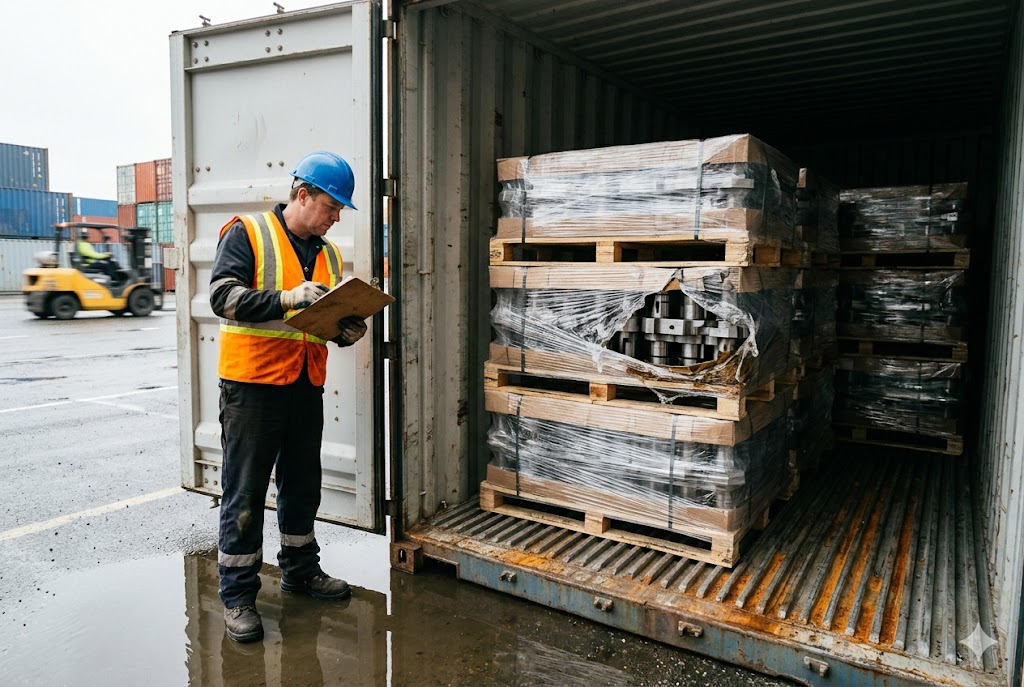
Under FOB and CIF, risk transfers to you the moment the goods are loaded onto the vessel in China. Under DDP, risk stays with the supplier until delivery at your named address. This means a CIF buyer bears damage risk in transit even though the seller is paying the freight bill.
Where Risk Actually Transfers
This is the point that most buyers misunderstand about Cost, Insurance and Freight 3 terms. The words "Cost, Insurance and Freight" sound like the supplier is responsible for the shipment. They are responsible for paying for the shipment. They are not responsible for the goods once they are on the vessel.
If a container carrying your precision CNC parts is damaged by rough seas three days out of Shanghai, the supplier is not liable. You are. And the insurance policy they purchased — the standard CIF minimum, known as ICC Clause C 4 — may not cover that type of damage at all.
What ICC Clause C Does Not Cover
ICC Clause C is the minimum insurance standard under CIF. It covers only major catastrophic events: vessel sinking, stranding, collision, fire, and explosion. It does not cover:
- Theft
- Rough handling damage
- Water ingress or moisture damage
- Contamination
- Package loss
For standard consumer goods, ICC Clause C is often adequate. For custom CNC machined parts — tight-tolerance metal components that can be rendered out-of-spec by a single dent or by moisture — it is insufficient.
Risk Transfer Summary
| Incoterm | Risk Transfers At | Who Files Insurance Claim | Recommended Insurance |
|---|---|---|---|
| FOB | Port of loading in China | Buyer | ICC Clause A (all-risk), buyer-arranged |
| CIF | Port of loading in China | Buyer | ICC Clause A (buyer should upgrade) |
| DDP | Buyer's named delivery address | Supplier | Supplier handles (buyer has no visibility) |
DDP Risk: The Compliance Trap
DDP sounds risk-free for the buyer. In practice, it has one major hidden risk: customs compliance liability.
Under DDP, the supplier arranges import customs clearance in your country. They appoint an importer of record 5 and file the customs entry on your behalf. If that importer of record is non-compliant, or if the supplier misclassifies your CNC parts on the entry document, you as the actual product owner can still face scrutiny from customs authorities.
Customs compliance exposure does not disappear because a supplier handled the paperwork. If there is a valuation dispute, an HS code audit, or a duty evasion investigation, your name is on the product and your company is at risk. DDP shifts operational responsibility. It does not fully transfer legal compliance risk.
When Should I Avoid Letting the Supplier Control All Shipping Terms?
We have seen clients lose negotiating power and overpay for logistics simply because they accepted whatever Incoterm the supplier quoted without asking. Letting the supplier control all shipping terms is a habit worth examining carefully.
You should avoid supplier-controlled terms — DDP and CIF — when you ship regularly, when your parts have high precision tolerances, when import duty rates are significant, or when you have an established freight forwarder. In these cases, FOB consistently gives you better outcomes across cost, insurance, and compliance.
Four Situations Where You Should Take Control
1. You Ship More Than Four Orders Per Year
At four or more shipments annually, your freight forwarder has leverage. They consolidate volume from multiple clients and negotiate annual rates with carriers. A supplier booking a single container cannot match those rates. Over a full year, the savings from using your own forwarder under FOB are material.
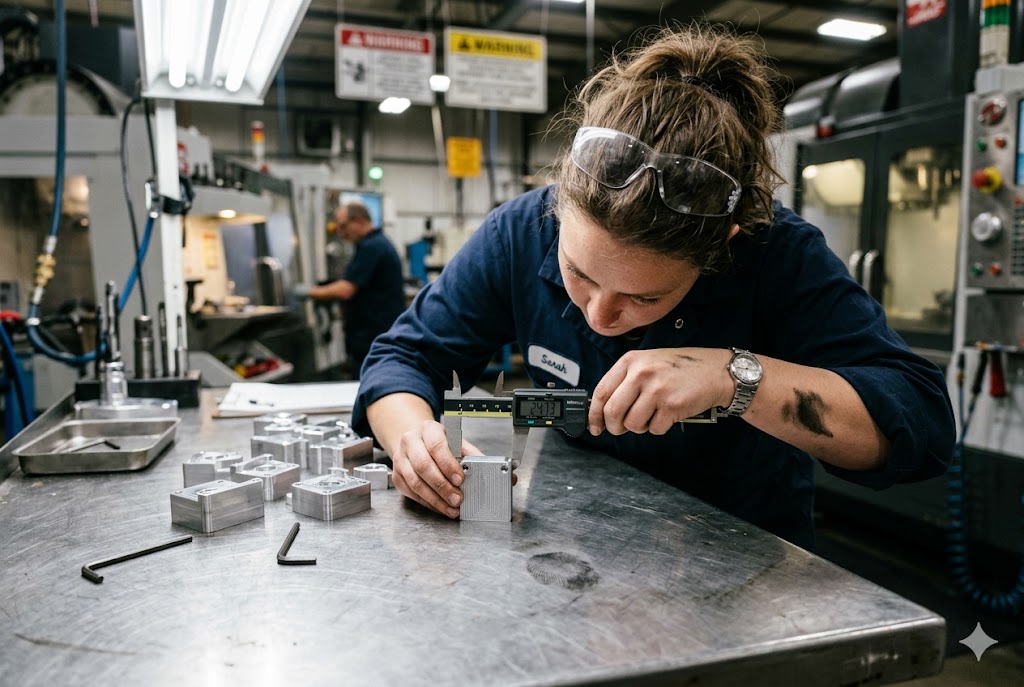
2. Your CNC Parts Have Tight Tolerances
Custom CNC machined parts — especially those with tolerances under 0.05 mm — are sensitive to transit conditions. Surface finishes can be scratched. Threaded features can be impacted. Moisture can cause rust on uncoated steel parts. These damage scenarios are exactly what ICC Clause C does not cover.
When you control the insurance under FOB, you can specify ICC Clause A all-risk coverage 6. You can also add specific riders for rust, contamination, and rough handling. This is not an option when the supplier arranges the policy.
3. Import Duties Are Calculated on CIF Value
In the United States and many other countries, import duties for certain product categories are assessed on the CIF value of the goods — meaning the declared value of the goods plus the ocean freight plus the insurance premium. Under CIF terms, freight and insurance are included in the declared value, which raises your dutiable amount and increases the tax you pay.
Under FOB terms, only the goods value is typically used as the basis for duty assessment. This means you pay duties on a lower base number. The difference can be meaningful on large or frequent shipments.
4. You Want to Choose Your Own Customs Broker
Your customs broker 7 is your compliance gatekeeper. They classify your CNC parts under the correct HS codes, apply for any applicable duty exemptions, and manage your import documentation. A supplier-appointed broker under DDP has no loyalty to you. Their client is the supplier. Their incentive is to complete the clearance quickly, not to optimize your duty liability.
When you use FOB and appoint your own broker, you choose someone accountable to you. You can instruct them to apply for first sale valuation, request binding rulings, or contest classifications — none of which is practical when the supplier controls the entry.
Checklist: When to Use Each Term
| Situation | Best Incoterm | Reason |
|---|---|---|
| First order, no established forwarder | DDP | Minimal coordination needed |
| Parts have tight tolerances (under 0.05 mm) | FOB | Buyer controls insurance, can select ICC A |
| 4+ shipments per year | FOB | Volume freight savings exceed coordination cost |
| Duties calculated on CIF value | FOB | Lower dutiable base reduces tax |
| Need custom broker accountability | FOB | Buyer appoints their own broker |
| Low-value, low-frequency, FBA delivery | DDP | Simplicity justifies cost premium |
How Can I Compare Quotes Fairly Under Different Incoterms?
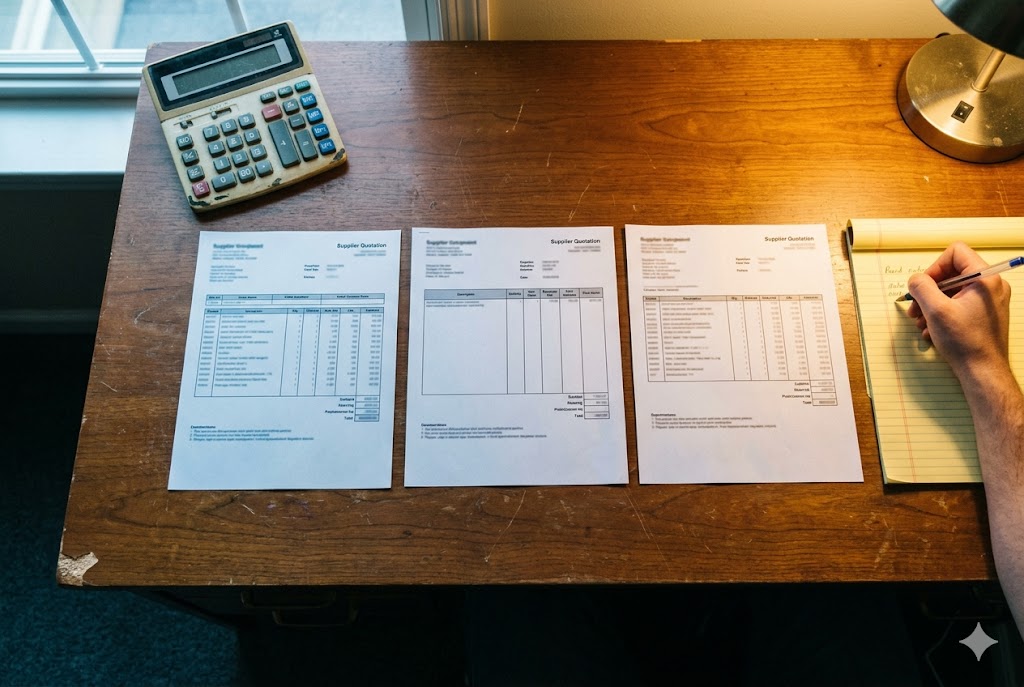
One of the most practical problems our clients face is receiving multiple quotations from different suppliers, each using a different Incoterm. Comparing a FOB quote from one factory to a DDP quote from another is like comparing two restaurant bills where one includes service tax and the other does not. The numbers mean different things.
To compare quotes fairly, convert every quotation to the same Incoterm basis — preferably FOB or landed cost 8 — by adding estimated freight, insurance, duties, and customs clearance fees to each FOB price, or stripping back DDP and CIF quotes to their implied goods-only value using your own freight and duty data.
Step-by-Step: Converting to a Common Basis
The cleanest method is to convert everything to a "landed cost" figure. Landed cost means the total amount you pay per unit or per order by the time goods arrive at your facility, cleared through customs, all costs included.
Here is how to do it:
Step 1 — Collect all quotes. Ask every supplier to quote FOB if possible. If a supplier only quotes DDP or CIF, request an itemized breakdown showing goods value separately from freight and other charges.
Step 2 — Add freight to FOB quotes. Contact your freight forwarder and get a current ocean freight rate for the relevant origin port and container size. Add that to the FOB goods value.
Step 3 — Add insurance. ICC Clause A insurance typically runs 0.3 to 0.5 percent of the goods plus freight value for standard cargo. Add this to your running total.
Step 4 — Add import duties and taxes. Look up the applicable HS code for your CNC parts and apply the current duty rate. For US importers, use the USITC tariff schedule 9. Include any Section 301 tariffs 10 if sourcing from China.
Step 5 — Add customs broker fees. A standard customs entry in the US costs between $150 and $300 for a simple shipment. Add this to every quote equally.
Step 6 — Compare the landed costs side by side.
Example Landed Cost Comparison
Assume a $15,000 order of custom CNC aluminum parts, single 20-foot container, China to Los Angeles.
| Cost Element | Supplier A (FOB) | Supplier B (CIF) | Supplier C (DDP) |
|---|---|---|---|
| Goods value (quoted) | $15,000 | $16,200 | $19,500 |
| Ocean freight | $1,800 (your rate) | Included in quote | Included in quote |
| Insurance (ICC A) | $85 | $40 (min, CIF) | Unknown |
| Import duties (assumed 5%) | $840 | $1,020* | Included in quote |
| Customs broker fee | $250 | $250 | $0 |
| Estimated landed cost | $17,975 | $17,510 | $19,500 |
*CIF duty calculated on higher dutiable value including freight and insurance.
In this example, Supplier B's CIF quote looks like the best goods price at $16,200, but the landed cost comes very close to Supplier A's FOB quote once you account for your own freight, better insurance, and duty differences. Supplier C's DDP quote at $19,500 is the most expensive total despite appearing most convenient.
Practical Tips for Purchasing Managers
Always request FOB quotes. Even if you ultimately choose DDP or CIF for operational reasons, having the FOB price gives you a reference point to evaluate whether the supplier's logistics markup is reasonable.
Keep a simple landed cost spreadsheet. Update it with current freight rates quarterly. Rates shift significantly with market conditions — what was accurate six months ago may no longer reflect reality.
Work with your customs broker on HS code classification before you request quotes. Knowing your duty rate in advance lets you build an accurate landed cost model without surprises at customs.
Conclusion
FOB, CIF, and DDP are not just shipping jargon — they directly affect your cost, risk, and compliance exposure on every CNC parts order. FOB gives experienced importers the most control and the lowest total cost. Start with DDP or CIF if you are new to sourcing, then migrate to FOB as your import volume grows.
Footnotes
1. Official U.S. government overview of all 11 Incoterms rules and their correct usage in international trade. ↩︎
2. In-depth explanation of FOB terms, risk transfer point, and how it compares with other sea-freight Incoterms. ↩︎
3. Detailed guide to CIF Incoterms 2020, covering seller obligations, insurance requirements, and risk transfer rules. ↩︎
4. Comprehensive comparison of ICC Clause A, B, and C marine cargo insurance and what each level covers. ↩︎
5. Definition and legal responsibilities of an importer of record under U.S. Customs and Border Protection rules. ↩︎
6. Guide to marine cargo insurance explaining why ICC Clause A all-risk coverage is recommended for high-value goods. ↩︎
7. Overview of customs broker responsibilities and how they manage compliance, HS classification, and duty optimization. ↩︎
8. Complete Incoterms 2020 guide explaining how to calculate landed cost and compare shipment terms accurately. ↩︎
9. U.S. government resource for finding HTS codes, applicable duty rates, and tariff classification guidance. ↩︎
10. Official USTR announcement on finalized Section 301 tariff increases on Chinese imports effective 2024–2026. ↩︎