Skip to main content Skip to footer

Every week, we review drawings sent in by clients — and the most common missing detail is a general tolerance note. Without one, disputes are almost inevitable.
ISO 2768-mK is the correct general tolerance standard for custom sheet metal parts sourced from China. The "m" class controls linear dimensions at ±0.1 to ±0.3 mm, which modern laser cutting and press brake equipment can consistently achieve. The "K" class controls flatness and perpendicularity after bending. One title block note governs all untoleranced features.
Once you understand this standard, drawing reviews go faster, supplier conversations become cleaner, and first-article inspections have a clear reference. Let's walk through what you need to know.
Is ISO 2768 Enough for My Drawing, or Do I Need Tighter Tolerances on Key Features?
Our engineers review hundreds of sheet metal drawings each year. The most common mistake we see is applying a single tight general tolerance across the entire part when only two or three features actually need it.
ISO 2768-mK is enough for most untoleranced features on a sheet metal part. However, features with functional requirements — mating holes, connector cutouts, and reference datums — need individual tolerances called out directly on the drawing. The general standard covers everything else.

What ISO 2768 Actually Covers
ISO 2768 has two parts. They work together and are almost always cited as a pair.
Part 1 — ISO 2768-1 governs linear and angular dimensions 1. This includes lengths, hole diameters, radii, and chamfer heights. It has four tolerance classes:
| Class | Symbol | Typical Use |
|---|---|---|
| Fine | f | Precision machined parts |
| Medium | m | Standard sheet metal, formed parts |
| Coarse | c | Structural fabrication |
| Very Coarse | v | Rough weldments |
Part 2 — ISO 2768-2 governs geometrical tolerances — straightness, flatness, perpendicularity, symmetry, and circular run-out 2. It has three classes:
| Class | Symbol | Flatness Tolerance Range |
|---|---|---|
| H | H | 0.02–0.2 mm |
| K (Medium) | K | 0.05–0.3 mm |
| L (Coarse) | L | 0.1–0.6 mm |
The combination ISO 2768-mK picks the medium class from each part. This is the right starting point for most sheet metal parts produced in China using fiber laser cutting and CNC press brakes 3.
When mK Is Not Enough
Some features require tighter control than mK provides. These should always carry explicit individual tolerances on the drawing:
- Mating holes for locating pins
- Press-fit or interference-fit features
- Connector cutouts where PCB alignment is critical
- Reference surfaces used for downstream machining
For these features, write the tolerance directly on the dimension — for example, Ø8.00 ±0.05. Do not rely on the general note to cover them. A Chinese fabricator reads the drawing dimension first; if no individual tolerance exists, they fall back to the title block standard.
The Cost of Going Too Tight
Requesting ISO 2768-fH (fine linear + H geometric) as the general standard on a sheet metal part is a common and expensive mistake. Fine class requires slower laser speeds, extra handling, a heavier inspection burden, and sometimes dedicated fixtures. The price premium is real. Reserve fH tolerances for post-machined features — tapped holes, reamed holes, milled pockets — not for formed sheet metal geometry.
How Can I Avoid Disputes With My Supplier Over Unspecified Tolerances?
When a part fails inspection and there is no tolerance specified on the drawing, both sides argue from a position they believe is correct. We have seen this scenario cause delayed shipments and damaged client relationships.
The only reliable way to avoid tolerance disputes is to state the governing standard in the drawing title block and add individual tolerances for every functionally critical dimension. If a dimension is not toleranced on the drawing, you cannot dispute the supplier's interpretation.

The Title Block Note Is Your Contract
The drawing title block is the legal and technical reference for your order. A single line — GENERAL TOLERANCES: ISO 2768-mK — automatically governs every untoleranced feature on the part. Without this line, your supplier has no defined standard to work to. They will apply their own internal standard, which may be looser or simply different from your expectation.
When we place orders with manufacturers on behalf of our clients, we always confirm that the title block note matches the purchase order and quality plan. This single check prevents the majority of dimensional disputes.
Individual Callouts Override the General Standard
Think of the general tolerance note as a safety net. It catches everything you did not explicitly control. Features you care about most should be individually toleranced and should override the general note. A good drawing structure looks like this:
| Feature Type | How to Tolerance It |
|---|---|
| Overall length and width | ISO 2768-mK (title block) |
| Formed flanges, bend angles | ISO 2768-mK (title block) |
| Mating holes, locating features | Individual callout on drawing |
| Tapped hole positions | Individual callout on drawing |
| Material thickness (functional fit) | Explicit note on drawing |
What ISO 2768 Does Not Cover
This is important. ISO 2768 does not govern every characteristic of your part. Disputes can still arise in areas outside its scope:
- Parallelism, concentricity, cylindricity, true position, and profile — these require explicit GD&T feature control frames 4. ISO 2768 does not govern them.
- Weld quality — governed by a separate standard such as ISO 5817 Class C or B 5. If your part has welds, specify the weld standard separately.
- Surface finish and coating — not part of ISO 2768. Specify Ra value, coating type, and thickness independently.
- Material thickness — governed by mill standards such as ISO 16162 or EN 10029 for steel. Cold-rolled steel plate in the 3–5 mm range can have mill tolerance as wide as −0.3/+0.7 mm. If your design is thickness-sensitive, add an explicit thickness tolerance on the drawing.
ASME vs ISO: Choose One and State It
If you are a US-based buyer, you may be used to ASME Y14.5 GD&T conventions 6. ASME and ISO are not interchangeable. A Chinese supplier trained on ISO standards may misread ASME feature control frames. State both the drawing standard (e.g., ASME Y14.5-2018 or ISO 8015) and the general tolerance standard (ISO 2768-mK) in the title block. This removes ambiguity before production starts.
Which Dimensions on My Sheet Metal Drawing Should I Control More Strictly?
Not all dimensions are equal. We always advise clients to think about which features actually affect function — assembly fit, load path, or mating interfaces — and control those with explicit tolerances. Everything else can safely fall under the general standard.
Dimensions that affect assembly fit, load transfer, or mating interfaces must carry individual tolerances on the drawing. These include mating hole diameters and positions, locating features, reference datums, and any feature that contacts another part in the final assembly.
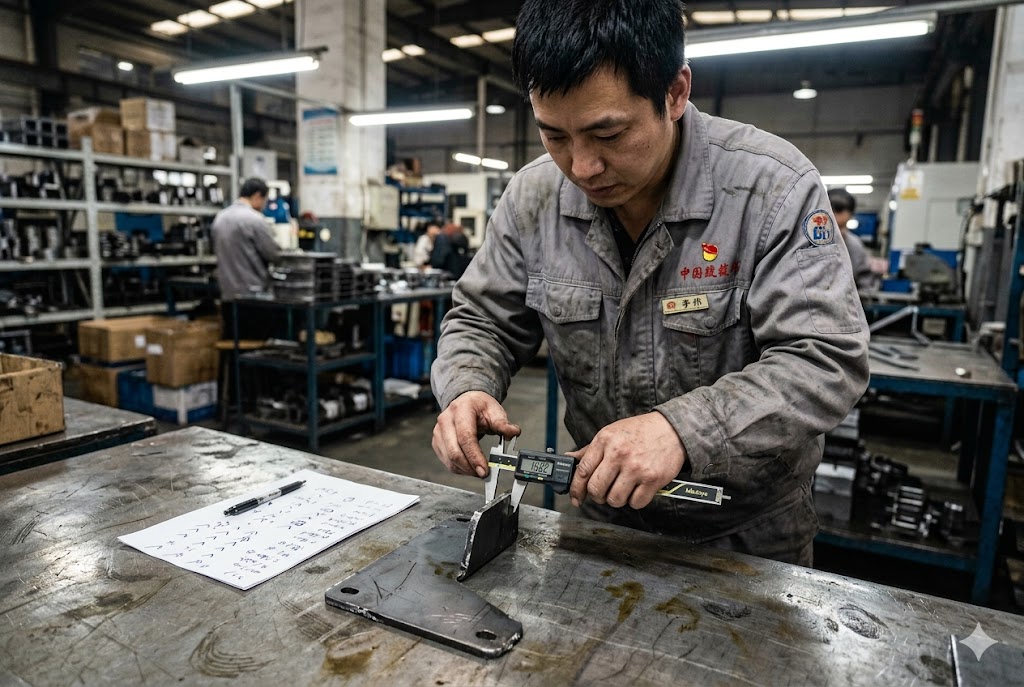
Categorize Your Features Before You Draw
A practical way to approach this is to sort every feature on your part into one of three buckets before you write a single tolerance:
| Feature Category | Example | Tolerance Approach |
|---|---|---|
| Functional / Critical | Mating hole, locating slot, datum surface | Individual tolerance on drawing |
| Secondary / Important | Bracket width, flange height | ISO 2768-mK (title block) |
| Non-critical | Cosmetic cutout, ventilation slot | ISO 2768-mK (title block) |
Only the first category needs explicit callouts. The rest is governed automatically by your title block note.
Post-Machined Features Need a Different Standard
If your sheet metal part goes through a secondary CNC machining operation — tapped holes, reamed holes, milled pockets — those features are no longer governed by sheet metal forming capability. They should be toleranced to ISO 2768-fH or carry individual tolerances, because the machining process can hold much tighter geometry than press brake forming.
A clean way to handle mixed parts is to state ISO 2768-mK as the general standard and add a note: "Machined features: ISO 2768-fH unless otherwise stated." This gives your supplier a clear two-tier tolerance framework without cluttering the drawing with individual callouts on every machined dimension.
Revisions Must Go on the Drawing
When your design evolves and you need to tighten a previously general-toleranced feature, remove it from the general standard by adding the specific tolerance directly on the drawing. A revision note in an email or a verbal instruction will not reach the shop floor. Chinese fabricators program laser cutters and press brakes directly from drawing files. If the tighter tolerance is not on the drawing, it will not be applied.
How Do Tolerance Choices Affect My Cost and Manufacturability?
Tighter tolerances always cost more. This is not a negotiating position — it is a manufacturing reality. Our sourcing team has collected quotations from dozens of sheet metal shops, and the pattern is consistent.
Tighter tolerances increase cost by requiring slower machine speeds, additional setups, dedicated fixtures, and a heavier inspection burden. Applying ISO 2768-mK as your general standard and reserving tighter callouts only for critical features is the most cost-effective approach for custom sheet metal parts.
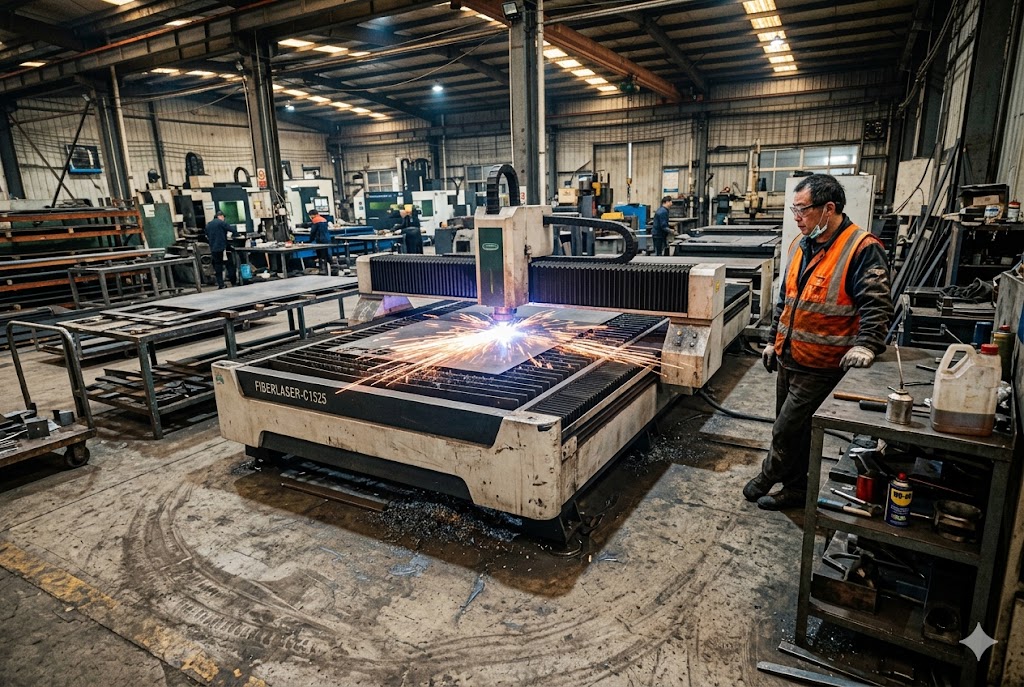
Why Tolerances Drive Price
Every time you tighten a tolerance, you change what the fabricator must do:
- Laser cutting speed drops to improve cut edge straightness and reduce heat distortion.
- Press brake setup time increases to achieve tighter bend angle repeatability.
- Inspection time grows because each tightly-toleranced feature requires a measurement, not just a visual check.
- Scrap rate rises on parts with many tight tolerances because any one out-of-spec dimension can reject the piece.
These costs are real, and they compound. A part with five critical dimensions individually toleranced to ±0.05 mm across a batch of 500 pieces will carry a meaningfully higher per-piece cost than the same part toleranced to ISO 2768-mK with no individual callouts. Understanding how ISO 2768-1 tolerance classes translate to real inspection requirements 7 helps buyers negotiate more effectively.
The ISO 2768 Class Comparison
To make the trade-off concrete, here is how the three most relevant classes compare for a linear dimension in the 30–120 mm nominal range:
| ISO 2768 Class | Linear Tolerance (30–120 mm range) | Relative Cost Impact |
|---|---|---|
| Fine (f) | ±0.05 mm | High — machining-level inspection needed |
| Medium (m) | ±0.1 mm | Standard — achievable on well-run equipment |
| Coarse (c) | ±0.2 mm | Lower — minimal inspection burden |
For most structural and enclosure-type sheet metal parts, medium class (m) is the right answer. Fine class is reserved for situations where fit genuinely requires it.
Manufacturability Is Not Just About Tolerance
Tolerance is one lever. Other drawing decisions also affect cost and yield:
- Minimum bend radius: Specify a bend radius smaller than the material thickness and you will get cracking. Most Chinese sheet metal shops use a minimum inside radius equal to the material thickness. Check with your supplier before finalizing geometry. Understanding bend radius, springback, and their effect on dimensional accuracy 8 is essential before finalizing a design.
- Hole-to-edge distance: Holes too close to a bend or an edge deform during forming. Practical sheet metal design guidelines recommend keeping holes at least 1.5× the material thickness away from any bend line 9.
- Tight tolerances near bends: Bend springback introduces angular and linear variation. Any dimension that spans a bend is inherently harder to control. If that dimension is functionally critical, consider adding a secondary machining step rather than relying on forming alone. Refer to a detailed comparison of ASME and ISO GD&T interpretations 10 when specifying cross-standard drawings for global suppliers.
Understanding these interactions before you finalize a drawing will save you from costly first-article failures and revision cycles.
Conclusion
Use ISO 2768-mK as your default general tolerance standard. Add individual callouts only for critical features. State it clearly in the title block. This single habit prevents most disputes and keeps your costs in check.
Footnotes
1. Official ISO standard for linear and angular dimension tolerances in manufactured parts. ↩︎
2. Official ISO standard governing geometrical tolerances for features without individual tolerance indications. ↩︎
3. Comprehensive guide explaining ISO 2768 tolerance classes and when to apply each in CNC and sheet metal contexts. ↩︎
4. Wikipedia overview of Geometric Dimensioning and Tolerancing, covering symbols, rules, and feature control frames. ↩︎
5. ISO 5817:2023 defines quality levels for fusion-welded joints in steel, nickel, titanium, and their alloys. ↩︎
6. Wikipedia entry on ASME Y14.5, the authoritative US standard for GD&T symbols and interpretation rules. ↩︎
7. Protolabs Network guide explaining how ISO 2768-1 tolerance classes affect CNC machining cost and inspection requirements. ↩︎
8. Komaspec engineering guide covering bend radius selection, springback compensation, and press brake tolerances. ↩︎
9. Yijin Solution's sheet metal design guidelines detailing hole placement, bend proximity rules, and achievable tolerances. ↩︎
10. GD&T Basics breakdown of ASME Y14.5 versus ISO GD&T systems, critical for drawings reviewed by global suppliers. ↩︎