Skip to main content Skip to footer
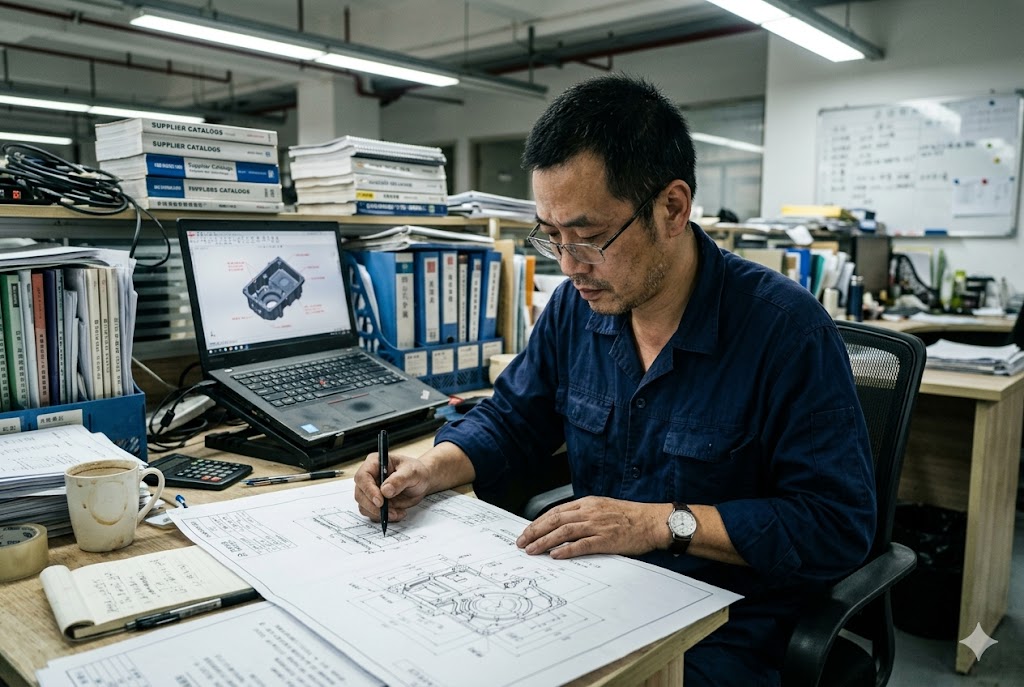
We see it every quarter — a buyer approves tooling, waits eight weeks, receives T1 samples, and then discovers the part cannot be produced as designed. The tool needs rework. The timeline slips. The cost climbs. It did not have to happen this way.
DFM — Design for Manufacturability — is the engineering practice of reviewing your part design against the real constraints of the die casting process before any tool steel is ordered. A qualified engineer examines your CAD model, identifies every feature the process cannot reliably produce, and proposes specific geometry changes while modifications still cost nothing but time. For die cast parts imported from China, a written DFM report is the single most cost-effective step you can take before committing tooling spend.
Most buyers know DFM exists. Few make it a hard requirement before tooling release. The sections below explain what that decision actually costs — and why changing it changes everything downstream.
How Can DFM Help You Catch Cost and Quality Risks Early in Your Project?
In our experience working with buyers across North America, the parts that cause the most downstream pain are rarely designed badly — they are designed for a different process. A geometry that machines cleanly can be a die casting 1 nightmare.
DFM catches cost and quality risks early by forcing a systematic review of your part geometry against die casting physics before tooling begins. Engineers check draft angles, wall thickness, undercuts, gate locations, and parting lines. Every problem found at this stage costs hours to fix in CAD. The same problem found after T1 sampling costs weeks and thousands of dollars in steel rework.
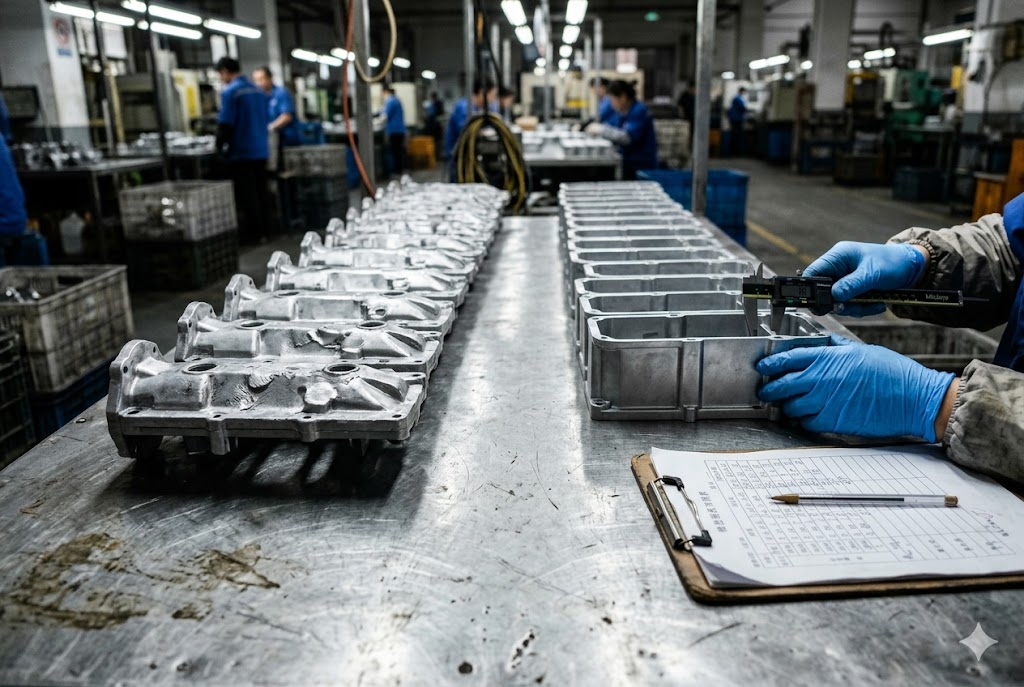
Why Design Stage Is the Cheapest Place to Fix Problems
The manufacturing industry's Rule of Ten 2 describes the cost escalation clearly. A problem costs $1 to fix during design, $10 during tooling, and $100 after production starts. For a real die casting program, this is not a metaphor — it is a budget line.
Here is what that looks like in practice:
| Stage Problem Is Found | Typical Fix Required | Estimated Cost Impact |
|---|---|---|
| During DFM review | CAD revision by designer | $0–$500 |
| After tooling starts (pre-T1) | Tool design change, steel rework | $1,000–$10,000 |
| After T1 rejection | EDM rework, re-trial, new samples | $3,000–$30,000 |
| After production shipment | Scrap order, rebuild tool, re-ship | $20,000–$100,000+ |
The numbers vary by program size and part complexity. The direction never varies. Every week you wait to find a problem, it costs more to fix.
The Most Common DFM Findings in Die Cast Parts
Our engineers see the same categories of issues repeatedly across aluminum and zinc die cast programs. Knowing them in advance helps you brief your design team before the DFM review even starts.
| DFM Finding Category | What It Means | Why It Matters |
|---|---|---|
| Insufficient draft angle | Walls lack taper for ejection | Part sticks in tool; surface damage on every cycle |
| Wall thickness variation | Sections too thick or too thin | Porosity in thick areas; cold shuts in thin areas |
| Undercuts with no slide provision | Geometry that locks into the tool | Cannot eject without a slide mechanism — adds cost and cycle time |
| Sharp internal corners | Zero-radius transitions | Stress concentration in tool steel; premature tool cracking |
| Unsupported thin ribs | Long ribs without draft or fillets | Fill problems; warpage; dimensional instability |
| Thread in as-cast position | Internal threads in deep cores | Requires unscrewing mechanism or secondary machining |
None of these findings mean the part design is wrong. They mean the design needs a specific modification to work in high-pressure die casting 3. DFM names each one, assigns a severity, and proposes the fix before you commit tooling budget.
How DFM Protects You Specifically on China-Sourced Programs
Time zones and ocean freight make every feedback cycle expensive. When a DFM-preventable issue surfaces after T1 sampling, the sequence looks like this: supplier opens tool, welds and re-machines cavity, re-hardens, re-polishes, reassembles, runs new trial, ships new samples. With standard ocean freight, that cycle adds six to ten weeks. With air freight and expedited tooling, it still adds three to four weeks and significant cost.
A DFM review 4 condenses that same feedback into three to five days of email exchange and CAD revision — at zero tooling cost. For buyers managing quarterly production schedules, that timeline difference is not academic. It is the difference between hitting a launch date and missing it.
Should You Wait for DFM Feedback Before You Approve Tooling Design?
Every week of tooling delay feels like lost time. We understand that pressure — our project managers track program timelines the same way your team does. But releasing tooling before DFM feedback is complete is not saving a week; it is borrowing a month at high interest.
Yes, you should always wait for written DFM feedback before approving tooling design. Tooling approval without a completed DFM review means you are authorizing steel cutting on a design that has not been validated for the process. Any problem discovered after that point is structurally more expensive than it would have been if found one week earlier.
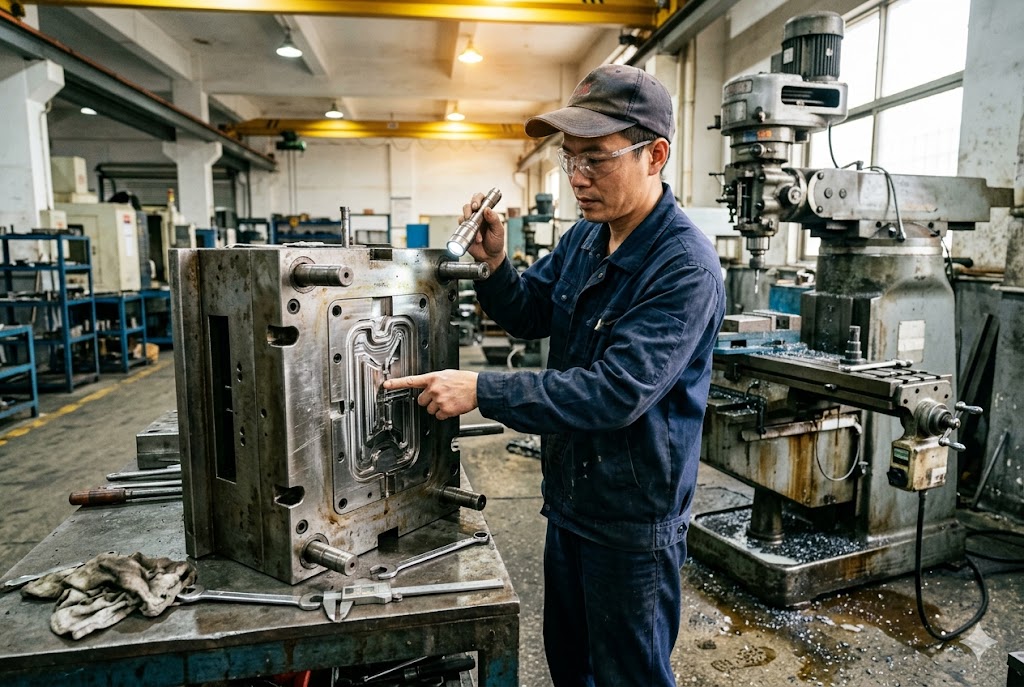
What a Proper DFM-to-Tooling Sequence Looks Like
A well-run die casting program follows a clear gated sequence. Each gate requires a documented approval before the next phase begins.
| Gate | Action Required | Who Approves |
|---|---|---|
| 1. Design freeze | Final 3D CAD and 2D drawing submitted to supplier | Buyer (design team) |
| 2. DFM review | Supplier returns annotated DFM report with findings | Supplier engineering |
| 3. DFM disposition | Buyer reviews findings, approves CAD modifications | Buyer (engineering + purchasing) |
| 4. Tooling design release | Supplier releases tool design for steel cutting | Both parties sign off |
| 5. T1 sampling | First article samples against approved drawing | Buyer inspects |
| 6. Production release | Written approval for series production | Buyer purchasing |
Skipping gate 3 and jumping from gate 2 to gate 4 is the single most common program management error we see on imported die casting projects.
What "Approving Tooling" Actually Commits You To
When you approve tooling, you are typically committing to the tooling payment schedule — often 50% on order, 50% on T1 approval. More importantly, you are signaling to the supplier that the design is final. From that point, any change you request is a tooling change — billable, time-consuming, and documented as a change order.
If your DFM review has not been completed, you are approving a design that your supplier has not yet validated as producible. The risk is entirely yours.
How to Run DFM and Tooling in Parallel Without Losing Time
There is a practical way to compress the timeline without skipping DFM. Request that your supplier begin tool design — not steel cutting — while DFM review is underway. Tool design takes one to two weeks and produces a documented tool layout. DFM takes three to five days. In most cases, the two processes run in parallel, and DFM findings are incorporated into the final tool design before any steel is ordered.
This approach captures nearly all the time savings of early tooling release while preserving the design checkpoint that DFM provides. It requires a supplier with genuine engineering capacity — which is itself a useful filter when evaluating Chinese die casters 5.
What Happens If You Skip DFM and Go Straight to Mold Making?
We have managed programs where the buyer skipped DFM to save a week. In every case, we watched that decision cost more time than it saved — sometimes significantly more. The mechanics of why are not complicated.
Skipping DFM and proceeding directly to mold making means all design problems that would have been caught in review will instead surface as T1 sample defects. Each defect requires a documented finding, a root cause analysis, a tooling change, rework, and a new trial cycle. On a complex part, three to five DFM-preventable findings discovered at T1 can add eight to fourteen weeks to your program timeline.
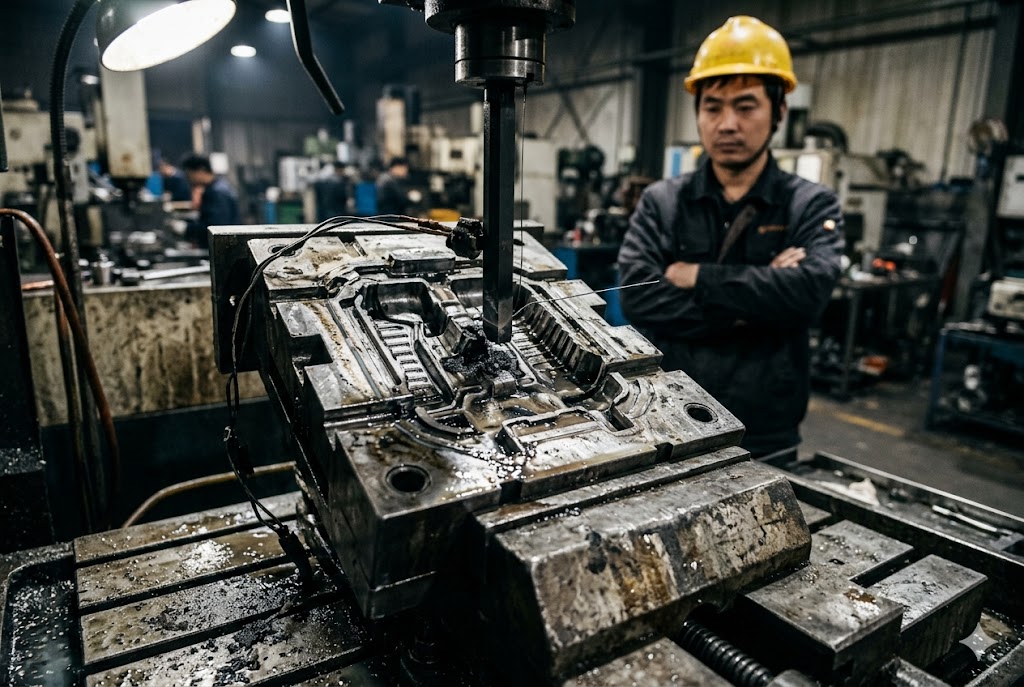
The Typical Post-T1 Rework Cycle
When T1 samples arrive with DFM-preventable defects, the rework process is sequential, not parallel. Each finding must be corrected, verified, and re-sampled before the next one is addressed — or before you know whether the previous fix introduced a new problem.
A part with three DFM-preventable findings — say, a cold shut 6 on a thin wall, a sink mark over a thick boss, and a dimensional error from insufficient draft — will typically require three separate tooling interventions. Each intervention involves welding or EDM 7, re-machining, re-hardening, polishing, reassembly, and a new trial run. With a Chinese supplier, each cycle takes two to four weeks.
The Compounding Effect on Your Supply Chain
Downstream customers do not care that your Chinese supplier needed three T1 trials. They care that the parts are late. If your program depends on a specific delivery window — seasonal inventory, a production launch, a contract milestone — a tooling delay measured in weeks can produce customer compensation claims, emergency air freight costs, and relationship damage that far exceeds the original tooling budget.
How Material and Geometry Problems Interact Without DFM
One category of problem is especially costly when DFM is skipped: material-geometry interaction defects. These are defects that are invisible when you review geometry alone or specify alloy alone, but emerge when the two are evaluated together in context of the actual casting process.
A common example: A380 aluminum alloy 8 specified on a part with 1.0mm wall sections, ribs spanning 80mm, and no draft on internal cores. A380 has adequate fluidity for most die casting applications — but not for this combination of features. The result is chronic cold shuts and incomplete fill that appear in T1 samples and require either alloy substitution, wall thickness changes, or vacuum-assisted process modifications. None of these are quick fixes. All of them require a DFM-level engineering review that should have happened before tooling started.
A proper DFM review evaluates material and geometry together. That is what makes it structurally different from a simple geometry check.
How Can a Strong DFM Review Improve Your Lead Time and Production Stability?
Our project team tracks lead time deviations on every active program. The single strongest predictor of a program that runs on schedule is whether a thorough DFM review was completed before tooling release. It is not the only factor — but it is consistently the most significant one we can influence before production begins.
A strong DFM review improves lead time and production stability by eliminating the root causes of T1 rejections, tooling rework cycles, and in-production dimensional drift before the tool is built. Programs with documented DFM approval consistently reach production release faster and sustain lower defect rates across the production run than programs where DFM was skipped or nominal.

DFM as a Supplier Qualification Signal
A thorough, annotated DFM report is one of the most reliable indicators of a Chinese supplier's actual engineering capability — far more reliable than factory photos, ISO certificates, or customer reference lists. Consider what a genuine DFM report requires a supplier to produce:
- A qualified engineer who has read your 3D model and 2D drawing in full
- Process knowledge specific to high-pressure die casting physics 9
- The ability to identify and articulate specific findings tied to your geometry
- Documented proposed remediation with before-and-after geometry comparisons
- A formal approval request before tooling release
A supplier who cannot produce this is telling you, before you have spent a dollar on tooling, that they will manage problems reactively rather than preventively. That information is worth more than any audit report.
How DFM Affects In-Production Defect Rates
DFM's value does not end at tooling approval. A design that was properly reviewed and modified for manufacturability produces parts with lower cycle-to-cycle variation, better dimensional stability, and lower scrap rates throughout the production run. Here is why:
Features that are marginal for die casting — thin walls near minimum fill limits, ribs with insufficient draft angle 10, cores that are borderline on length-to-diameter ratio — produce parts that are functionally acceptable sometimes, and marginal or defective at others, depending on process variation within normal control limits. DFM identifies and corrects these marginal features. The result is a design with genuine process margin — features that produce acceptable parts across the full range of normal process variation, not only at optimal settings.
What a DFM Report Should Contain
Not every DFM report is equal. Buyers evaluating Chinese die casters should be able to distinguish a genuine report from a nominal one.
| Element | Genuine DFM Report | Nominal DFM Report |
|---|---|---|
| Part reference | Your specific part number and drawing revision | Generic or missing |
| Findings format | Annotated screenshots with dimensions and callouts | Bullet list with no geometry reference |
| Severity classification | Critical / Major / Minor for each finding | No classification |
| Proposed changes | Specific geometry modification with before/after | "Please review draft angles" |
| Material validation | Alloy evaluated against actual wall geometry | Alloy noted but not evaluated |
| Approval request | Written sign-off requested before tooling release | Tooling proceeds without documented approval |
Insisting on the left column — and rejecting the right column as insufficient for tooling release authorization — is one of the most cost-effective decisions you can make at the beginning of a Chinese die casting program. It costs you nothing to require it. It protects your tooling budget, your timeline, and your production quality in every program that follows.
Conclusion
DFM is not a bureaucratic checkpoint. It is the moment when design intent meets process reality — at the only point in your program when changes are still free. Require it before every tooling release, and document the approval. Everything downstream will be easier.
Footnotes
1. NADCA's official FAQ explains what die casting is and why high-pressure injection into reusable steel dies enables tight tolerances. ↩︎
2. The 1-10-100 Rule quantifies how defect correction costs multiply tenfold at each subsequent production stage. ↩︎
3. NADCA's technical standards manual covers tooling, alloy properties, tolerances, and design guidelines for high-pressure die castings. ↩︎
4. Wikipedia's DFM overview explains how design-for-manufacturability reduces production cost by aligning geometry with process constraints. ↩︎
5. Premium Parts' die casting design guidelines outline best practices for wall thickness, ribs, fillets, and draft to improve manufacturability. ↩︎
6. Detailed guide to cold shut defects: causes, prevention strategies, and how alloy choice and wall geometry interact to trigger them. ↩︎
7. Xometry's EDM resource explains how electrical discharge machining reshapes hardened tool steel during die tooling rework. ↩︎
8. Overview of A380 aluminum alloy properties, common casting defects such as porosity and cold shuts, and mitigation strategies. ↩︎
9. Dynacast's beginner's guide covers DFM methodology for die cast components, including wall thickness, draft, and process selection. ↩︎
10. Detailed guide to die casting mold tooling, covering the role of draft angles, EDM finishing, and ejection system design. ↩︎