Skip to main content Skip to footer
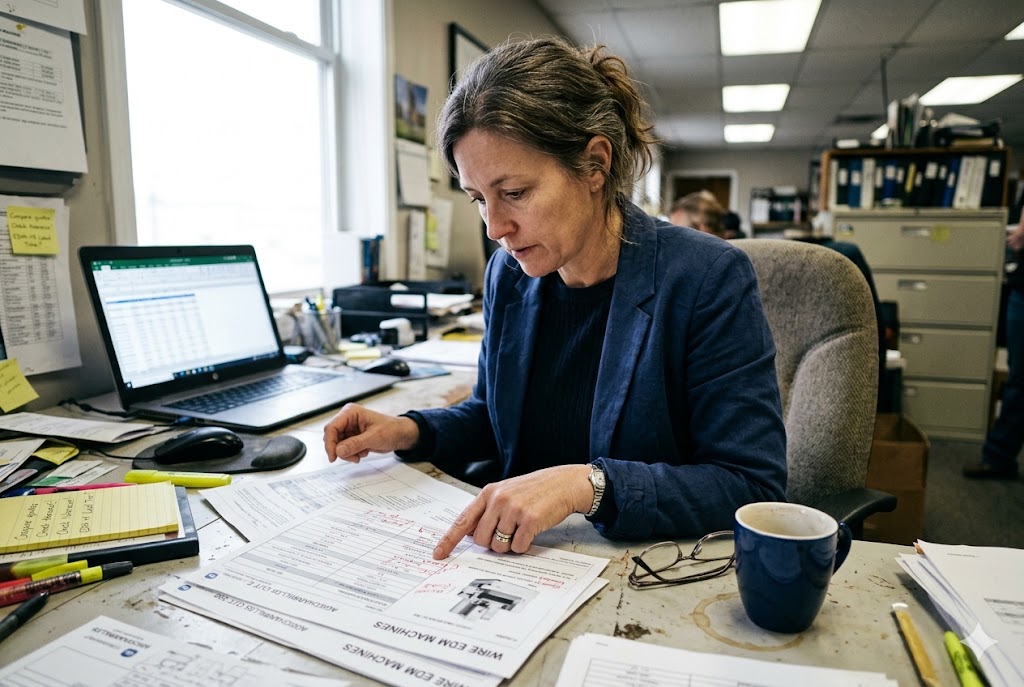
We get this question from buyers almost every week — and it never has a simple answer. The confusion is real, because a supplier's quoted machine model means very little if you don't know what it can actually deliver at the upper end of its range.
The maximum part size a Chinese wire EDM supplier can machine depends on two hard limits: the machine's XY travel range and its worktable load capacity. Common domestic machines handle parts up to 800×500mm, while high-end slow-wire platforms can accommodate parts exceeding 1,400×987mm and weights up to 3,000kg.
Understanding these constraints before you send drawings will save you from costly surprises mid-project. Here is what every buyer needs to know.
What Is the Typical Worktable Travel Range for Wire EDM Machines in Chinese Factories?
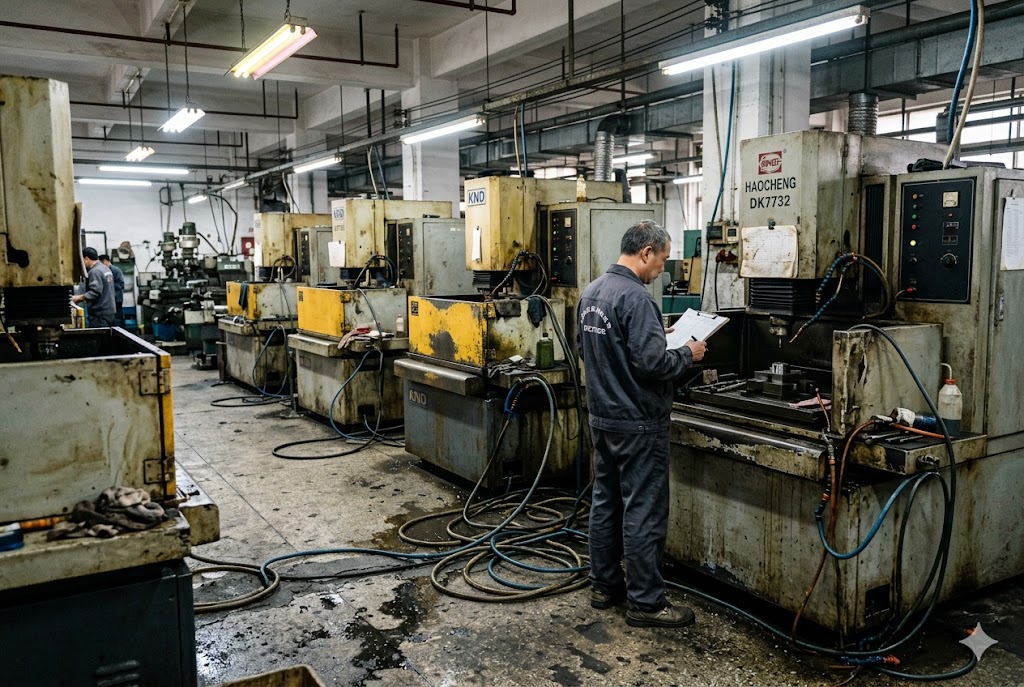
When our team visits supplier factories for audits, the machine mix on the floor tells you more than any brochure. Most Chinese shops run a blend of domestic fast-wire and imported slow-wire machines — and the difference in travel range is significant.
Most Chinese wire EDM factories use domestic DK77-series fast-wire or medium-wire machines with XY travel ranges between 400×300mm and 800×500mm. Larger slow-wire machines from Sodick, GF Machining Solutions, or Makino can extend this to 1,400×987mm, but only a minority of Chinese shops own them.
The Domestic Machine Tier
The DK77 series dominates Chinese shop floors. These are affordable, fast, and widely understood by local operators. Standard models range from DK7732 (320×400mm travel) up to DK77120F and beyond, with worktable configurations reaching 500×800mm on larger units. Non-standard configurations are available on request from machine builders, though lead times and support vary.
Here is a quick reference for the most common DK77 configurations found in Chinese factories:
| Model | XY Travel (mm) | Max Workpiece Weight (kg) | Wire Type |
|---|---|---|---|
| DK7732 | 320×400 | 300 | Fast/Medium |
| DK7750 | 500×600 | 600 | Fast/Medium |
| DK7763 | 630×800 | 800 | Fast/Medium |
| DK77100 | 1000×800 | 1,200 | Fast/Medium |
| DK77120F | 1200×1000 | 1,500 | Fast/Medium |
These machines work well for the vast majority of tooling, bracket, and insert work. Their limitation is surface finish — fast-wire and medium-wire machines cannot match the Ra 0.2μm or better that slow-wire machines achieve 1 routinely.
The Slow-Wire Tier in China
A smaller number of Chinese precision shops have invested in imported slow-wire platforms. These machines cost substantially more and require better environmental controls, but they open up a wider size range with much tighter tolerances.
The GF Machining Solutions Cut P 550 Pro 2, for example, handles parts from under 1mm up to 400mm in height, with workpiece weights up to 1,500kg. It processes steel, carbide, copper, aluminum, titanium, PCD, and graphite — a material range that domestic machines cannot match.
At the large end, Makino's U86 3 accommodates parts up to 1,400×987mm in XY with workpiece weights up to 3,000kg. Chinese shops equipped with these machines can accept parts of equivalent dimensions — but confirming they actually own the machine, and that it is calibrated and maintained, is a separate step you cannot skip.
What This Means for Buyers
If your part is under 500×400mm and under 600kg, most Chinese wire EDM shops can handle it. If your part is larger, you need to identify shops with imported slow-wire platforms and verify their actual capability — not just their machine model.
How Does Part Height (Z-Axis) Limit What a Wire EDM Supplier Can Cut?
Our engineers deal with this constraint constantly when reviewing customer drawings. Z-axis capacity is the dimension buyers most often forget to check — and it can block a project entirely if overlooked.
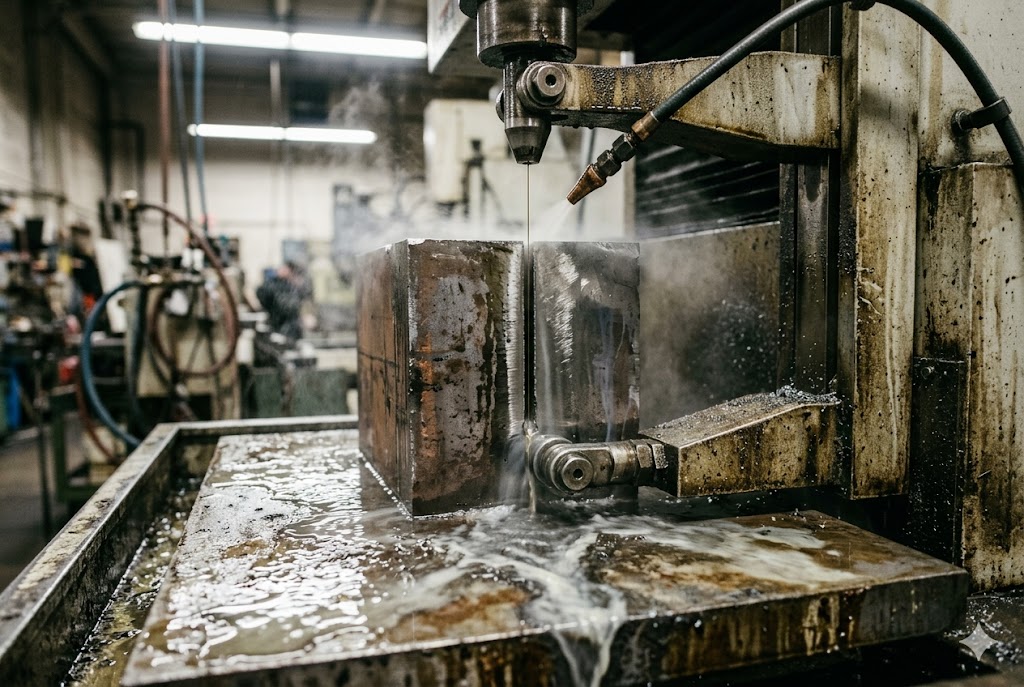
The Z-axis travel on a wire EDM machine sets the maximum cutting thickness. A machine with 300mm Z-axis travel can only cut through material up to 300mm thick in a single operation. Beyond this, the part must be repositioned or the design must be split — adding cost and risk.
Z-Axis Ranges by Machine Class
Different machine classes offer different Z-axis capacity. Here is how the tiers compare:
| Machine Class | Typical Z-Axis Travel | Practical Cutting Thickness |
|---|---|---|
| Domestic fast-wire (DK77 small) | 150–200mm | Up to 180mm |
| Domestic fast-wire (DK77 large) | 200–400mm | Up to 350mm |
| Imported slow-wire (mid-range) | 300–400mm | Up to 350mm |
| Imported slow-wire (large format) | 400–500mm | Up to 430mm |
The gap between "rated Z-axis travel" and "practical cutting thickness" matters. The machine may list 400mm of Z-axis capacity, but cutting accuracy and surface finish degrade as thickness increases.
Why Thick Cutting Is Harder Than It Looks
Wire EDM removes material by electrical discharge 4 between a thin wire and the workpiece. As the cut gets deeper, flushing dielectric fluid into the cutting zone becomes harder. Debris accumulates. The wire deflects slightly from its ideal path. Both effects reduce accuracy and surface finish.
Experienced EDM operators note that while machines can technically cut up to 430mm of material, it is rarely practical to cut tool steel thicker than 300mm. Above that threshold, flushing problems, wire deflection, accuracy loss 5, and very slow feed rates make other processes more economical.
The Practical Ceiling for Most Work
Most wire EDM work in Chinese factories stays within 300–500mm of cutting thickness. For parts thicker than this, the buyer has three realistic options:
- Cut in sections, repositioning the workpiece between operations
- Split the design so wire EDM handles only the detailed features
- Use a different process — such as sinker EDM or CNC milling 6 — for the bulk material removal
Each option adds time and cost. Knowing this before finalizing your drawing saves negotiation delays later.
Do I Need to Split Oversized Parts Into Sub-Components for Wire EDM Machining?
This is a real design decision, not just a workaround. When we review project drawings for clients, we sometimes recommend splitting before the RFQ goes out — because it directly affects which suppliers can quote, and at what cost.
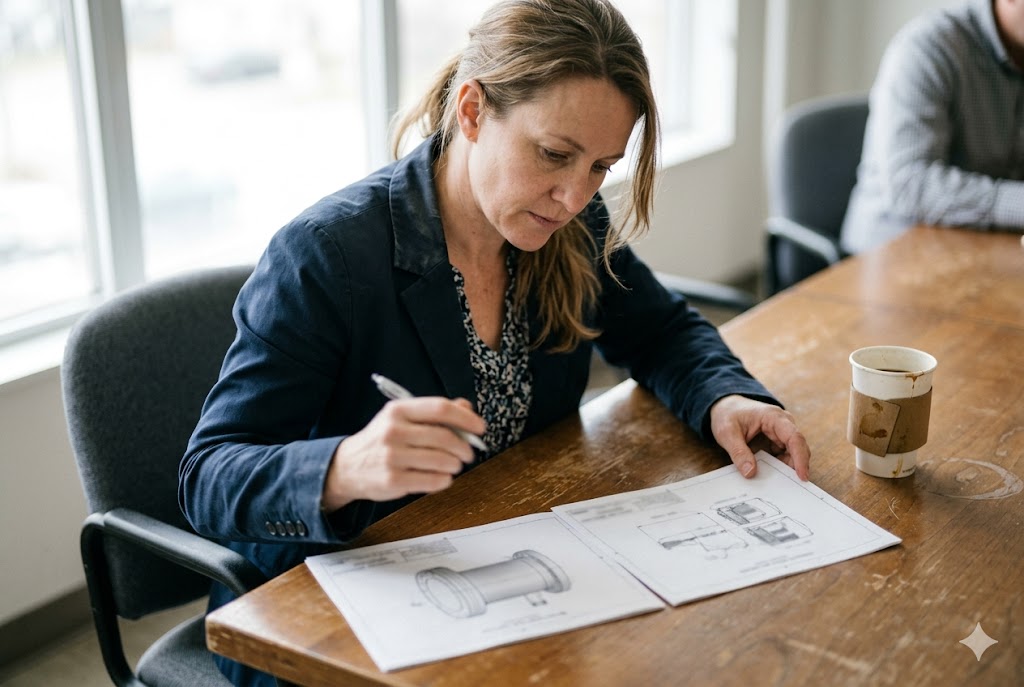
If your part exceeds a supplier's XY travel or Z-axis capacity, splitting into sub-components is often the most practical solution. This is common for large molds and automotive dies. Splitting lets wire EDM handle precision features while CNC milling addresses bulk geometry, keeping cycle times and costs under control.
When Splitting Is the Right Answer
Not every oversized part needs to be split. The decision depends on three factors: the nature of the precision features, the material, and the assembly tolerance.
If the wire EDM features — slots, contours, small holes — are concentrated in a specific zone of a larger part, splitting that zone out as a separate insert is usually clean and practical. Large mold and die work uses this approach routinely. The insert is wire-EDM'd to tight tolerance, then press-fit or bolted into a CNC-milled body.
If the precision features span the entire part and cannot be isolated, splitting is more complicated. You now need tight assembly tolerances between the sub-components, which adds inspection steps and risk.
When Splitting Creates More Problems
Splitting introduces a joint. Joints are a source of misalignment, stress concentration, and potential failure — especially in high-cycle tooling. If your application involves repeated impact loading, high clamping forces, or very tight geometric tolerances across the full part envelope, splitting may introduce more risk than it solves.
In these cases, finding a supplier with a machine large enough to handle the part in one operation is worth the extra effort. A Sodick wire EDM platform 7, for instance, is designed specifically for high-precision work where machine capability and environmental stability are non-negotiable. The alternative — a split part that fails or goes out of tolerance — costs far more than the sourcing time.
Cost Comparison: Split vs. Single-Setup
Here is a simplified comparison to help frame the decision:
| Approach | Wire EDM Supplier Pool | Cycle Time | Assembly Risk | Typical Cost Impact |
|---|---|---|---|---|
| Single-setup (large machine) | Narrow — few shops qualify | Longer per machine | None | Higher per part |
| Split into sub-components | Wider — more shops qualify | Shorter per piece | Yes — alignment needed | Lower per piece, added inspection |
| Hybrid (EDM features + CNC body) | Medium — depends on shop capability | Moderate | Low if designed well | Often the best balance |
The hybrid approach — wire EDM for precision features, CNC milling for bulk geometry — is usually the most cost-effective path for large complex parts.
How Do I Confirm a Supplier's Actual Cutting Envelope Before Sending My Drawings?
This is where sourcing discipline matters most. In our experience coordinating factory audits for US and Canadian clients, the gap between what a supplier claims and what they can actually deliver at the upper end of their size range is one of the most common sources of project failure.
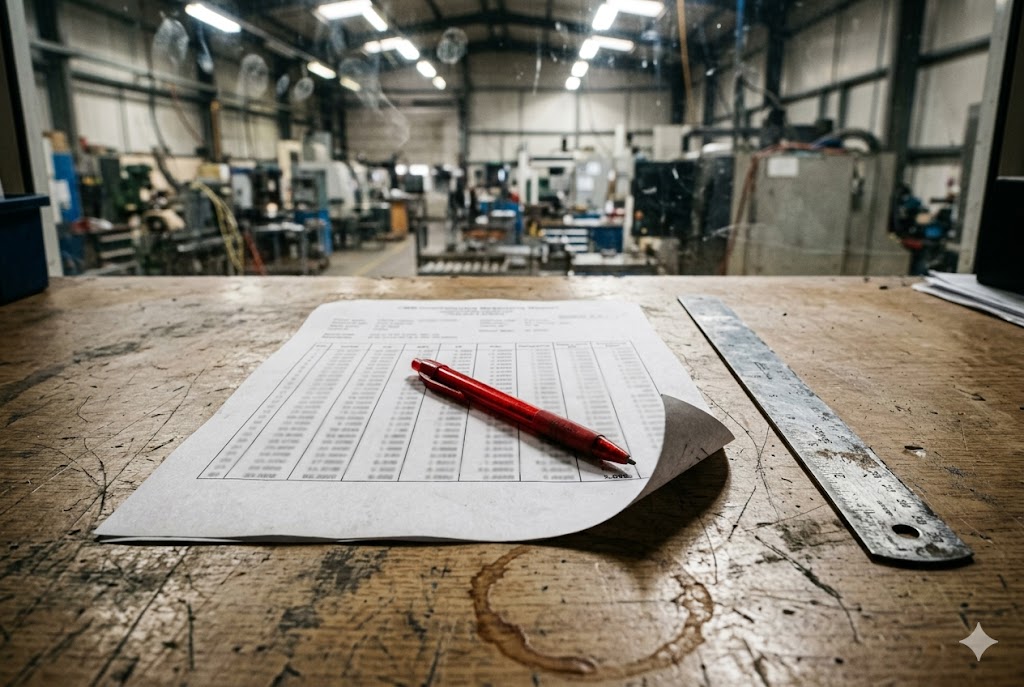
To confirm a supplier's actual wire EDM cutting envelope, request the machine model number, manufacturer's specification sheet, and documented work samples of parts close to the size you need. Worktable load capacity must also be verified — exceeding rated weight causes accuracy loss that no programming adjustment can fix.
Four Things to Ask Before Sending Drawings
A specification sheet is a starting point, not a guarantee. Here is what to request:
1. Machine model and manufacturer's spec sheet. The spec sheet gives you XY travel, Z-axis capacity, and worktable load rating. These three numbers define the hard limits.
2. Work samples of comparable part sizes. Ask for inspection reports — CMM data or first-article reports 8 — for parts that are at least 70% of the size you need. If a supplier cannot provide these, they have not done the work at that scale.
3. Environmental controls documentation. Large, precise wire EDM work requires stable temperature. Thermal expansion is a real and daily challenge 9 in precision machining — a shop cutting 200mm brackets all day may have a floor temperature that swings 5–8°C, which is acceptable for small work but not for large precision parts. Ask how temperature is controlled in the EDM area.
4. Filtration and dielectric system capacity. Cutting large parts generates more debris. If the shop's filtration system is sized for small-to-medium work, it will struggle on large jobs, causing surface finish problems and mid-cut wire breaks. Understanding the multi-pass surface finishing process 10 and whether the supplier's system can support it consistently across long cuts is essential.
The Worktable Load Limit: A Frequently Overlooked Constraint
Worktable load capacity is a hard mechanical limit. Exceeding it causes machine vibration, loss of positional accuracy, and mechanical wear. No parameter adjustment can compensate for an overloaded table.
For large steel blocks or stacked plate arrays, calculate the workpiece weight before sending the RFQ. If the number is close to the machine's rated limit, ask the supplier explicitly what their margin policy is — some shops refuse to load beyond 80% of rated capacity; others will run right to the limit.
Red Flags During Supplier Qualification
Watch for these warning signs when a supplier responds to your inquiry about large-format wire EDM:
- They quote machine travel but cannot provide work samples at similar dimensions
- They reference machine capability without mentioning worktable load limits
- They do not mention temperature control or dielectric filtration when discussing large jobs
- Their lead time seems too short for the complexity and size of the part
Any of these signals that their experience at that size range is limited — and that their confidence may be based on the machine's theoretical capability, not demonstrated production results.
Conclusion
Knowing a supplier's machine model is only the first step. The real question is whether their environment, process experience, and quality systems are matched to your part size. Verify with data — not just spec sheets.
Footnotes
1. Compares slow-wire vs. fast-wire EDM surface finish, accuracy, and temperature requirements. ↩︎
2. Official product overview of the GF Machining Solutions CUT P 550 Pro wire EDM specifications. ↩︎
3. Makino's official U86 page detailing XY travel up to 1,400×987mm and 3,000kg capacity. ↩︎
4. Explains the wire EDM process, dielectric flushing role, and its effect on cut accuracy. ↩︎
5. Modern Machine Shop guide on dielectric fluid management and its impact on wire EDM performance. ↩︎
6. Covers key differences between sinker EDM and wire EDM and when each process is preferred. ↩︎
7. Sodick's full wire EDM machine lineup with linear motor technology for high-precision cutting. ↩︎
8. Step-by-step guide to reading and validating a CMM inspection report for manufactured parts. ↩︎
9. Explains how ambient temperature swings affect dimensional accuracy in EDM and CNC machining. ↩︎
10. Modern Machine Shop breakdown of wire EDM speed, skim passes, and achievable surface finish levels. ↩︎