Skip to main content Skip to footer
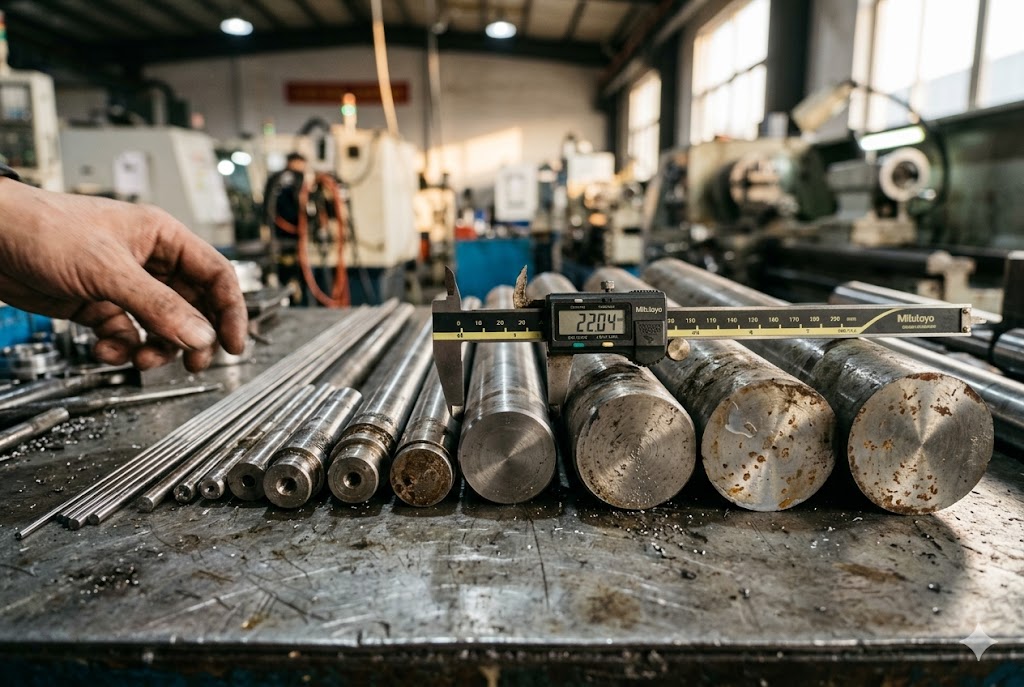
Every time we help a client source precision turned parts, one question keeps coming up: "Can your factories actually hit this diameter?" It's a fair question — and a costly one to get wrong. Wrong machine selection means scrap, delays, and angry downstream customers.
Swiss-type CNC lathes in China can handle bar stock from as small as 0.5mm up to 38mm in guide bushing mode, and up to 42mm in non-guide-bushing mode. The commercial sweet spot covering most orders is Ø3mm to Ø32mm, which matches both machine availability and bar stock supply in the Chinese market.
That range sounds wide — because it is. But not every factory in China can work across the full range. Here is what you need to know before placing an order.
What Is the Smallest Diameter Part a Swiss-Type Lathe Factory in China Can Reliably Produce?
When clients send us drawings for micro-precision components, the first thing our team checks is whether the required diameter is below 4mm. Below that threshold, machine selection in China gets narrow fast.
Swiss-type lathes in China can reliably produce parts down to 0.5mm (0.020") in diameter. However, consistent accuracy at that extreme requires specialized guide bushings and high-spindle-speed machines — equipment found almost exclusively at facilities running imported Japanese brands, not domestic Chinese machines.
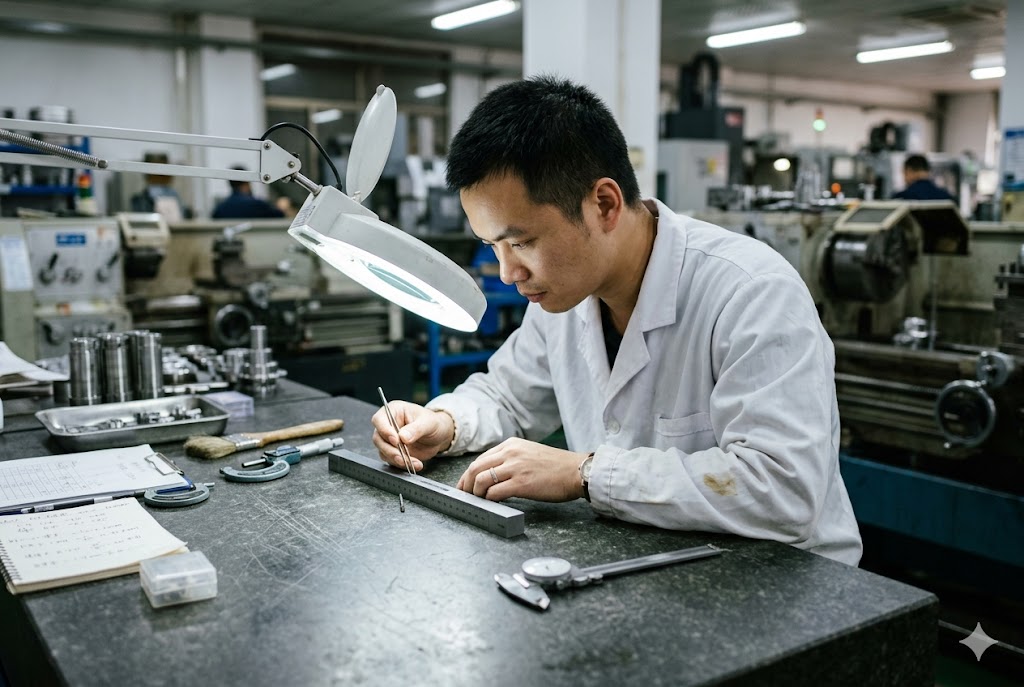
The Sub-4mm Reality in Chinese Factories
The 0.5mm lower bound is real — but it is not common. Very few facilities in China actually produce at that diameter with confidence. Here is why.
At diameters below 4mm, the guide bushing 1 clearance must be extremely tight. If the clearance between the bushing and the bar is off by even a few microns, the part deflects under the cutting tool. That deflection produces dimensional error and surface damage. Controlling that clearance demands both machine precision and bar stock consistency.
The bar stock itself is the first constraint. Screw-machine-quality centerless-ground bar 2 — the kind that maintains diameter consistency within ±0.013mm along a full 12-foot length — becomes hard to source domestically in China for diameters below 3mm. When a factory cannot get the right bar, the machine cannot perform, no matter how good it is.
Which Machines Handle Sub-4mm Work in China?
| Diameter Range | Typical Machine | Origin | Spindle Speed | Notes |
|---|---|---|---|---|
| 0.5mm – 2mm | Citizen Cincom L12 | Japan | Up to 15,000 RPM | Ceramic bearings required |
| 2mm – 4mm | Tsugami B012, Citizen M16 | Japan | 10,000–15,000 RPM | High RPM with small guide bushings |
| 4mm – 20mm | Citizen, Tsugami, Sowin, JSWAY | Japan / China | 8,000–12,000 RPM | Domestic machines viable at 4mm+ |
| 20mm – 32mm | Star, Tsugami, TAIKE, Nanjing Jianke | Japan / China | 5,000–8,000 RPM | Both domestic and Japanese machines common |
Chinese domestic builders — including TAIKE, Sowin, JSWAY, and Nanjing Jianke — have made real progress. But they have not yet matched the spindle dynamics, vibration damping, and guide bushing clearance control needed for reliable sub-4mm production to medical or aerospace tolerances. If your parts are below 4mm and tolerances are tight, ask specifically which machine model will run your job.
What "Reliable" Actually Means
Reliable does not mean the factory has run one sample at 0.5mm. It means:
- Consistent first-article results across multiple setups
- Cpk ≥ 1.33 3 on critical dimensions
- Documented bar stock traceability
- Machine calibration records within the last 6 months
When we visit supplier factories on behalf of clients, we ask for production records — not showroom samples. The difference between a factory that has machined 0.8mm parts once and one that does it in volume every week is large.
Watchmaking and Micro-Electronics Applications
The 0.5mm–2mm range exists primarily for watchmaking components and micro-electronics connectors. Some Chinese facilities in Guangdong and Shenzhen have built real capability here, but they are running Japanese equipment. If you are sourcing watch components or micro-pins, ask your service provider to name the exact machine model and share spindle speed specifications. That tells you immediately whether the capability is genuine.
Can Swiss-Type Lathes Handle Bar Stock Larger Than 32mm, and What Machines Support That?
The 32mm ceiling comes up often in our supplier audits. Clients see a drawing calling for a 35mm or 38mm diameter part and assume a Swiss lathe cannot do it. That assumption is close — but not entirely correct.
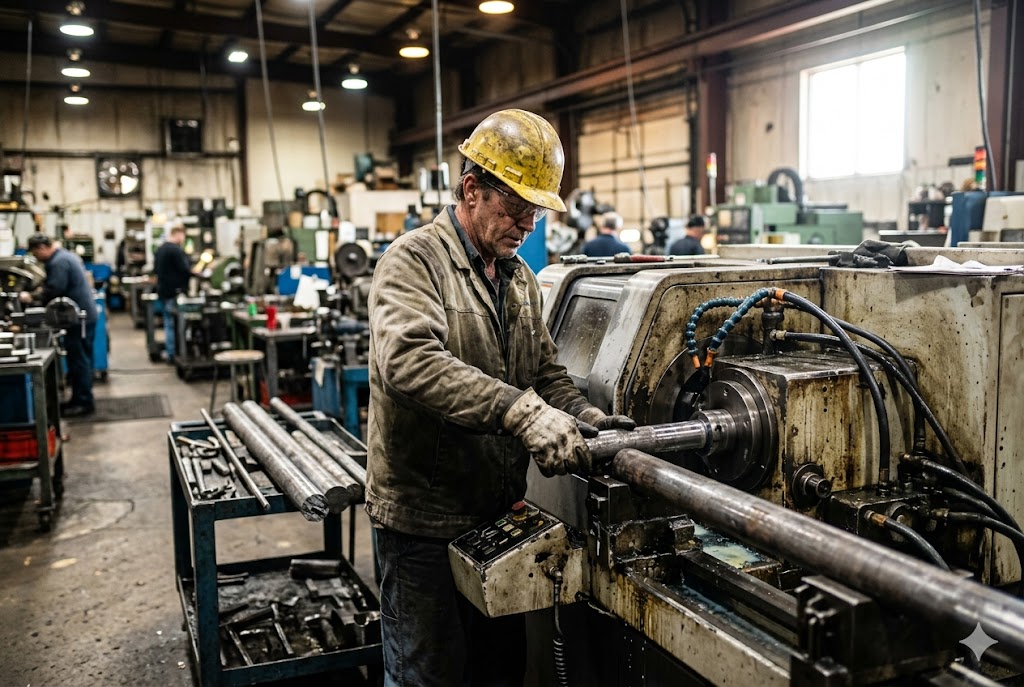
Swiss-type lathes in guide bushing mode can handle bar stock up to 38mm (1.50"), which is the accepted global architectural limit. In non-guide-bushing mode, convertible machines can extend that to 42mm. However, very few Chinese domestic Swiss lathe manufacturers currently offer certified machines above 32mm.
The 38mm Guide Bushing Limit
The 38mm ceiling is not a Chinese market limitation — it is a physics constraint. The sliding headstock and guide bushing architecture 4 works by supporting the bar immediately ahead of the cutting zone. As diameter increases, the guide bushing becomes a structural bottleneck. At 38mm, the forces required to maintain bore precision while feeding the bar exceed what the guide bushing system can reliably manage.
This limit applies to Japanese, European, and Chinese machines equally. If a supplier tells you their Swiss lathe handles 40mm in guide bushing mode, ask for the specification sheet. That number is almost certainly wrong.
Non-Guide-Bushing (NGB) Mode: Up to 42mm
Some convertible Swiss-type machines allow the guide bushing holder to be removed. The bar is then gripped directly from the headstock collet. This is called non-guide-bushing or chucker mode.
In NGB mode, machines like the Star SR-38 Type B 5 can handle bar stock up to 42mm. The trade-off is significant: you lose the near-zero-overhang precision advantage that defines true Swiss machining. NGB mode is better suited for shorter, stockier parts where length-to-diameter ratio is low and tight tolerances on long features are not required.
What Chinese Domestic Builders Offer Above 32mm
| Machine Class | Max Bar Capacity | Common Chinese Brands | Availability in China |
|---|---|---|---|
| Standard Swiss (guide bushing) | Up to 32mm | TAIKE, Sowin, JSWAY, Nanjing Jianke | Widely available |
| Large Swiss (guide bushing) | Up to 38mm | Citizen, Star, Tsugami (imported) | Available at premium facilities |
| NGB / chucker Swiss | Up to 42mm | Star SX-38 (imported), some domestic hybrids | Limited |
| Sliding headstock turning center (not true Swiss) | Up to 50mm | Various Chinese brands | Available, but different capability profile |
The last row deserves attention. Some Chinese manufacturers label their sliding headstock turning centers as "Swiss-type." These machines can handle bar stock up to 50mm, but they are not true guide-bushing Swiss lathes. They do not provide the same overhang control or precision for long slender parts. Importing from a facility running these machines for work that requires true Swiss precision is a quality risk.
How to Verify Machine Capability Above 32mm
When sourcing parts in the 33mm–42mm range from Chinese factories, ask for:
- The exact machine model and year of manufacture
- Whether the machine is running in guide bushing or NGB mode for your part
- A sample first article inspection report (FAI) showing dimensional results on a part of similar diameter and complexity
Our team conducts factory visits specifically to verify these details. A supplier quoting 38mm capacity on a domestic machine that tops out at 32mm is a common issue we catch during audits.
How Does Bar Diameter Affect Cycle Time, Material Waste, and Per-Part Cost?
This is the question purchasing managers ask us most often when comparing quotations. Two factories quote the same part at very different prices. Bar diameter choice is often the reason — and it is rarely explained clearly.
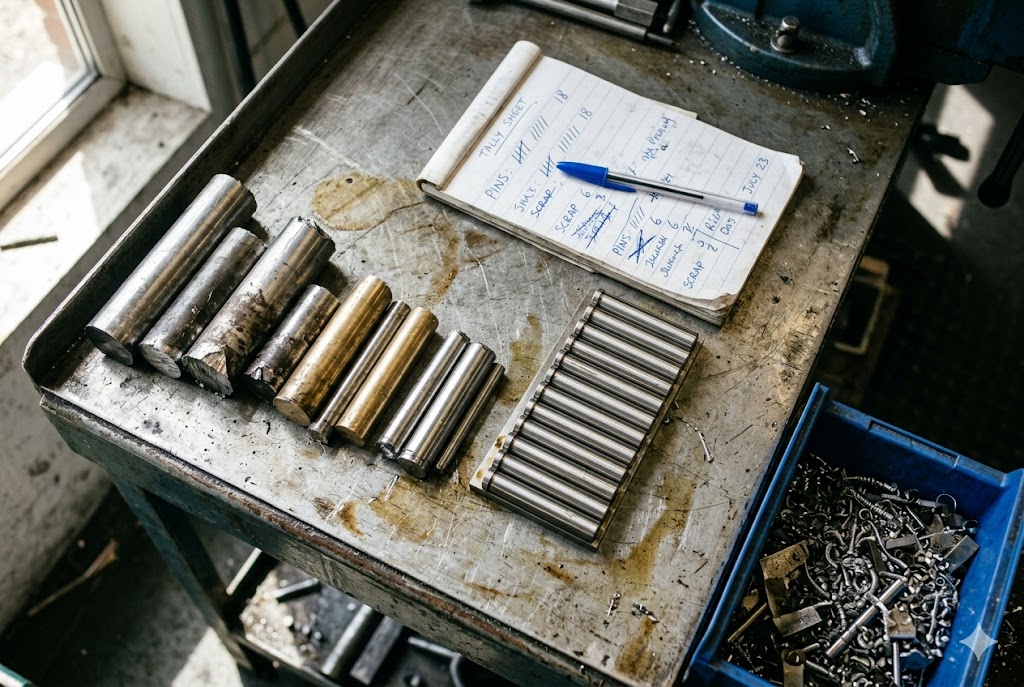
Bar diameter directly affects cycle time, material utilization, and tooling wear. Using a bar that is too large for the part wastes material and extends cycle time. Using a bar that is too small risks deflection and scrap. Selecting the correct near-net-size bar is one of the most important cost decisions in Swiss CNC machining.
Cycle Time: Why Larger Diameter Costs More Time
Swiss lathes feed bar stock continuously 6. Larger diameter bar means more material to remove per part. More material removal means more cutting passes. More passes mean longer cycle time. Longer cycle time means fewer parts per hour.
For example, a part with a finished outer diameter of 8mm machined from a 10mm bar requires far less stock removal than the same part machined from a 16mm bar. If both factories quote on the same drawing but use different bar diameters, the cycle time difference can be 30–50%.
Material Waste and Bar Utilization
Every Swiss lathe leaves a remnant at the end of each bar. The remnant cannot be fed through the guide bushing and is scrapped. For expensive materials — titanium Grade 5 7, stainless 316L, Inconel — this remnant cost adds up fast.
| Bar Diameter | Typical Remnant Length | Waste Risk for Expensive Materials |
|---|---|---|
| Under 10mm | 80–120mm | Low — small remnant volume |
| 10mm – 20mm | 100–150mm | Moderate |
| 20mm – 32mm | 120–180mm | Higher — larger remnant cross-section |
| Above 32mm | 150–200mm | Significant for exotic alloys |
Good factories minimize remnant waste by batching runs intelligently and selecting bar lengths that leave minimal tail stock. Ask your supplier how they handle remnant management for your specific material.
Near-Net-Size Bar Selection
The correct engineering approach is to specify a bar diameter that is as close as possible to the largest feature on the finished part — with just enough stock for cleanup cuts. This practice:
- Reduces cycle time by minimizing stock removal
- Reduces material cost per part
- Reduces tool wear
- Reduces heat generation during machining
Our engineers review customer drawings before quoting and often recommend a bar diameter change that the customer had not considered. A 2mm reduction in bar diameter can cut per-part cost by 15–25% on high-volume runs.
How Diameter Affects Per-Part Cost: A Practical Example
Assume a stainless steel pin with a 12mm finished outer diameter, 80mm long, machined in a 10,000-piece order:
- Machined from 14mm bar: cycle time approximately 45 seconds, material waste per part approximately 12 grams
- Machined from 20mm bar: cycle time approximately 70 seconds, material waste per part approximately 28 grams
At volume, the difference in cycle time and material alone creates a meaningful cost gap. This is why we push back on bar diameter assumptions when reviewing supplier quotations on behalf of clients.
What Diameter Range Covers 90% of Typical Swiss CNC Parts Ordered by Importers?
When we analyze the orders flowing through our supply chain for US and Canadian clients, one pattern holds consistently. The overwhelming majority of Swiss CNC parts fall inside a narrow diameter band — and knowing that band helps importers set realistic sourcing expectations.
The Ø3mm to Ø32mm range covers approximately 90% of typical Swiss CNC parts ordered by North American importers. This range matches the commercial capacity of most Chinese factories running Swiss lathes, whether on domestic or imported machines, and aligns with domestic bar stock supply availability.

What End Markets Drive This Range?
The 3mm–32mm band is not arbitrary. It reflects the actual geometry of high-volume precision parts across the industries that import most from China:
- Electronics connectors and pins: Ø1mm–Ø8mm
- Automotive fuel system and sensor components: Ø6mm–Ø20mm
- Hydraulic fittings and valve parts: Ø12mm–Ø32mm
- Medical device shafts and implant components: Ø3mm–Ø16mm
- Aerospace fasteners and bushings: Ø6mm–Ø32mm
Parts outside this range exist. But they represent a small share of volume orders — and sourcing them requires more specific factory matching.
Machine Availability by Diameter Class in China
| Diameter Class | Factory Availability in China | Typical Machine Source | Common Applications |
|---|---|---|---|
| Ø0.5mm – Ø3mm | Limited — specialist facilities only | Japanese imports (Citizen, Tsugami) | Watch parts, micro-pins, medical probes |
| Ø3mm – Ø20mm | Broad — most Swiss lathe shops | Japanese and domestic Chinese | Connectors, sensors, shafts, fasteners |
| Ø20mm – Ø32mm | Good — mid-range shops | Japanese and domestic Chinese | Fittings, valve bodies, aerospace parts |
| Ø32mm – Ø38mm | Limited — larger facilities only | Mostly Japanese imports | Heavy automotive, industrial components |
| Above Ø38mm | Very limited — not true Swiss | Sliding headstock turning centers | Larger turned parts (non-Swiss architecture) |
Why the 3mm–32mm Range Also Aligns with Supply Chain Logistics
Precision ground bar stock 8 for diameters outside the 3mm–32mm range is harder to source with the quality consistency Swiss machining requires. Screw-machine-quality bar — centerless-ground to ±0.013mm diameter consistency along its full length — is readily available in China for the 3mm–32mm range in common materials: 303 stainless, 304, 316L, 6061 aluminum, C360 brass, and titanium Grade 5.
Below 3mm and above 32mm, sourcing the right bar often requires import lead times or premium domestic suppliers. That adds cost and scheduling risk that importers should factor into their total landed cost calculations.
Our Sourcing Recommendation for Importers
If your parts fall in the Ø3mm–Ø32mm range, you have the broadest choice of factories in both China and Vietnam — and the most competitive pricing. If your parts are outside that range, tell your sourcing partner early. Machine matching and bar stock sourcing both take more lead time at the extremes.
Our team includes engineers who review drawings before we approach any factory. We do not send inquiries to facilities that cannot actually run your diameter. That saves everyone time — and prevents the quality failures that come from mismatched machine capability.
For importers evaluating machine specs, the Citizen Cincom L12 9 and the Tsugami B0125-III 10 are two benchmark machines widely referenced when evaluating Chinese factory capability at the sub-20mm and sub-12mm ends of the range respectively. Asking a potential supplier which model they run for your diameter — and verifying the answer against published specifications — is one of the fastest ways to confirm whether stated capability is real.
Conclusion
Swiss-type CNC lathes in China cover 0.5mm to 38mm — but factory capability varies sharply across that range. The 3mm–32mm band is where most importers find reliable production, competitive pricing, and consistent bar stock supply. Always verify machine model and bar stock specifications before placing orders outside that window.
Footnotes
1. Explains how guide bushings work and why clearance control is critical for Swiss lathe precision. ↩︎
2. Covers centerless grinding tolerances and why screw-machine-quality bar stock matters for Swiss machining. ↩︎
3. Defines the Cpk process capability index and why ≥1.33 is the accepted minimum for manufacturing quality. ↩︎
4. Explains Swiss machining architecture, guide bushing function, and bar stock diameter limitations. ↩︎
5. Star SR-38 Type B specifications showing guide bushing and non-guide bushing mode capacity up to 42mm. ↩︎
6. Comprehensive guide to Swiss-type lathe operation, bar feeding, and cycle time fundamentals. ↩︎
7. Overview of Ti-6Al-4V (Grade 5) titanium properties and its use in aerospace and medical machining. ↩︎
8. Details why precision ground bar stock is essential for Swiss CNC machines and what tolerances to expect. ↩︎
9. Case study on micromachining with the Citizen Cincom L12, covering spindle speeds and bar diameter capability. ↩︎
10. Tsugami B0125-III specifications covering 12mm Swiss turning and guide bushing/chucker convertibility. ↩︎