Skip to main content Skip to footer
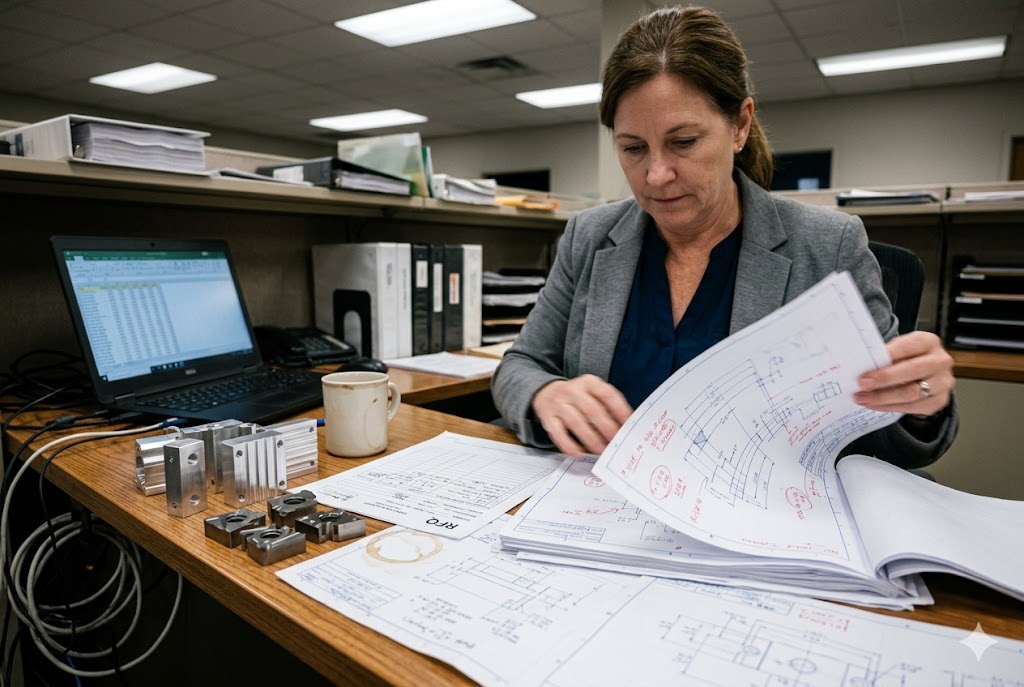
Every week, our sourcing team reviews RFQs from US and Canadian buyers who specify "wire EDM" on their drawings but leave the material field blank — or worse, list the wrong grade. That gap costs time, money, and sometimes an entire production run.
Wire EDM machines in China most commonly process tool steels (D2, H13, SKD11), stainless steels (300 series, 17-4 PH), tungsten carbide, titanium alloys (Ti-6Al-4V), aluminum alloys (6061, 7075), and nickel superalloys such as Inconel 718. The right material depends on the part's end-use, required hardness, and tolerance class.
Understanding which materials Chinese shops handle best — and which carry hidden risks — helps you write better purchase orders and avoid costly surprises at inspection.
Can My Chinese Wire EDM Supplier Machine Titanium, Inconel, or Copper Alloys?
When our engineers first started fielding requests for Inconel turbine components, we learned quickly that not every wire EDM shop in China is equipped for exotic alloys. Capability varies widely, and the wrong supplier choice leads to scrapped parts and missed deadlines.
Yes, most mid-to-large Chinese wire EDM suppliers can machine titanium (Ti-6Al-4V), Inconel (718, 625), and copper alloys (C17200, C11000). However, exotic alloys require slower cut speeds, specialized wire electrodes, and experienced operators. Always verify capability with sample parts before placing a production order.
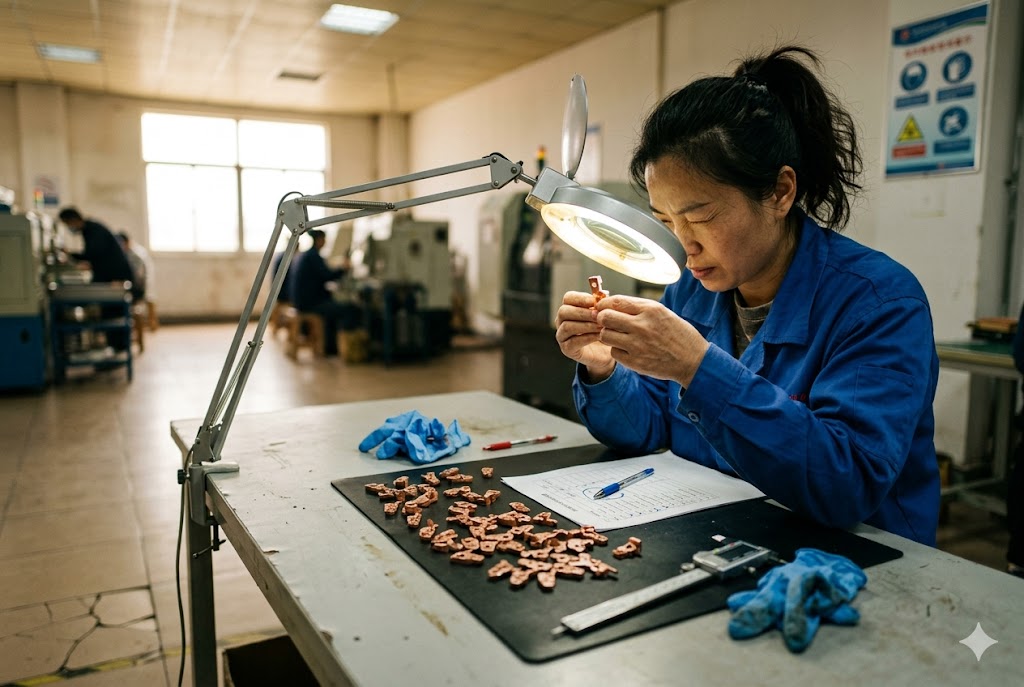
Titanium Alloys
Ti-6Al-4V is the most common titanium grade processed by Chinese wire EDM shops. It is used heavily in aerospace brackets, orthopedic implants, and structural connectors. Wire EDM is particularly well-suited to titanium because it avoids the work-hardening and tool wear that make conventional milling expensive on this material.
The cutting is done without mechanical contact, so there is no cutting force on the workpiece. This matters for thin-walled titanium features that would deflect or distort under a milling cutter.
One risk specific to titanium is the recast layer. Wire EDM creates a thin, brittle white layer on the cut surface — typically 0.005 to 0.025 mm thick. On titanium parts used in fatigue-critical applications 1, this layer must be removed by post-process lapping or additional EDM skim cuts. Many Chinese suppliers skip skim passes unless you specify and pay for them in the contract.
| Titanium Grade | Common Application | Key EDM Consideration |
|---|---|---|
| Ti-6Al-4V (Grade 5) | Aerospace brackets, implants | Recast layer removal required for fatigue parts |
| Ti-3Al-2.5V (Grade 9) | Hydraulic tubing connectors | Good machinability, moderate strength |
| Commercially pure Ti (Grade 2) | Chemical equipment | Soft, cuts cleanly, recast layer thinner |
Inconel and Nickel Superalloys
Inconel 718, Hastelloy C-276, and Waspaloy 2 are regularly processed by specialized Chinese EDM facilities serving aerospace and energy clients. These alloys resist conventional cutting because they work-harden rapidly and generate extreme heat at the cutting edge. Wire EDM sidesteps both problems entirely.
The trade-off is speed. Nickel superalloys cut slowly. Expect wire EDM cutting rates on Inconel to be roughly 30–50% slower than on tool steel of comparable thickness. This affects price and lead time. Ask your supplier for a per-kilogram or per-hour rate on exotic alloys separately from their standard tool steel pricing.
Copper Alloys
Standard copper (C11000) is an excellent wire EDM material because of its high electrical conductivity. It machines cleanly and quickly. Copper-beryllium (C17200) is a growing niche — it is used for precision spring contacts and connectors in electronics. However, beryllium is toxic. Machining C17200 generates hazardous dust and requires documented material handling controls. If you are importing into the EU or North America, you need to confirm that your Chinese supplier has proper safety procedures and that the parts meet RoHS/REACH compliance requirements 3. This is a supply chain risk that goes beyond part quality — it is a legal and regulatory exposure.
| Copper Alloy | Conductivity | EDM Speed | Compliance Risk |
|---|---|---|---|
| C11000 (pure copper) | High | Fast | None |
| C17200 (copper-beryllium) | High | Moderate | RoHS/REACH — beryllium toxicity |
| C36000 (free-machining brass) | Moderate | Fast | None |
Which Materials Are Most Cost-Efficient to Cut With Wire EDM in China?
We see buyers spend 40% more than necessary on wire EDM jobs simply because their material choice drives up machine time. The material you specify on a drawing has a direct impact on cut speed, wire consumption, and therefore your unit cost.
Tool steels (D2, H13, SKD11) and aluminum alloys (6061, 7075) are the most cost-efficient materials for wire EDM in China. They cut at higher speeds, require fewer skim passes, and are widely stocked by Chinese suppliers. Exotic alloys like Inconel or titanium carry a significant cost premium due to slower cutting rates.
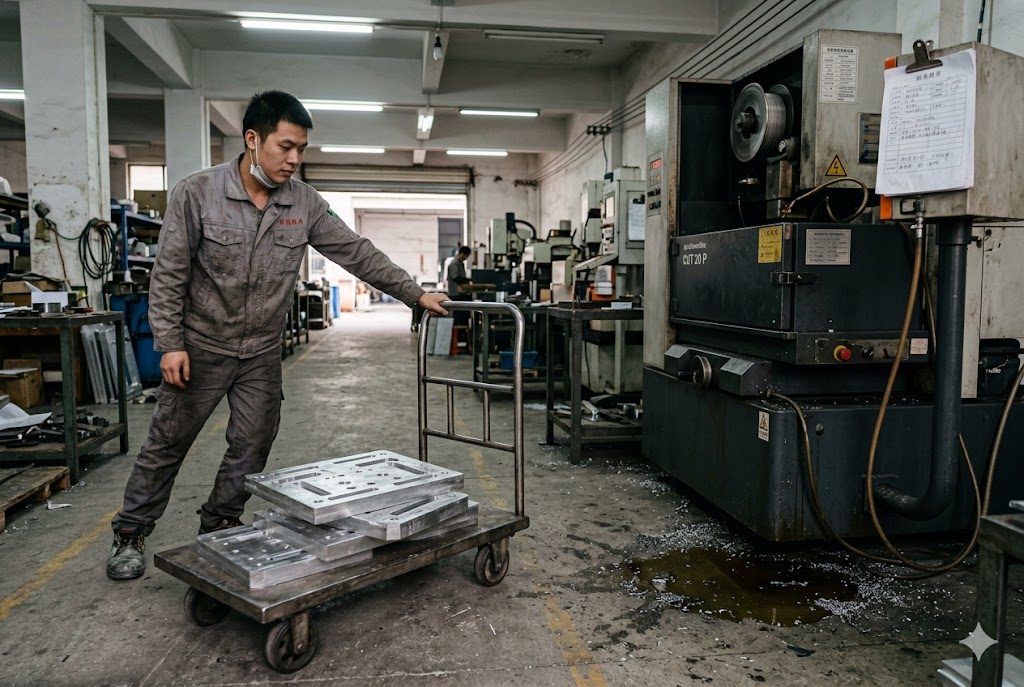
Why Material Affects Cost So Directly
Wire EDM removes material through electrical spark erosion 4. The speed of this process depends on the material's electrical conductivity, thermal conductivity, and melting point. Materials that conduct electricity well and have lower melting points are removed faster per unit of energy.
Aluminum, for example, cuts very quickly. Inconel cuts slowly because it has a high melting point and low thermal conductivity — meaning more energy is needed to erode each cubic millimeter of material. More machine time means higher cost, even if the raw material price itself is similar.
Cost Efficiency by Material Category
| Material | Relative EDM Cut Speed | Typical Cost Premium vs. Tool Steel | Common Use Case |
|---|---|---|---|
| Aluminum 6061/7075 | Very fast | Lower cost | Prototypes, fixtures, enclosures |
| Tool steel D2/H13/SKD11 | Fast (in hardened state) | Baseline | Dies, molds, punches |
| Stainless 304/316 | Moderate | 10–20% higher | Medical parts, connectors |
| Stainless 17-4 PH | Moderate | 15–25% higher | Aerospace fasteners |
| Titanium Ti-6Al-4V | Slow | 40–60% higher | Aerospace, implants |
| Inconel 718 | Very slow | 80–120% higher | Turbine parts, energy sector |
| Tungsten carbide | Slow, requires Mo wire | 60–100% higher | Cutting inserts, wear parts |
How to Reduce Cost Without Changing Your Design
There are practical ways to lower wire EDM costs without redesigning your part:
Specify skim cuts only where required. Skim passes improve surface finish and remove the recast layer, but they add machine time. If the feature is non-critical, a single rough cut may be sufficient. Tell your supplier explicitly which surfaces need skim cuts and which do not.
Batch similar materials together. Chinese EDM shops set up their machines with specific wire types and dielectric fluid settings for each material. Combining multiple parts of the same material in one run reduces setup time and unit cost.
Choose domestic-equivalent grades where possible. If your drawing specifies D2 tool steel, Chinese shops stock the domestic equivalent Cr12MoV 5. If your application allows it, accepting domestic equivalents reduces lead time and cost. If your application does not allow it, say so explicitly in the purchase order and require mill test reports.
Does Material Conductivity Affect How Well a Metal Can Be Wire EDM Machined?
This question comes up in almost every technical conversation our team has with new buyers. The short answer is yes — but the relationship is more nuanced than most people expect.
Electrical conductivity is a prerequisite for wire EDM: the workpiece must conduct electricity for spark erosion to occur. However, higher conductivity does not always mean faster or better cutting. Thermal conductivity, melting point, and material toughness all influence cut quality and speed together.
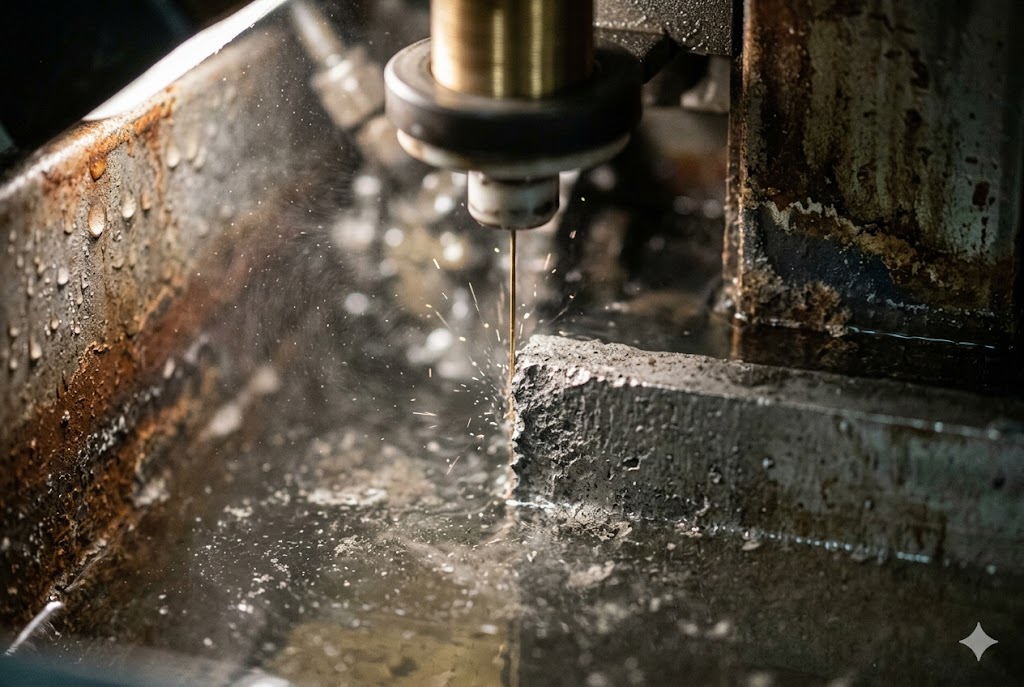
How Wire EDM Uses Electrical Conductivity
Wire EDM works by passing a controlled electrical discharge (spark) between a thin wire electrode and the workpiece through a dielectric fluid (usually deionized water) 6. The spark vaporizes a tiny amount of workpiece material with each pulse. Repeat this millions of times and you erode a precise slot — the kerf — through the part.
For this to work, the workpiece must be electrically conductive. This is why wire EDM cannot cut ceramics, plastics, or glass in their pure form. Any metal alloy with sufficient conductivity can, in principle, be wire EDM'd.
The Role of Thermal Conductivity and Melting Point
A material that conducts heat well dissipates the spark energy quickly. This actually slows the erosion rate because less heat stays concentrated at the spark point. Copper, for example, has very high thermal conductivity — it conducts heat away so efficiently that it takes more energy per pulse to remove material than you might expect from a "soft" metal.
On the other hand, a material with low thermal conductivity — like titanium or Inconel — concentrates heat at the spark point, which aids erosion but also creates more aggressive recast layer formation and HAZ (heat-affected zone) damage.
Recast Layer and Heat-Affected Zone by Material
The heat-affected zone and recast layer are byproducts of the thermal nature of wire EDM. They are present on every wire EDM cut surface to some degree.
| Material | Recast Layer Thickness | HAZ Depth | Risk Level |
|---|---|---|---|
| Tool steel (D2, H13) | 0.005–0.020 mm | Low–moderate | Medium — skim cuts recommended for dies |
| Titanium Ti-6Al-4V | 0.010–0.025 mm | Moderate | High — brittle layer, fatigue risk |
| Inconel 718 | 0.008–0.020 mm | Moderate | High — can initiate cracking |
| Aluminum 6061 | 0.003–0.010 mm | Very low | Low — minimal concern |
| Tungsten carbide | 0.005–0.015 mm | Low | Medium — requires Mo wire |
| Stainless 304/316 | 0.005–0.015 mm | Low | Low–medium |
What Buyers Should Specify
Do not leave recast layer treatment to the supplier's judgment. If your part is used in a fatigue-critical, load-bearing, or implant application, specify in your purchase order that skim cuts are required and that the recast layer depth must not exceed a stated threshold. Some buyers also require post-process lapping or etching to remove the white layer entirely.
Chinese suppliers will skip these steps if they are not in the contract. It is not laziness — it is cost control on their side. Make your requirements explicit, and price them in accordingly.
Are There Materials My Supplier Should Avoid Using Wire EDM on Due to Quality Risks?
Our supply chain team has flagged several situations where a supplier's choice of process — or material — introduced risks that only appeared at final inspection or, worse, at the customer's facility.
Certain materials present specific quality risks in wire EDM: copper-beryllium (C17200) carries RoHS/REACH compliance risks; hardened tool steels require post-process skim cuts to remove brittle recast layers; and non-disclosed domestic steel substitutions can cause mechanical failure in service. Buyers must address these risks contractually, not assume suppliers will manage them voluntarily.

The Substitution Risk: Domestic Grades Without Disclosure
This is the most common quality risk we encounter. Chinese suppliers frequently substitute lower-grade domestic tool steel equivalents without telling the buyer. The most common substitutions are:
- Cr12MoV substituted for D2
- H11 substituted for H13
- SKD11 listed on the certificate but a lower-carbon variant used in production
These substitutions may perform adequately for low-stress applications. For injection mold cavities or stamping dies running high-volume production, they can cause premature failure — and by the time the failure is discovered, the supplier has been paid and the mold is in production.
What to do: Require mill test reports (MTRs) with heat-level traceability 7. A supplier-issued certificate of conformance is not sufficient. The MTR must come from the steel mill and include the heat number, chemical composition, and mechanical properties. Verify that the heat number on the MTR matches the stamp on the material.
The Recast Layer Risk on Hardened Steels and Titanium
As discussed earlier, the recast layer is a thin, brittle, re-solidified zone on every wire EDM cut surface. On hardened tool steels (HRC 55–62) used for stamping dies, the recast layer is hard and brittle — it can spall or crack under impact loading. On titanium, it can initiate fatigue cracking under cyclic stress 8.
Chinese suppliers routinely omit skim passes (finishing passes that erode the recast layer) unless these are explicitly contracted and priced. The additional cost is real but small compared to the cost of a failed die or a recalled implant component.
The Beryllium Risk: C17200 and Regulatory Compliance
Copper-beryllium (C17200) is used for precision spring contacts and connectors in electronics. It performs well — the issue is the beryllium content. Beryllium is highly toxic when inhaled as dust or fume. Machining C17200 without proper controls is a worker safety violation 9.
For buyers importing into the EU or North America, the risks are layered:
- RoHS/REACH compliance: Beryllium and its compounds are listed substances under REACH. Confirm that your part's use case is permitted and that the supplier has REACH documentation.
- Worker safety: Your supplier must have documented controls — dust extraction, PPE, medical monitoring — for beryllium work. Audit this before placing orders.
- End-customer liability: If your downstream customer discovers undocumented beryllium use in a product, the liability can flow back to you as the importer.
The Wire Electrode Choice Risk
Most Chinese EDM shops use brass wire as the cutting electrode. Brass wire is inexpensive and works well for most materials and tolerances. However, for tungsten carbide or for surface finishes requiring sub-micron Ra values, molybdenum (Mo) wire is the correct choice 10.
Mo wire produces a narrower kerf, lower recast layer, and better surface finish than brass wire on these applications. If your supplier quotes a carbide job using brass wire, ask whether Mo wire is available and specify it in the contract if needed. The wire type directly affects kerf width and dimensional accuracy — a parameter that should not be left to supplier discretion on precision parts.
Conclusion
Tool steels dominate Chinese wire EDM, but exotic alloys, aluminum, and copper variants are all viable with the right supplier. Specify materials precisely, require traceable MTRs, and contract skim cuts and recast layer requirements explicitly — do not assume suppliers will manage these details without written instruction.
Footnotes
1. Research showing EDM recast layers reduce Ti-6Al-4V fatigue strength by 15–30%; post-processing removes the damage. ↩︎
2. Study on wire EDM machinability and surface characteristics of Inconel 718 using optimized parameters. ↩︎
3. EU regulatory overview on beryllium alloys under REACH and RoHS for industrial importers. ↩︎
4. Wire EDM process guide covering wire selection, material compatibility, and cutting speed factors. ↩︎
5. Technical comparison of D2 and Cr12MoV tool steels explaining composition gaps and substitution risks. ↩︎
6. Explains the role of deionized water as dielectric fluid in wire EDM — insulation, cooling, and flushing. ↩︎
7. Explains what an MTR is, how heat numbers work, and why mill-issued documents are essential for traceability. ↩︎
8. Study confirming that recast layer and HAZ from wire EDM are the primary contributors to Ti-6Al-4V fatigue failure. ↩︎
9. OSHA FAQ on beryllium exposure risks, permissible limits, and required worker protections for machining operations. ↩︎
10. Explains why molybdenum wire is used for carbide EDM cutting versus standard brass wire. ↩︎