Skip to main content Skip to footer
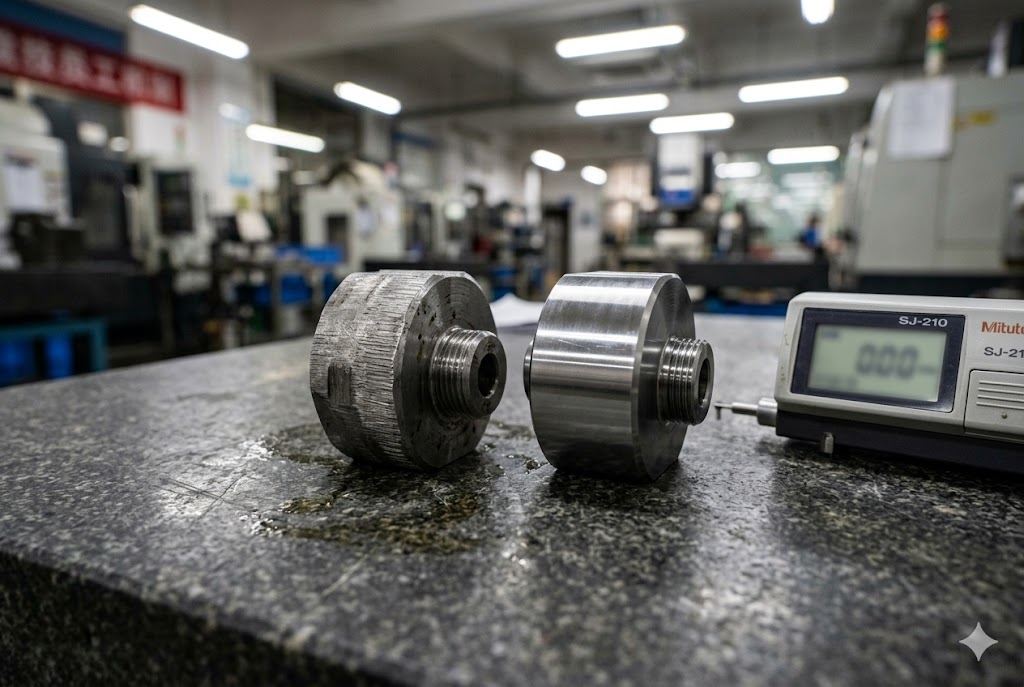
We have coordinated wire EDM orders across dozens of Chinese shops, and the same problem comes up every time: a buyer writes "Ra 0.8μm" on a drawing, two shops quote the same number, but the parts come back looking completely different. One has visible surface lines. The other is near-mirror smooth. Same spec. Different result.
Wire EDM machining in China can achieve surface roughness from Ra 3.2μm on a single rough pass down to Ra 0.2μm on a slow-wire machine with multiple skim passes. The result depends on machine type, pass count, and dielectric fluid. Most Chinese shops use fast-wire machines, which cannot reliably go below Ra 1.6μm.
Understanding this gap before you place an order saves you from receiving parts that fail inspection. Here is what every buyer sourcing wire EDM parts from China needs to know.
What Ra Value Should I Expect From a Standard Single-Pass Wire EDM Cut?
Every time we review a client's drawing before sending it to a Chinese shop, we check one thing first: does the surface roughness callout match what that shop's machines can actually deliver? A single-pass cut is the default — and its limits are often misunderstood.
A standard single-pass wire EDM cut in China produces Ra 1.5–3.2μm. Fast-wire machines — the most common type in Chinese domestic shops — sit at the higher end of that range, around Ra 3.0μm, with visible surface lines left by the wire discharge. This is adequate for tooling inserts and structural brackets, but not for precision fits or sealing surfaces.
What Happens During a Single Pass
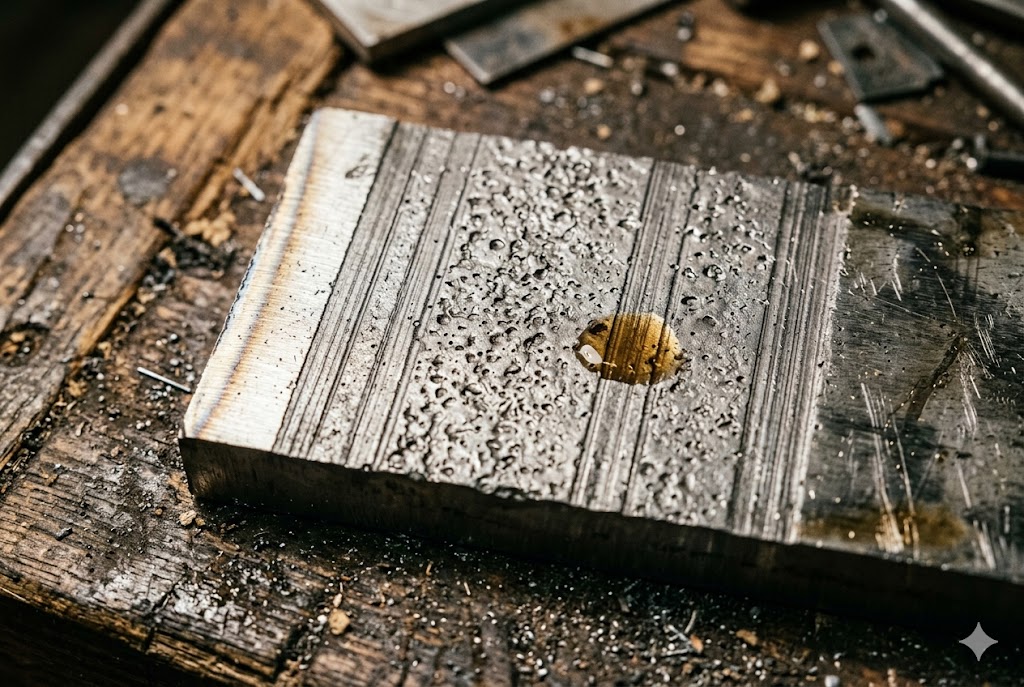
A single rough cut removes material at maximum efficiency. The machine runs at high discharge energy and fast wire speed. This produces a surface with a recast layer — a thin zone of re-melted and re-solidified metal — ranging from 5 to 15μm thick. Under a microscope, the surface looks like a shallow crater field 1.
For most tooling applications, this is acceptable. For precision mating surfaces, bearing seats, or parts requiring tight dimensional tolerances, it is not.
The Three Tiers of Wire EDM Surface Finish
Chinese wire EDM shops can be grouped into three performance tiers based on machine type:
| Machine Type | Typical Ra (Single Pass) | Best Achievable Ra | Common in China |
|---|---|---|---|
| Fast-wire (WEDM-HS) | Ra 3.0–6.3μm | Ra 1.6μm | Very common |
| Medium-wire (WEDM-MS) | Ra 1.6–3.2μm | Ra 0.8μm | Moderate |
| Slow-wire (WEDM-LS) | Ra 0.8–1.6μm | Ra 0.2μm | Less common |
Fast-wire machines dominate the Chinese market. They are low-cost, high-speed, and perfectly adequate for general tooling and fixture components. The wire moves continuously from a spool and is not reused, but the discharge energy is set high to maximize cutting speed.
Medium-wire machines were developed in China as an upgrade to fast-wire. They use multiple passes to improve finish. They can reach Ra 0.8μm under good conditions but are inconsistent.
Slow-wire machines use a precision wire-feed system with tight tension control. They cut slower, cost more to operate, and produce significantly better surfaces. A well-maintained slow-wire machine from Fanuc, Sodick, or Mitsubishi 2 can reliably reach Ra 0.4μm and below.
Why the Same Ra Callout Produces Different Results
If your drawing says "Ra 0.8μm" without specifying machine type or pass count, a fast-wire shop will quote one pass and call it done. A slow-wire shop will quote two or three skim passes. The prices will differ by 30–60%. The parts will differ even more.
This is not dishonesty. It is ambiguity. The fix is simple: add a process note to your drawing that says "Slow-wire EDM required" or "Minimum 3 skim passes" alongside the Ra callout.
How Many Skim Passes Are Needed to Reach Ra 0.4 µm on a Wire EDM Part?
When we help clients spec out precision tooling or insert cavities, the conversation almost always arrives at Ra 0.4μm. It sounds straightforward. In practice, getting there requires a clear understanding of what skim passes actually do — and how many are genuinely needed.
Reaching Ra 0.4μm on a wire EDM part typically requires one rough cut followed by two to three skim passes on a slow-wire machine using deionized water as the dielectric. Each skim pass runs at lower discharge energy than the previous one, progressively reducing the recast layer and smoothing the surface texture.
What a Skim Pass Actually Does
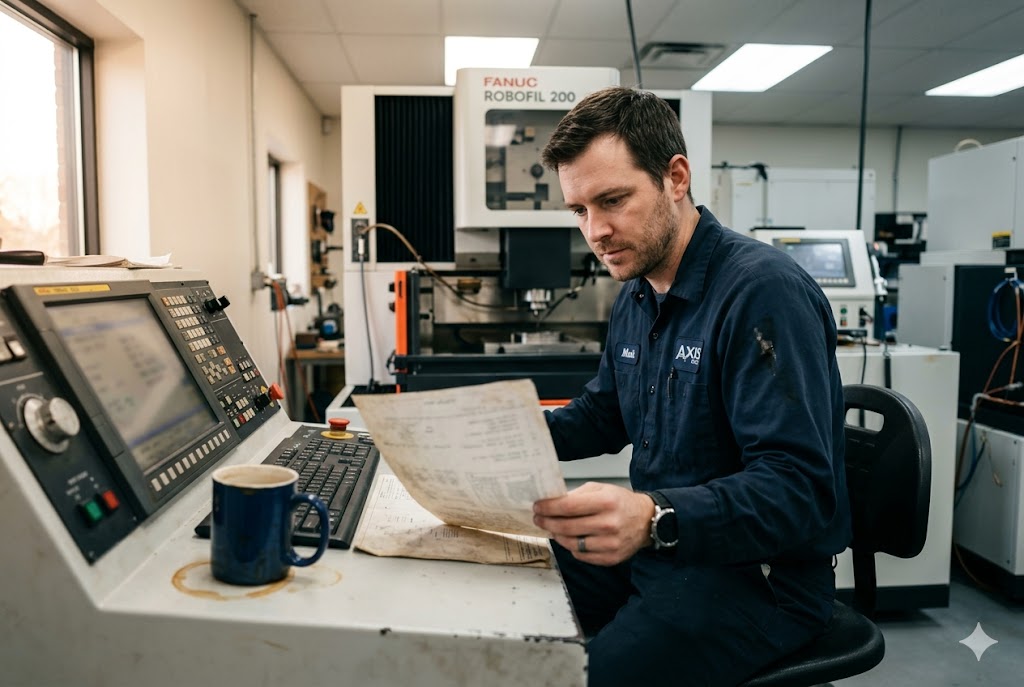
A skim pass is a finishing cut. The wire returns along the same path at reduced energy — lower peak current, shorter pulse duration, smaller spark gap. Each pass removes a thin layer of the recast material left by the previous pass.
The result is cumulative. After one skim pass, you remove most of the rough recast layer. After two skim passes, the surface is measurably smoother. After three skim passes, you are near the practical floor for water-based dielectric machines 3.
Pass Count by Target Ra
| Target Ra (µm) | Rough Pass | Skim Passes Required | Approx. Time Increase vs. Rough Only |
|---|---|---|---|
| Ra 1.6 | 1 | 0 | — |
| Ra 0.8 | 1 | 1 | +15–20% |
| Ra 0.4 | 1 | 2–3 | +30–40% |
| Ra 0.2 | 1 | 4–5 | +50–60% |
These figures apply to slow-wire machines with deionized water dielectric. Fast-wire machines cannot replicate them even with additional passes, because the machine architecture does not support the low-energy settings needed for final skim quality.
Material Changes the Pass Count
Not all materials behave the same way under skim conditions. Tool steels respond predictably. Carbide is harder to skim 4 and needs more passes at lower energy. Titanium generates debris that must be flushed aggressively. Inconel and superalloys are thermally challenging and require tight servo gap control.
| Material | Skim Passes for Ra 0.4µm | Wire Diameter | Notes |
|---|---|---|---|
| Tool steel (D2, H13) | 2–3 | 0.20–0.25mm | Standard settings |
| Tungsten carbide | 3–5 | 0.15–0.20mm | Ultra-low energy required |
| Titanium alloy | 2–3 | 0.20–0.25mm | Elevated flushing pressure |
| Inconel / superalloy | 3–4 | 0.20mm | Low duty cycle, tight gap control |
Why Cost Increases Nonlinearly
Each additional skim pass does not just add time proportionally. The machine slows down. The operator monitors more closely. The risk of wire breakage increases at ultra-low energy settings. For a part that costs $80 in rough-cut time, reaching Ra 0.4μm may cost $120–$130 total. Reaching Ra 0.2μm may cost $160–$180. The last increment of finish quality is always the most expensive.
Does Slow-Wire EDM Produce a Significantly Better Surface Finish Than Fast-Wire?
This is one of the most frequent questions we get from clients who are comparing quotes from two different Chinese shops. One shop is cheaper. One is slower and more expensive. The client wants to know if the price difference is justified.
Yes — slow-wire EDM produces significantly better surface finish than fast-wire. Slow-wire machines with deionized water dielectric reliably reach Ra 0.4µm, and oil-based slow-wire machines can achieve Ra 0.2µm or better. Fast-wire machines cannot match these levels regardless of operator experience or number of passes.
The Core Difference Is Machine Architecture
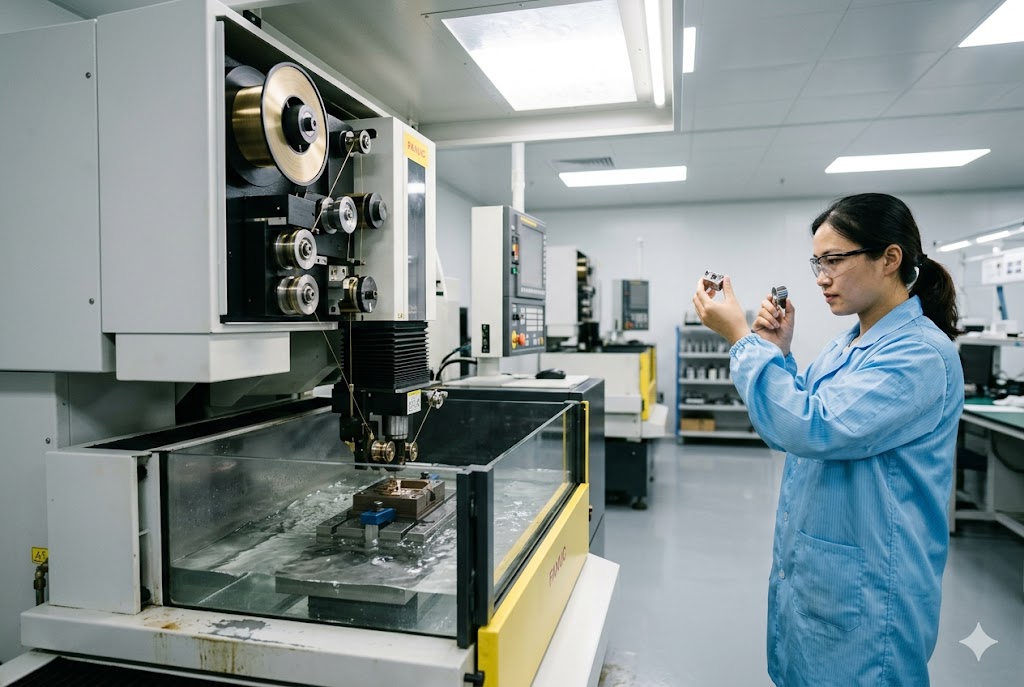
Fast-wire machines (called WEDM-HS in Chinese industry) use a wire that moves at high speed in both directions — it reciprocates back and forth. This is efficient and low-cost, but it creates inconsistent discharge conditions. The wire vibrates. The surface shows it.
Slow-wire machines use a wire that moves in one direction only, at controlled low speed, with precision tension management. The discharge conditions are stable. The surface finish is consistent and measurable.
This is not a matter of operator skill. A highly experienced operator on a fast-wire machine cannot reach Ra 0.4µm. The physics of the machine architecture prevent it.
The Dielectric Factor
The type of dielectric fluid also matters — and this is where many buyers are surprised. Oil-based dielectric wire EDM machines 5 can achieve surface finishes significantly smoother than water-based systems.
| Dielectric Type | Practical Ra Floor | Common In China | Typical Machine Brand |
|---|---|---|---|
| Deionized water | Ra 0.4µm | Very common | Fanuc, Mitsubishi, Sodick |
| Oil-based | Ra 0.2µm | Rare | Sodick (oil models) |
Oil-based dielectric machines are uncommon in China. They are found almost exclusively in shops serving semiconductor fabrication, micro-mold, and high-precision optical industries. If your specification calls for Ra 0.2µm or better 6, you need to specifically seek out a shop running oil-based dielectric — and expect a significant price premium.
Mirror-Quality Finish: Is It Possible?
Sodick's oil-based machines can achieve surface finishes that approach mirror quality. At the right angle under direct light, a reflection becomes visible in the machined surface. On standard water-based machines, reaching an equivalent level requires up to seven skim passes — which substantially increases cycle time and cost, and is rarely practical for production runs.
Under optimized lab conditions, wire EDM can reach Ra 0.1µm — matching precision grinding. But this requires specialized wire grades, ultra-low energy settings, clean dielectric, stable guides, and a temperature-controlled environment. At this level, even slightly elevated flushing pressure causes wire vibration that immediately degrades the measured Ra. This level of finish is not a production specification. It is a research capability.
When Fast-Wire Is the Right Choice
Fast-wire is not inherently inferior — it is the right tool for a different job. For wire-cut tooling blanks, fixture components, punches and dies that will be post-ground, or structural brackets with no finish requirement, fast-wire is faster and cheaper. The mistake is applying a slow-wire finish requirement to a fast-wire job, or — more commonly — applying a fast-wire budget to a slow-wire specification.
How Do I Specify Surface Roughness Requirements Clearly on My Technical Drawing?
The most expensive mistake we see in our sourcing work is not choosing the wrong supplier — it is sending an incomplete drawing. A vague Ra callout costs more than a wrong callout, because everyone assumes they are right.
To specify surface roughness clearly on a wire EDM drawing, state the Ra value, the required machine type (slow-wire), the minimum number of skim passes, and the measurement method. A complete callout eliminates ambiguity across all suppliers and ensures comparable quotes.

The Four Elements of a Complete Surface Finish Callout
A surface roughness callout on a wire EDM drawing should include four things:
- The Ra value (e.g., Ra 0.4µm)
- The process requirement (e.g., "Slow-wire EDM required")
- The minimum pass count (e.g., "Minimum 3 skim passes")
- The measurement method (e.g., "Ra measured by contact profilometer per ISO 4287 7")
Most drawings include only item 1. This is where the problem starts.
What Happens Without a Complete Callout
Without a complete callout, each supplier interprets the specification using their own default process. A fast-wire shop reads "Ra 0.8µm" and quotes one pass. A slow-wire shop reads the same callout and quotes three passes. The prices differ. The parts differ. Neither supplier is wrong — they are both responding to an ambiguous instruction.
When you receive the parts and one fails inspection, the supplier will correctly point out that your drawing did not specify process requirements. You will absorb the cost of rework or re-order.
Recommended Drawing Note Format
Add a general note to your drawing title block or beside the affected surface symbol:
"All wire EDM surfaces: slow-wire process required. Minimum 2 skim passes for Ra ≤ 0.8µm. Minimum 3 skim passes for Ra ≤ 0.4µm. Surface roughness to be measured by calibrated contact profilometer per ISO 4287. CMM report required with first article."
This one note eliminates the three most common sources of wire EDM surface finish disputes.
Ra Specification Quick Reference
| Specification | Process Required | Measurement Standard | Suitable Application |
|---|---|---|---|
| Ra 3.2µm | Fast-wire, 1 pass | Visual or profilometer | Structural brackets, rough tooling |
| Ra 1.6µm | Fast-wire or medium-wire | Profilometer | General tooling, non-sealing surfaces |
| Ra 0.8µm | Slow-wire, 1–2 skims | Profilometer | Precision tooling, moderate fits |
| Ra 0.4µm | Slow-wire, 2–3 skims | Calibrated profilometer + report | Precision molds, tight fits |
| Ra 0.2µm | Slow-wire (oil dielectric), 4–5 skims | CMM-verified profilometer | Aerospace, semiconductor, medical |
The Recast Layer Requirement
For fatigue-critical parts — aerospace components 8, medical implants, dynamically loaded tooling — add a recast layer requirement to your drawing:
"Maximum recast layer 2µm. Verified by metallographic cross-section on first article."
Without this requirement, suppliers default to the economical two-pass cut. The recast layer on a two-pass cut 9 ranges from 5 to 10µm. This is adequate for static tooling. For parts under dynamic loading, it is a fatigue initiation site.
Specifying the recast layer is a separate requirement from Ra. A surface can measure Ra 0.4μm and still have a 6μm recast layer if the final skim pass was not run at low enough energy. Require both — and require documentary evidence. For drawing callout guidance aligned with full process requirements, a comprehensive wire EDM drawing specification 10 covers recast layer, pass count, and dimensional tolerances together.
Conclusion
Wire EDM surface finish in China spans a wide range — from Ra 3.2µm on a fast-wire rough cut to Ra 0.2µm on an oil-based slow-wire machine. Specify completely. Verify with documentation. The finish you get is the finish you asked for — no more, no less.
Footnotes
1. Explains how EDM discharge energy creates a crater-field surface morphology after a single rough pass. ↩︎
2. Overview of leading slow-wire EDM machine brands, including Fanuc, Sodick, and Mitsubishi specifications. ↩︎
3. Peer-reviewed study on WEDM parameter effects on surface roughness achievable with water-based dielectric. ↩︎
4. Guide to EDM finishing strategies including why carbide requires more skim passes at lower energy. ↩︎
5. Sodick's oil-dielectric wire EDM series, enabling Ra below 0.2µm for ultra-precision applications. ↩︎
6. Explains Ra floor differences between oil-cutting and water-cutting wire EDM processes. ↩︎
7. Digital Surf's reference guide to ISO 4287 Ra and other surface roughness parameters. ↩︎
8. Peer-reviewed study on how EDM recast layer characteristics cause fatigue crack initiation in aerospace parts. ↩︎
9. Details the structural risks of the EDM recast layer, including residual stress and fatigue life reduction. ↩︎
10. Practical wire EDM drawing guide covering recast layer specs, pass count, and dimensional tolerances. ↩︎