Skip to main content Skip to footer
We source from dozens of Chinese injection molding factories every year, and cleanroom claims are where we see the biggest gap between what a supplier says and what they can actually prove. Many buyers lose time and money discovering this too late.
To assess a Chinese supplier's cleanroom injection molding capability, verify the ISO 14644-1 classification they claim, request the most recent third-party certification report, review 90 days of environmental monitoring records, confirm all-electric machines are in use, and check whether ISO 13485 is held for medical parts.
Here is what each of those steps looks like in practice — and how to catch the gaps before they become shipment problems.
What Cleanroom Class Is Required for Medical or Electronic Injection-Molded Parts Manufactured in China?
Buyers often reach out to three or four Chinese suppliers at once without knowing which cleanroom class their part actually needs. That single gap causes every comparison to fall apart.
ISO Class 8 covers most medical device housings, catheters, and syringes. ISO Class 7 is required for implantable devices, stents, and IV systems. ISO Class 6 and below applies to ophthalmic implants and microfluidics. Choosing the wrong class either inflates cost or creates a compliance failure.
Why the ISO Class Number Matters Before You Contact Anyone
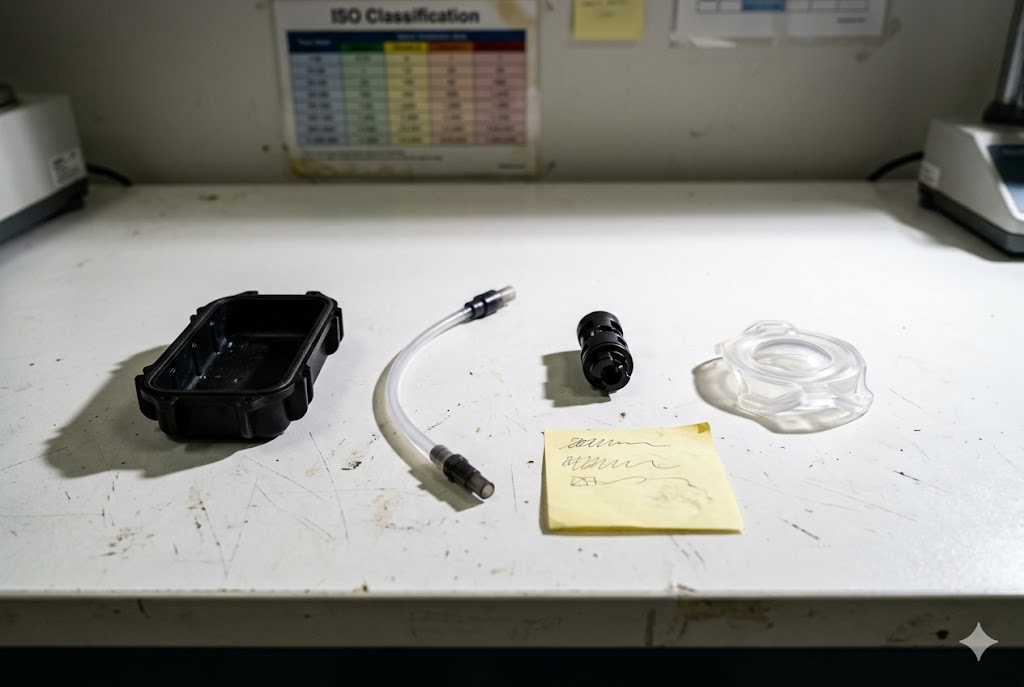
The global standard is ISO 14644-1:2015 1. It replaced the older US Federal Standard 209E — the one that used terms like "Class 10,000" and "Class 100,000." Any Chinese supplier who still references Federal Standard 209E instead of ISO 14644 is using a superseded framework. That is not a minor administrative detail. It usually means their documentation and monitoring processes have not been updated to match current international expectations.
Here is a quick reference for part type versus required cleanroom class:
| Part Type | Typical ISO Class Required |
|---|---|
| Medical device housings, general | ISO Class 8 |
| Catheters, syringes | ISO Class 8 |
| IV systems, stents | ISO Class 7 |
| Implantable devices | ISO Class 7 |
| Ophthalmic implants | ISO Class 6 or stricter |
| Microfluidic components | ISO Class 6 or stricter |
| Semiconductor-adjacent parts | ISO Class 5 or stricter |
| Consumer electronics housings | White room or ISO Class 8 |
What Happens When a Supplier Claims a Higher Class Than You Need
This sounds reassuring at first. In practice, it is a cost-efficiency red flag. A higher-class cleanroom costs significantly more to build, certify, and maintain. If a supplier running ISO Class 6 is quoting you the same price as an ISO Class 8 facility, something is not adding up. Either their Class 6 claim is inflated, or they are absorbing cost somewhere else in the process — and that usually shows up in quality.
Particle Count Limits by ISO Class
Understanding the numbers behind each ISO cleanroom classification 2 helps you ask better questions during audits.
| ISO Class | Max Particles ≥0.1µm per m³ | Max Particles ≥0.5µm per m³ |
|---|---|---|
| ISO Class 5 | 100,000 | 3,520 |
| ISO Class 6 | 1,000,000 | 35,200 |
| ISO Class 7 | 10,000,000 | 352,000 |
| ISO Class 8 | 100,000,000 | 3,520,000 |
Start every supplier conversation by telling them exactly which ISO class your part requires. Do not ask them what class they have and then decide if it fits. That approach gives them room to upsell or misrepresent. State the requirement first. Ask if they can meet it. Then ask for documentation.
How Do I Verify a Chinese Factory's Cleanroom Certification for Injection Molding?
Our team has walked through cleanroom facilities that looked impressive on photos and failed basic checks during in-person audits. Visual impressions are almost useless here. You need documentation and a structured walkthrough.
To verify a Chinese factory's cleanroom certification, request the third-party certification report including the certifying body's name and most recent audit date, confirm the requalification interval matches ISO 14644-2 requirements, and inspect the gowning protocol and differential pressure readings during an audit.
The Certification Report Is Your First Evidence Gate
Do not accept a marketing claim, a photo of a clean-looking room, or a certificate that does not name the certifying body and date. Ask for the most recent third-party certification report. ISO 14644-2 3 sets the requalification intervals — ISO Class 5 cleanrooms must be recertified every six months, and ISO Class 6 through 8 annually. If the report is more than 12 months old for an ISO Class 8 facility, the certification has lapsed.
One detail many buyers miss: ask whether the certification measurement was taken during active production or in an empty room. An empty cleanroom produces particle counts that are far lower than real operating conditions. A legitimate facility will certify under production conditions — or at minimum disclose which method was used.
The Gowning Protocol Tells You What the Certification Cannot
Walk into the facility — or request a live video walkthrough — and watch what happens before anyone enters the cleanroom. Here is what each ISO class requires at minimum:
| ISO Class | Minimum Gowning Requirement |
|---|---|
| ISO Class 8 | Smock, gloves, hairnet, shoe covers |
| ISO Class 7 | Full coverall, face mask, gloves, shoe covers, pressure anteroom |
| ISO Class 6 | Full bunny suit, face shield or mask, double-glove, pressure anteroom |
| ISO Class 5 and below | Full bunny suit, face shield, booties, HEPA-filtered air shower |
If personnel are walking directly from a standard factory floor into a claimed cleanroom without a gowning transition, that facility is not operating at the classification it claims — regardless of any paperwork.
Differential Pressure Is a Live Indicator of a Functioning Cleanroom
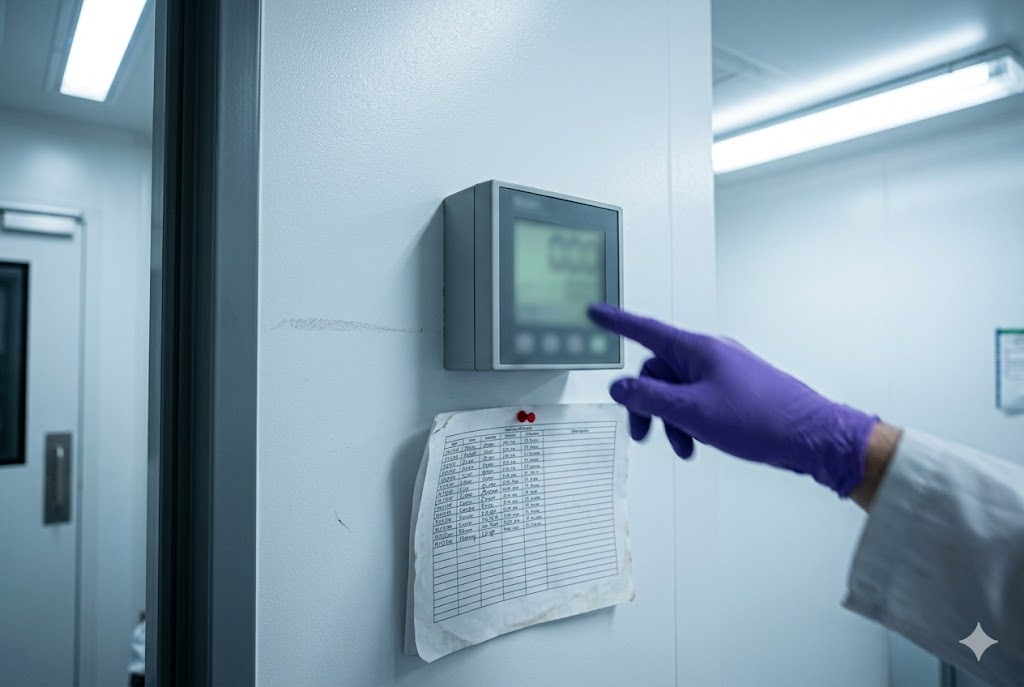
A properly maintained cleanroom maintains positive pressure relative to adjacent spaces 4 — typically 10 to 15 Pascals above the surrounding area. This prevents unfiltered outside air from entering when doors open. During any audit, ask the supplier to show you the live differential pressure reading on the monitoring display and confirm that continuous pressure data is being logged, alarmed, and reviewed. A supplier who cannot show you a live pressure reading or logged trend data is not operating a controlled environment. They are operating a room that was cleaned once.
What Documentation Should a Chinese Injection Molding Factory Provide to Prove Cleanroom Compliance?
When we help clients evaluate Chinese suppliers, the document request list is often the fastest filter. Strong suppliers respond quickly with complete packages. Weak ones stall, substitute, or go quiet.
A compliant Chinese cleanroom injection molding supplier should provide: the ISO 14644-1 certification report, 90 days of environmental monitoring data, IQ/OQ/PQ process validation records, ISO 13485 certificate for medical parts, and material traceability documentation for each production batch.
The Environmental Monitoring Records Are the Most Revealing Document
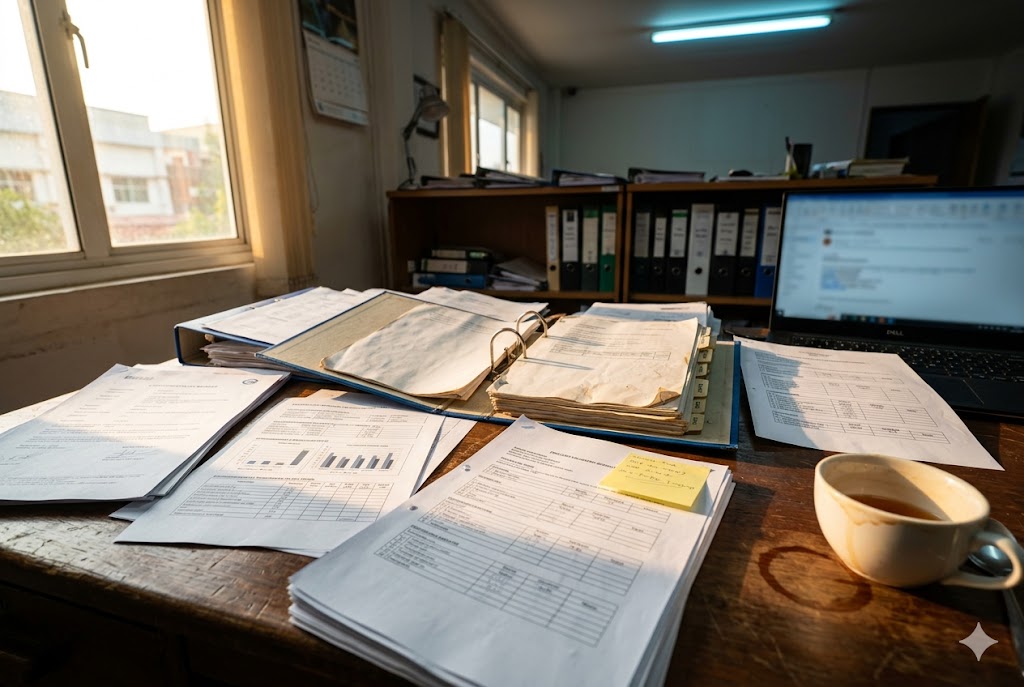
One certification report shows that a cleanroom passed a test on one day. Ninety days of continuous monitoring records show how the environment performs every day. ISO 14644-2 requires routine particle counting at defined locations with data trended over time. Legitimate facilities maintain alert limits and action limits, with documented corrective actions when readings exceed thresholds.
A supplier who can only produce a single certification report and no ongoing monitoring data is treating the cleanroom as a room that was certified once — not a controlled environment maintained daily. That is a disqualifying finding for any regulated medical or electronic application.
IQ, OQ, and PQ: Process Validation Is Not Optional
For medical device parts, process validation documentation 5 is mandatory. The three stages are:
- Installation Qualification (IQ) — confirms the equipment is installed to specification
- Operational Qualification (OQ) — demonstrates the molding process performs correctly across its defined operating range
- Performance Qualification (PQ) — proves the process consistently produces conforming parts over a representative production run
A supplier who has never completed IQ/OQ/PQ for their cleanroom molding operation cannot demonstrate regulatory compliance. This is a significant import risk for any product that will go through FDA or CE review.
ISO 13485 vs ISO 9001: Do Not Accept a Substitute
For medical device components specifically, cleanroom certification alone is not enough. The supplier must also hold ISO 13485:2016 6 — the quality management system standard specific to medical devices. ISO 13485 governs material traceability, device history records, change control, and corrective action documentation.
ISO 9001 is a general quality management standard. It is not a substitute for ISO 13485 in a medical context. Some Chinese suppliers present ISO 9001 as evidence of medical-grade capability. It is not.
| Document | What It Covers | Required For |
|---|---|---|
| ISO 14644-1 Certification Report | Cleanroom particle classification | All cleanroom claims |
| ISO 14644-2 Monitoring Records (90 days) | Ongoing environmental control | All cleanroom operations |
| IQ/OQ/PQ Records | Process validation | Medical and regulated parts |
| ISO 13485:2016 Certificate | Medical device QMS | All medical device components |
| Material Traceability Records | Batch-level material control | Medical and regulated parts |
| Differential Pressure Logs | Positive pressure maintenance | All ISO Class 7 and above |
Request all of these before issuing an RFQ. The response — in speed, completeness, and document quality — tells you more about a supplier's actual capability than any factory visit.
Which Chinese Injection Molding Suppliers Are Qualified for ISO Class 7 or Class 8 Cleanroom Production?
We get this question frequently. Buyers want a shortlist of verified suppliers. The honest answer is that no public list stays accurate for long — certifications lapse, equipment changes, and management turnover affects compliance culture faster than any directory can track.
To identify qualified Chinese ISO Class 7 or Class 8 cleanroom injection molding suppliers, require the current certification report, confirm all-electric injection machines are installed inside the cleanroom, verify ISO 13485 is held for medical parts, and conduct a live or in-person audit before placing any first order.

The Machine Inside the Cleanroom Disqualifies Many Suppliers Immediately
This is the technical detail most buyers miss. Standard hydraulic injection presses generate oil mist and particulates. Those contaminants are fundamentally incompatible with ISO Class 7 and stricter cleanroom environments. Legitimate cleanroom molding operations use all-electric injection machines 7, which eliminate hydraulic fluid contamination entirely.
If a Chinese supplier is running hydraulic presses inside a claimed ISO Class 7 cleanroom, that is a disqualifying finding. The physics do not allow a hydraulic press to coexist with the particle limits of an ISO Class 7 environment during active production.
Ask this question directly: "Are the injection molding machines inside your cleanroom fully electric, or do any use hydraulic systems?" A supplier who hesitates, deflects, or sends a photo of the machine without answering the question directly has answered the question.
The "White Room" Problem in China
The single most commonly misrepresented cleanroom capability among Chinese injection molding suppliers is the distinction between a "white room" and a certified ISO cleanroom. White rooms are visually clean spaces with HVAC — but they have no particle classification, no certification, and no validated contamination control.
White rooms are widely offered in China at significantly lower cost. They are appropriate for some non-regulated consumer and electronics applications. They cannot support medical device regulatory submissions 8 or any application requiring validated contamination control.
The marker to watch for: any supplier who uses the phrase "clean room" without citing a specific ISO class number should be treated as unverified until documentation proves otherwise. Always require the ISO class number, the certifying body, and the certification date — in writing — before proceeding.
How to Structure Your Supplier Shortlisting Process
| Screening Step | What to Check | Pass Criteria |
|---|---|---|
| Initial document request | ISO 14644-1 report, ISO 13485 cert | Documents provided within 5 business days |
| Certification review | Certifying body, date, class claimed | Current, third-party, ISO class matches requirement |
| Machine type confirmation | Electric vs. hydraulic inside cleanroom | All-electric confirmed in writing |
| Environmental monitoring | 90-day particle count and pressure logs | Trending data with alert/action limits shown |
| Gowning protocol audit | Video or in-person observation | Protocol matches claimed ISO class |
| IQ/OQ/PQ review | Process validation records | All three stages completed and documented |
Running suppliers through this sequence — in order — eliminates most unqualified candidates before any samples are requested or tooling investment is made. We run this process for every new cleanroom supplier we onboard for clients, and it has consistently prevented the documentation surprises that cause regulatory delays after shipment.
When sourcing from China, understanding the FDA's quality system regulation for medical devices 9 gives buyers an important benchmark against which to measure supplier documentation packages. Similarly, reviewing CE marking conformity assessment procedures 10 helps clarify what European regulatory reviewers will expect from a Chinese cleanroom molding supplier's quality records.
Conclusion
Assessing a Chinese supplier's cleanroom injection molding capability comes down to documentation, machine type, and a structured audit process. Know your ISO class requirement before any conversation starts, and do not accept claims without third-party evidence to back them.
Footnotes
1. Official ISO 14644-1:2015 standard defining cleanroom air cleanliness by particle concentration. ↩︎
2. ISO online browsing platform entry for ISO 14644-1, with full particle limit tables by class. ↩︎
3. ISO 14644-2 specifying monitoring and requalification intervals for classified cleanrooms. ↩︎
4. CDC/NIOSH guidance on engineering controls including pressure differentials in controlled environments. ↩︎
5. FDA guidance document on process validation for medical device manufacturers (IQ/OQ/PQ framework). ↩︎
6. ISO 13485:2016 standard for medical device quality management systems and regulatory compliance. ↩︎
7. Industry analysis on all-electric injection molding advantages for cleanroom and precision applications. ↩︎
8. FDA overview of the medical device regulatory submission and approval process in the US. ↩︎
9. US eCFR Title 21 Part 820, the FDA quality system regulation benchmarking medical device manufacturers. ↩︎
10. European Commission guide to CE marking conformity assessment procedures for regulated products. ↩︎