Skip to main content Skip to footer
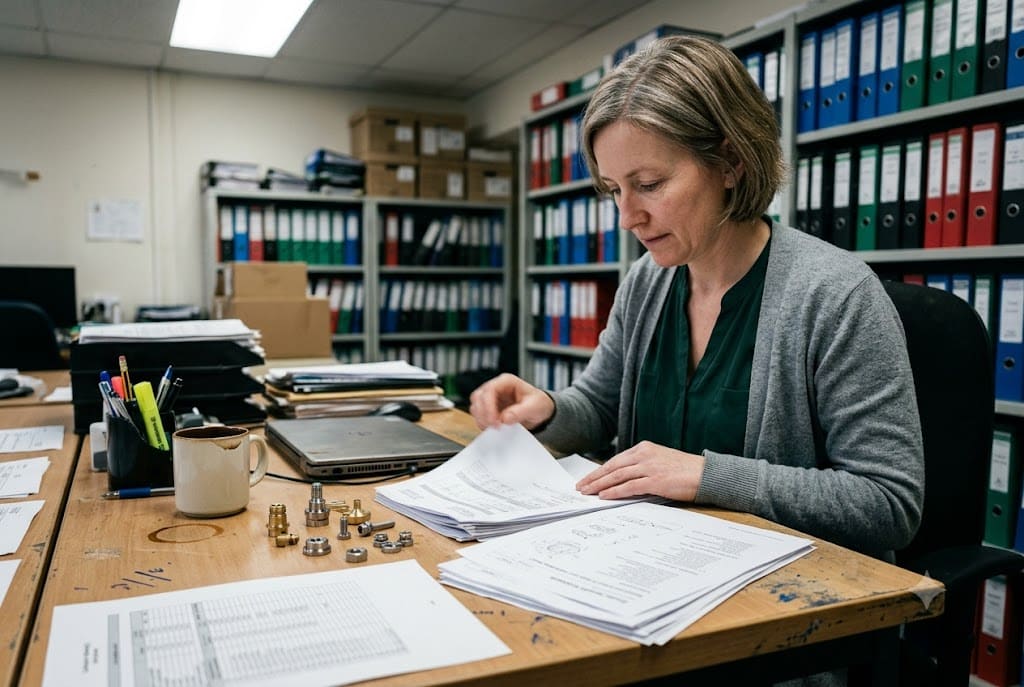
Every year, we see clients walk away from factories that looked great on paper — clean floors, ISO certificates on the wall — only to receive warped parts, flash-covered edges, or missed tolerances. When we trace the root cause, the same issue keeps surfacing: nobody confirmed whether the machines on that factory floor could actually handle the job.
To confirm a Chinese supplier's machine tonnage meets your requirements, calculate your minimum clamp force first by multiplying your part's projected area by the material's tonnage factor, then request the supplier's machine list in writing, verify nameplate ratings during an audit, and write the required tonnage into your purchase agreement as a binding technical specification.
This guide walks through each step in plain terms. By the end, you will know exactly what to ask, what to check, and what to put in writing before you commit to tooling.
How Is Injection Molding Machine Tonnage Calculated and Why Does It Matter for My Custom Parts?
Plenty of buyers send out RFQs without knowing their own tonnage requirement. That puts you at a disadvantage before the conversation even starts. Our engineers calculate the required clamp force for every project before we approach a single supplier.
Injection molding machine tonnage is the clamping force the machine applies to keep the mold closed during injection. To calculate the minimum you need, multiply the part's total projected area in square inches by a material-specific tonnage factor — 2.5–3 tons/in² for high-flow resins and 3–5 tons/in² for low-flow resins — then add a 10% safety margin. The result is your minimum required machine tonnage.
What Is Projected Area?
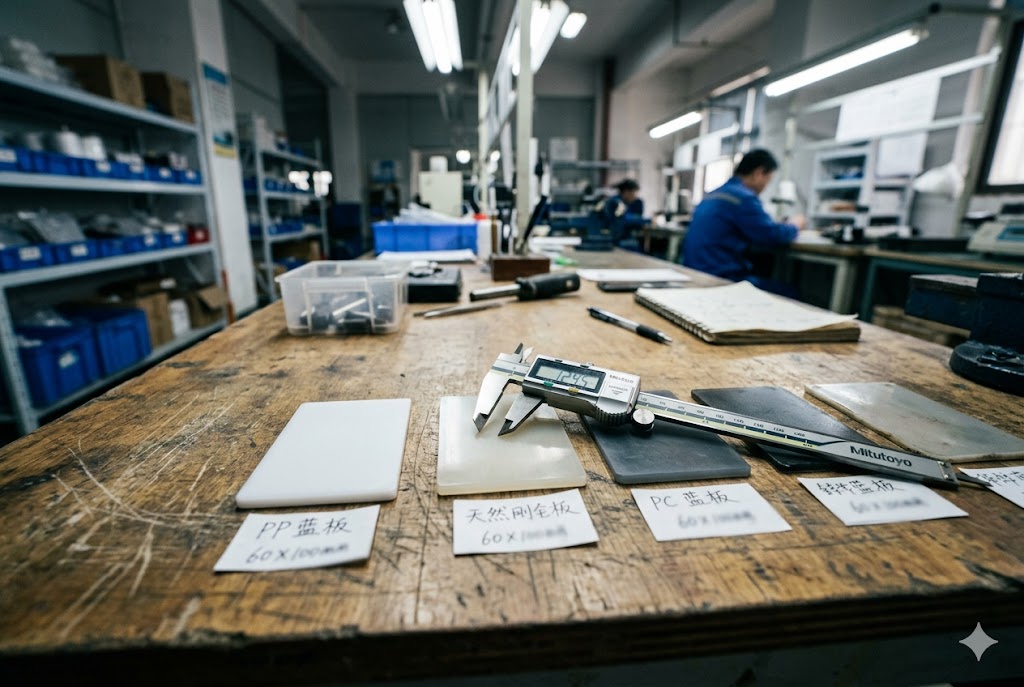
Projected area is the shadow your part casts when light shines straight down through the mold — length times width at the parting line. If you have a multi-cavity mold, multiply that single-cavity area by the number of cavities, then add the runner area. That combined number is your total projected area.
Material Tonnage Factors
Different resins flow at different pressures inside the mold. High-flow materials need less clamping force to stay sealed. Low-flow materials build more cavity pressure and push harder against the mold halves.
| Resin Type | Examples | Tonnage Factor (tons/in²) |
|---|---|---|
| High-flow (easy fill) | PP, PE, PS | 2.5 – 3.0 |
| Medium-flow | ABS, POM | 3.0 – 4.0 |
| Low-flow (difficult fill) | PC, PA (nylon), PBT | 3.5 – 5.0 |
| Glass-filled or specialty | PC/ABS blends, GF nylon | 4.0 – 5.5 |
These ranges are starting points. Complex geometry — deep ribs, thin walls, long flow paths — pushes you toward the upper end of the range or beyond. A reputable supplier running Moldflow or equivalent simulation software 1 can refine this estimate before any steel is cut.
Why Tonnage Matters for Your Parts
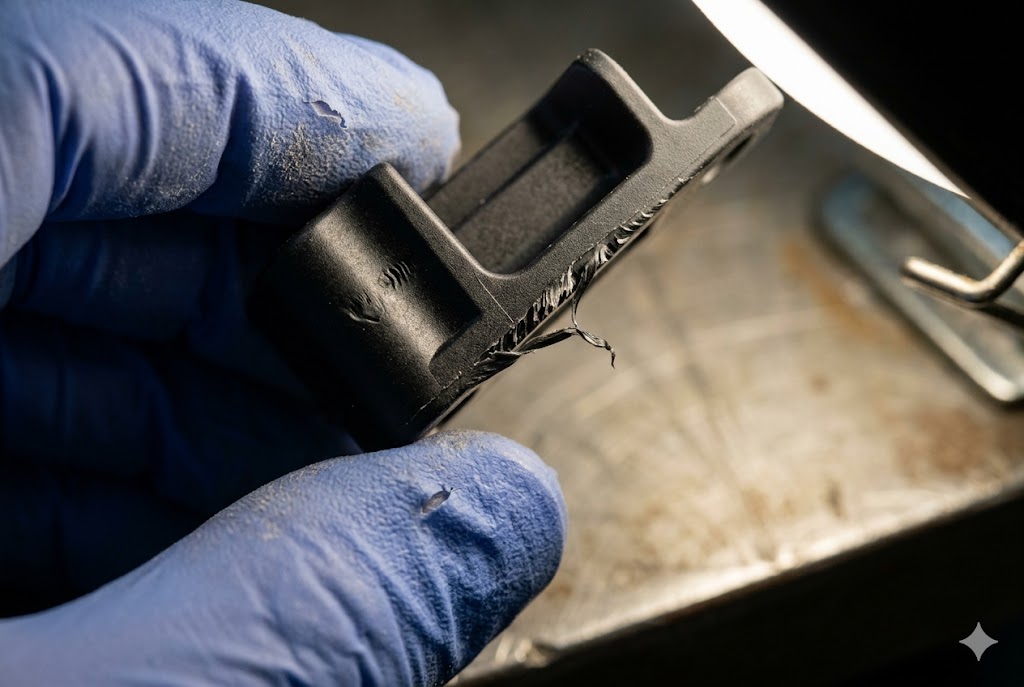
If clamp force 2 is too low, the mold opens slightly under injection pressure. Molten resin leaks into the parting line gap. The result is flash — thin fins of plastic along the mold edge. Flash causes dimensional failures, surface defects, and assembly problems downstream. It is one of the most common complaints we hear from clients sourcing injection-molded parts from new suppliers.
If tonnage is far too high, the opposite problem appears. The machine crushes the mold with excess force. Parting lines wear faster, cycle times can rise, and energy costs per part increase. Neither scenario is acceptable for a production run.
Tonnage Is Not the Only Constraint — Shot Size Matters Too
Machine tonnage tells you about clamping force. It says nothing about barrel capacity. Your part's shot weight must fall between 25% and 75% of the machine's maximum barrel capacity 3. A machine with the right tonnage but an oversized barrel produces inconsistent melt temperatures and poor part quality. Always ask suppliers to confirm both tonnage and shot capacity utilization for your specific part.
What Happens if a Chinese Supplier Uses a Machine With Insufficient Clamping Force for My Injection-Molded Parts?
We have seen this scenario play out more times than we would like to admit. A supplier wins the job, assigns the mold to a smaller press to free up capacity on a bigger machine, and the buyer receives the first shipment without ever knowing a machine swap happened.
If a supplier uses a machine with insufficient clamping force, the mold cannot stay fully closed during injection. Molten resin forces its way into the parting line, producing flash. Dimensions go out of tolerance, surface finish degrades, and parts may fail functional tests. Repeated short-shot attempts can also damage the mold itself, increasing your long-term tooling costs.
Visible Defects You Will See
When clamping force is inadequate, the defects are often obvious — but not always caught at the factory before shipment. Here is what to look for:
| Defect | Appearance | Root Cause Link |
|---|---|---|
| Flash | Thin plastic fins along parting line | Mold opens under injection pressure |
| Short shot | Incomplete fill, missing features | Resin escapes before cavity fills |
| Sink marks | Depressions on thick sections | Pressure loss during packing phase |
| Warpage | Part bends or twists after ejection | Uneven pressure distribution in cavity |
| Dimensional oversize | Part wider than drawing spec | Mold halves shift under pressure |
Hidden Damage to Your Mold
Flash is the symptom you see. Mold damage is the cost you pay later. When resin repeatedly forces into the parting line, it bruises and deforms the steel at the mold edge. Over thousands of cycles, the parting line becomes permanently gapped. You end up paying for a mold repair or a new mold 4 — for a problem that was never your fault.
The Machine-Swap Problem
In high-volume Chinese factories, machine assignment is a production scheduling decision. Without a written requirement in your purchase order, a supplier can legally move your mold to any machine on the floor. We always write the required machine tonnage range into the supply agreement. That one line gives you contractual grounds to reject parts produced on the wrong machine.
What Insufficient Tonnage Costs You in Real Terms
Dimensional failures caught at pre-shipment inspection mean delayed shipments and rescheduled production lines for your customers. Parts that slip through inspection reach your customers and trigger returns, warranty claims, or production stoppages. The financial exposure can far exceed the cost of the entire order. That is why we conduct in-production quality control visits and pre-shipment inspections 5 on every order — not just a final document check.
How Do I Specify the Required Machine Tonnage Range When Sending an RFQ to Chinese Injection Molding Suppliers?
Most buyers send an RFQ with a drawing and a target price. That is not enough. When we manage sourcing for clients, we include a technical brief alongside every drawing. Tonnage is always in that brief.
When sending an RFQ to Chinese injection molding suppliers, state your calculated minimum machine tonnage, the acceptable range, the resin type and grade, and require the supplier to confirm in writing which machine model and tonnage rating will be used for your mold. Include this as a mandatory field in the RFQ response template, not as a note the supplier can ignore.

What to Include in Your RFQ Technical Brief
A well-structured RFQ filters out unqualified suppliers before you spend time on back-and-forth communication. Include these fields:
| RFQ Field | What to Write | Why It Matters |
|---|---|---|
| Part projected area | State in square inches or cm² | Supplier can verify your tonnage calculation |
| Material and grade | e.g., "PA66 30% GF, natural" | Determines tonnage factor and process parameters |
| Minimum machine tonnage | State your calculated minimum | Non-negotiable floor for machine selection |
| Acceptable tonnage range | e.g., "500–800 tons" | Prevents use of excessively large machines |
| Number of cavities | State exactly | Affects total projected area calculation |
| Required response field | "Assigned machine: brand, model, tonnage" | Forces a documented answer |
How to Frame the Tonnage Requirement Without Sounding Adversarial
You want clear requirements, not a confrontational tone. A straightforward line works: "Please confirm the machine tonnage and model number that will be used for this mold. This must fall within the range specified above." Reputable suppliers answer this without hesitation. Evasive or vague answers at the RFQ stage are a warning sign.
Gate Design Affects Your Tonnage Requirement
Gate location 6 changes how much cavity pressure builds during fill. A center gate or two opposing gates distribute pressure evenly. A single side gate concentrates pressure and may require more clamping force than your basic area calculation suggests. When you send drawings, ask the supplier to include gate placement in their DFM (Design for Manufacturability) report and to note how their proposed gate design affects the required machine tonnage.
Follow Up With a Written Confirmation
Once a supplier quotes, ask for written confirmation of the machine assignment before you approve the mold design. Keep this in your project file. If machine tonnage becomes a dispute point later, your written record resolves it immediately.
Should I Request a Machine List From a Chinese Injection Molding Factory Before Placing My Order?
Yes — and the way a factory responds tells you a great deal about them. We request machine lists from every factory we evaluate. It is one of the fastest ways to assess whether a supplier can genuinely handle your volume and your part complexity.
You should always request a written machine list from a Chinese injection molding factory before placing your order. The list should include machine brand, tonnage rating, and quantity for each press on the floor. Reputable export-grade factories provide this information without hesitation. Reluctance or vague answers is a disqualifying red flag before a single dollar is committed.
What a Good Machine List Looks Like
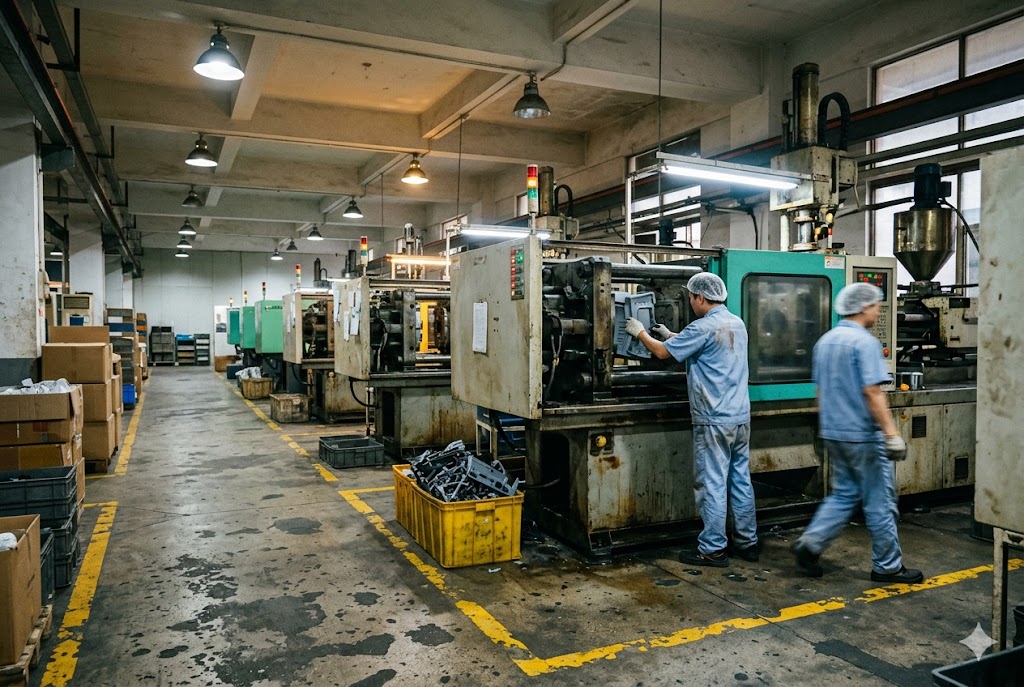
A credible machine list is specific. It names brands and tonnages. Chinese injection molding machine brands — Haitian 7, Yizumi, Tederic — are well known and their specifications are publicly verifiable. A supplier that lists "20 machines, 80–2000 tons" without brand names or model numbers is giving you unverifiable information.
Here is what a solid machine list entry looks like:
| Brand | Model | Tonnage | Quantity | Status |
|---|---|---|---|---|
| Haitian | MA3200/1000 | 320 tons | 4 | Active |
| Yizumi | UN500A2 | 500 tons | 3 | Active |
| Tederic | D-series | 800 tons | 2 | Active |
| Haitian | Jupiter III | 1,300 tons | 1 | Active |
If a supplier cannot give you a list that looks something like this, treat it as a warning.
Cross-Reference During an Audit
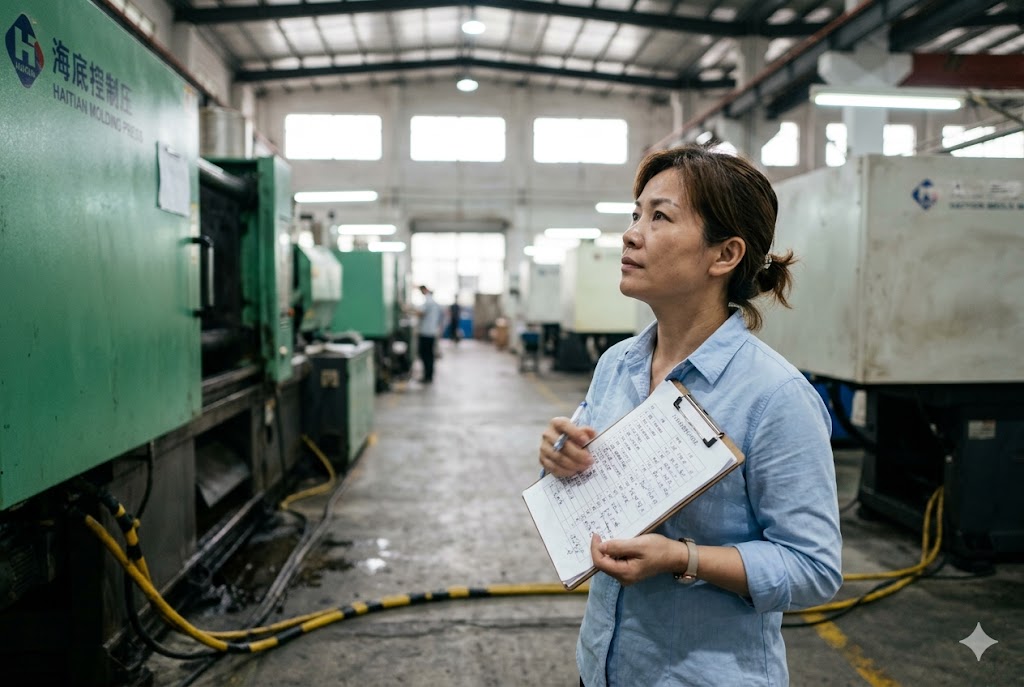
A machine list on paper means nothing if the physical machines do not match. During factory audits 8 — which we conduct on behalf of our clients — we walk the floor and read the nameplate tonnage rating on each press. Chinese machine manufacturers display tonnage prominently on the machine frame. Any discrepancy between the nameplate and the supplier's documentation requires an explanation before production starts.
If you cannot visit in person, a structured video walkthrough achieves most of the same goals. Ask the supplier to show you each machine's nameplate on camera.
The Trial Run Standard
Knowing a machine exists is not the same as knowing it performs reliably under sustained production conditions. Export-grade suppliers run the mold continuously for approximately four hours during the final trial run. A short burst does not reveal whether the machine maintains stable clamping force under thermal load 9. Four hours does. If a supplier's trial protocol is shorter than this, push back.
Require the Actual Clamp Force Setting in Writing
Before the first production shipment, ask the supplier to document the actual clamp force setting used during the approved T1 sample run — not the machine's rated maximum. That setting is your production baseline. It goes into your project file. If the mold transfers to a different factory in the future, or if you need to re-run production after a gap, that documented setting is the reference point that keeps quality consistent across runs. Third-party flash defect analysis 10 on retained T1 samples gives you an independent benchmark for comparison in future production cycles.
Conclusion
Know your minimum tonnage before you talk to any supplier. Put it in writing in your RFQ, your mold agreement, and your purchase order. Verify machine nameplates in person or on camera. Document the actual clamp force setting after T1 approval. These steps are not complicated — but skipping any one of them is where quality problems begin.
Footnotes
1. How Moldflow simulation refines clamp force estimates before steel is cut. ↩︎
2. Why correct clamp force is vital and how to calculate it for your mold. ↩︎
3. Expert guidance on optimal shot size as a percentage of barrel capacity. ↩︎
4. The two root causes of injection molding flash and how to troubleshoot them. ↩︎
5. How independent pre-shipment inspections in China prevent defective deliveries. ↩︎
6. Overview of injection molding gate types and their effect on cavity pressure. ↩︎
7. Official specifications and product range for Haitian injection molding machines. ↩︎
8. Step-by-step guide to auditing a plastic injection molding factory in China. ↩︎
9. How to calculate clamping force accounting for thermal load and process variables. ↩︎
10. Causes of injection molding flash and how retained samples reveal process drift. ↩︎