Skip to main content Skip to footer

We've seen it happen more than once: a shipment of injection-molded parts clears Chinese customs, arrives at a US port, and gets detained because the paperwork doesn't match the regulatory framework of the destination market. The cost — in delays, rework, and lost customer trust — is significant. If your parts touch food or go into a medical device, the compliance requirements are not optional and they are not simple.
Importing food-grade or medical-grade injection-molded parts from China requires material-specific documentation tied to FDA 21 CFR or EU Regulation 10/2011 for food contact, or ISO 13485 certification and ISO 10993 biocompatibility data for medical use. A "food-grade" label on a resin bag is not sufficient proof of compliance for either market.
This article walks through the four most critical questions we hear from purchasing managers sourcing these parts. Each section gives you actionable requirements you can take directly into your supplier negotiations.
Which Plastic Resins Meet FDA or EU Food-Contact Regulations for Injection-Molded Parts Sourced from China?
Our production team deals with resin selection questions every week, and the confusion here is real. Many suppliers quote "food-grade resin" without knowing which regulatory list that resin actually appears on — or under what conditions it qualifies.
For US-bound food-contact parts, compliance is governed by FDA 21 CFR on a resin-by-resin basis — for example, 177.1520 covers polyolefins and 177.1580 covers polycarbonate. For EU-bound parts, EU Regulation 10/2011 applies, which maintains a positive list of permitted substances and requires a Declaration of Compliance from the manufacturer.

The FDA Framework: Resin-Specific, Not Blanket
FDA 21 CFR does not issue a single "food-grade" certificate. Compliance depends on the specific resin grade, the type of food being contacted, the temperature of use, and the duration of contact. A polypropylene resin approved for repeated-use containers under 21 CFR 177.1520 1 may not be approved for high-temperature applications like microwave-safe parts.
Common FDA-listed resins used in food-contact injection molding include:
| Resin | Relevant 21 CFR Section | Common Application |
|---|---|---|
| Polyolefins (PP, PE) | 177.1520 | Food containers, closures |
| Polycarbonate (PC) | 177.1580 | Reusable water bottles, trays |
| Nylon (Polyamide) | 177.1500 | Food processing equipment |
| ABS | 177.1020 | Refrigerator liners, kitchenware |
| PET | 177.1630 | Beverage containers |
The supplier must provide documentation linked to the specific resin grade — not a generic product family. Choosing the wrong resin or failing to reference the correct CFR section is one of the most common reasons food-contact parts fail US market entry. A practical injection molding material selection guide 2 can help purchasing teams frame the right questions before engaging a Chinese compounder.
EU Regulation 10/2011: The Positive List System
EU Regulation 10/2011 3 is stricter in structure. It requires that every monomer, additive, and processing aid used in the plastic material appear on the EU positive list. A Chinese compounder adding a proprietary colorant or lubricant that is not on this list renders the entire part non-compliant — even if the base polymer is approved.
The supplier must also issue a Declaration of Compliance (DoC) — a legal document, not a marketing brochure. The DoC must name the regulation, identify the plastic materials, and confirm that migration limits are met under the intended conditions of use.
Where Chinese Domestic Standards Fall Short
Chinese injection molders producing for their domestic market work under the GB 4806 series, including GB 4806.7-2023 for plastics and GB 9685-2016 (amended 2025) for permitted additives. These standards are not equivalent to FDA 21 CFR or EU 10/2011. The permitted substance lists differ. The migration limits differ. A supplier who says "we meet GB food-contact standards" is not confirming FDA or EU compliance.
| Standard | Jurisdiction | Positive List | Migration Limits | DoC Required |
|---|---|---|---|---|
| FDA 21 CFR | USA | Resin-specific sections | Yes, condition-based | No formal DoC, but documentation required |
| EU Regulation 10/2011 | European Union | Yes, comprehensive | Yes, specific limits | Yes, legal requirement |
| GB 4806 series | China domestic | Yes | Yes | Not required for domestic use |
Always ask your supplier which regulatory list their resin appears on — and request the specific section reference, not just a letter of conformance.
How Do I Verify That a Chinese Injection Molding Supplier Is Using Certified Food-Grade or Medical-Grade Material?
This is where a lot of sourcing programs break down. A supplier can send you a certificate that looks official but covers only the base resin — not the colorants, mold-release agents, or regrind content that went into your actual parts. Our sourcing team has developed a document checklist specifically for this reason.
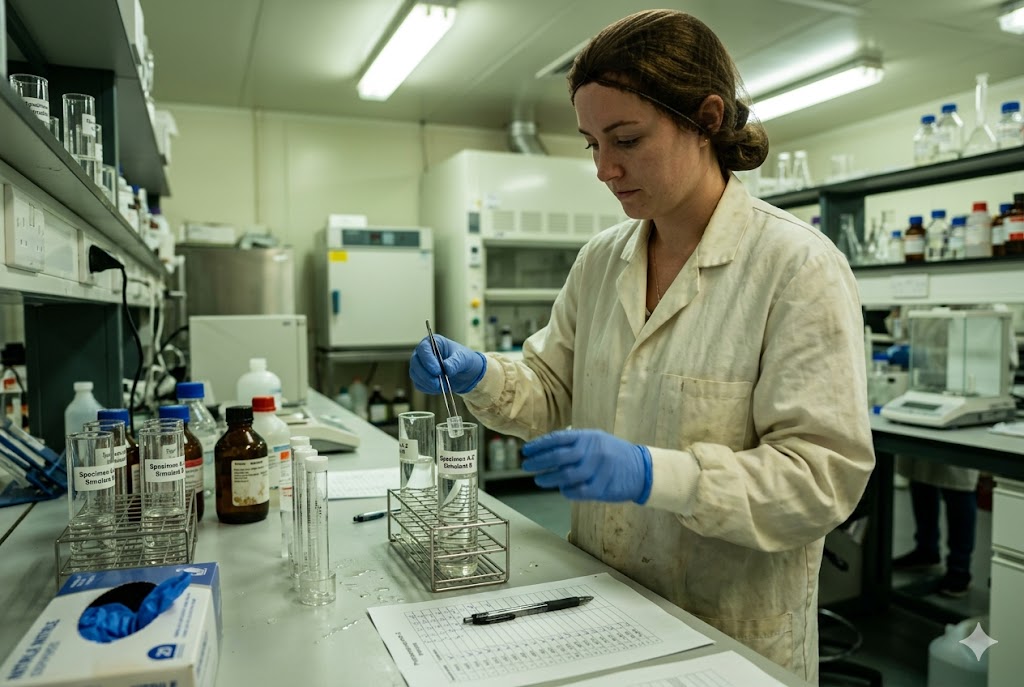
To verify food-grade or medical-grade material compliance, you need lot-traceable material certificates tied to the exact resin batch used in your order, finished-article migration test data from an ISO 17025-accredited lab 4, and a full formulation disclosure covering all additives and processing aids — not just the primary resin.
Why Resin Datasheets Are Not Enough
A resin datasheet from the compounder tells you the base polymer family. It does not tell you what additives were introduced at the compounding stage. It does not tell you whether the molder added regrind. It does not reflect the actual batch used in your parts.
"Food-grade resin" and "food-grade part" are not the same thing. The base polymer may appear on the FDA or EU 10/2011 positive list, but colorants, mold-release agents, regrind content, and processing lubricants added at the Chinese compounder or molder level may not be. Finished-part compliance requires documentation covering the complete formulation.
Migration Testing: The Technical Proof
Migration testing is the definitive proof of compliance for food-contact parts. Two levels apply:
- Overall migration (OML): the total mass transferred from the plastic into a food simulant per unit of surface area. EU 10/2011 sets a limit of 10 mg/dm².
- Specific migration (SML): the mass transferred for each restricted substance. Limits vary by substance.
Testing must use the correct food simulant matched to the intended food type. Aqueous foods, acidic foods, fatty foods, and dry foods each have a designated simulant. A test using the wrong simulant is invalid.
| Food Type | EU 10/2011 Simulant | Example Foods |
|---|---|---|
| Aqueous, pH > 4.5 | Simulant A (water) | Beverages, milk |
| Acidic, pH ≤ 4.5 | Simulant B (acetic acid) | Vinegar-based foods |
| Alcoholic | Simulant C (ethanol) | Wine, spirits |
| Fatty | Simulant D (vegetable oil or isooctane) | Oils, fatty meats |
| Dry | Simulant E (modified polyphenylene oxide) | Flour, spices |
Testing must be performed by a laboratory accredited to ISO 17025. A factory-internal test does not satisfy this requirement.
EU Special Controls for Polyamide and Melamine Kitchenware
EU Regulation 284/2011 5 adds an extra layer for China-origin shipments. Polyamide and melamine plastic kitchenware from China must meet specific requirements at the EU border: pre-notification at least two working days before arrival, a declaration, and an ISO 17025-accredited lab report testing for primary aromatic amines (polyamide) or formaldehyde (melamine). Missing these documents means border rejection — not a correctable deficiency.
If your parts fall into these categories, build the lab testing and documentation timelines into your production schedule before shipment, not after.
What Additional Certifications Should I Require from a Chinese Factory Supplying Medical-Grade Injection-Molded Parts?
When our team audits Chinese factories for medical-grade molding capability, we work through a structured checklist. The bar is higher here than almost anywhere else in the parts supply chain, and the liability exposure for importers is significant.
For medical-grade injection-molded parts from China, require ISO 13485:2016 certification 6 with a current audit record, ISO 10993 biocompatibility test data matched to contact type and duration, and documented cleanroom qualification per ISO 14644 — at minimum ISO Class 7 for most components, with tighter classifications for implantable parts.

ISO 13485: The Quality System Baseline
ISO 13485:2016 is the quality management system standard for medical device manufacturing. The FDA has aligned its own Quality System Regulation (21 CFR Part 820) with ISO 13485 through the QMSR update. A Chinese molder without a current, audited ISO 13485 certificate cannot credibly supply regulated medical device components.
"Current" matters. Ask for the certificate issue date, scope of certification, and the name of the notified body that issued it. Then verify the certificate directly with the certifying body. Expired or scope-limited certificates are common issues in this supply chain.
ISO 10993: Biocompatibility Is Not USP Class VI
This is the most commonly misunderstood area in medical-grade sourcing. Many Chinese suppliers offer USP Class VI test reports as evidence of biocompatibility. USP Class VI is a minimum threshold — it tests for acute systemic toxicity, intracutaneous reactivity, and implantation, but it does not cover the full risk-based evaluation matrix that ISO 10993 biocompatibility testing 7 requires.
ISO 10993 biocompatibility testing is structured by contact type and duration:
| Contact Type | Examples | Key ISO 10993 Tests |
|---|---|---|
| Surface contact | Gloves, electrodes | Cytotoxicity, sensitization |
| External communicating | Catheters, tubing | Cytotoxicity, sensitization, genotoxicity |
| Implant | Orthopedic, cardiovascular | Full panel including implantation, chronic toxicity |
| Short-term (≤24 hr) | Single-use devices | Abbreviated panel |
| Prolonged (24 hr–30 days) | Wound dressings | Extended panel |
| Permanent (>30 days) | Implantable devices | Full panel |
A factory that provides only USP Class VI data for a permanently implanted component is not meeting the current FDA-recognized standard. Require ISO 10993 test data matched to your specific contact type and duration category.
Cleanroom Requirements
Medical-grade injection molding must occur in a controlled cleanroom environment classified per ISO 14644 8. ISO Class 7 (equivalent to the former 10,000-class cleanroom) is the standard for most medical components. Implantable devices typically require ISO Class 5 or Class 6 environments.
Ask the factory for:
- Cleanroom qualification certificate with classification level
- Ongoing environmental monitoring records (particle counts, viable monitoring)
- Gowning and entry protocol documentation
A Chinese factory that cannot provide documented cleanroom qualification and continuous monitoring data cannot be treated as a legitimate medical-grade molder — regardless of what resin it uses.
What Documentation Is Required for U.S. Customs Clearance of Medical or Food-Contact Injection-Molded Parts from China?
Getting the product right is only half the problem. We've helped clients resolve customs holds that could have been avoided entirely with the right document package assembled before shipment. The importer of record carries the regulatory liability — not the Chinese supplier.
For US customs clearance of food-contact or medical-grade injection-molded parts from China, the required document package includes lot-traceable material certificates, finished-article migration test data or ISO 10993 biocompatibility reports, FDA facility registration 9 confirmation where applicable, and a complete formulation disclosure — supplier certificates do not transfer regulatory liability to the destination market.

The Importer of Record Bears the Risk
This is the point that purchasing managers sometimes underestimate. A Chinese supplier can provide a full set of certificates, and those certificates can still fail to satisfy US regulatory requirements. The importer of record — your company — is legally responsible for ensuring that what enters the US market complies with FDA regulations. Supplier-provided documents support that compliance but do not substitute for it.
A robust procurement program includes:
- Audit rights over the Chinese supplier's facility and records
- Lot-traceable material certificates linked to the specific production run
- Third-party migration or biocompatibility test data from accredited laboratories
- Contractual indemnification clauses covering regulatory non-conformance discovered after import
Document Checklist by Part Category
The document requirements differ depending on whether the parts are food-contact or medical-grade.
Food-Contact Parts:
| Document | Purpose | Who Provides It |
|---|---|---|
| Resin certificate of conformance | Links specific resin lot to FDA 21 CFR section | Resin compounder |
| Full formulation disclosure | Confirms all additives are on the permitted list | Chinese molder |
| Migration test report (ISO 17025 lab) | Proves finished-part compliance | Accredited third-party lab |
| EU Declaration of Compliance (if EU-bound) | Legal compliance document under EU 10/2011 | Manufacturer or importer |
| Country of origin documentation | Required for customs and tariff classification | Molder / freight forwarder |
Medical-Grade Parts:
| Document | Purpose | Who Provides It |
|---|---|---|
| ISO 13485 certificate (current) | Quality system verification | Certifying body |
| Biocompatibility report (ISO 10993) | Confirms biological safety | Accredited test lab |
| Cleanroom classification certificate | Confirms manufacturing environment | Factory / certifying body |
| FDA facility registration (if applicable) | Required for device manufacturers | FDA FURLS database |
| Material traceability records | Lot-level material chain of custody | Factory |
| Pre-shipment inspection report | Third-party verification before departure | SGS, Bureau Veritas, or equivalent |
Third-Party Inspection Before Shipment
For both categories, we recommend a pre-shipment inspection by an accredited third party 10 — SGS, Bureau Veritas, or an equivalent agency — covering dimensional verification, visual defects, and document completeness. This is not a guarantee of compliance, but it catches document gaps and nonconforming parts before they reach the US port and creates a documented record that supports your quality system.
Building the document assembly timeline into your purchase order — with clear milestones and supplier obligations — is more effective than chasing certificates after parts are already on the water.
Conclusion
Compliance for food-grade and medical-grade injection-molded parts from China is document-intensive, regulation-specific, and the importer's responsibility to enforce. Build your supplier qualification program around traceable materials, third-party test data, and contractual obligations — before the first shipment leaves China.
Footnotes
1. Official eCFR text for FDA 21 CFR 177.1520, the polyolefin food-contact plastics section. ↩︎
2. Xometry guide covering FDA and regulatory compliance factors in injection molding resin selection. ↩︎
3. EUR-Lex summary of EU Regulation 10/2011 on plastic food-contact materials and the positive list system. ↩︎
4. Wikipedia overview of ISO/IEC 17025, the international accreditation standard for testing laboratories. ↩︎
5. EUR-Lex summary of EU Regulation 284/2011 governing polyamide and melamine kitchenware imports from China. ↩︎
6. Wikipedia entry on ISO 13485:2016, the QMS standard for medical device manufacturing. ↩︎
7. Wikipedia entry on ISO 10993, the standard series for biocompatibility evaluation of medical devices. ↩︎
8. MedDeviceGuide reference on ISO 14644 cleanroom classification requirements for medical device production. ↩︎
9. FDA official page on medical device establishment registration and FURLS listing requirements. ↩︎
10. SGS pre-shipment inspection services for verifying quality, quantity, and compliance before export. ↩︎