Skip to main content Skip to footer

Choosing the wrong surface finish can turn a perfectly machined part into a failed part.
An aluminum component may meet every dimensional requirement after machining, yet develop fit problems after anodizing. A housing may look excellent but fail to provide reliable electrical grounding because the selected finish is non-conductive. A black oxide finish may look suitable on a steel component but provide insufficient protection when the part is exposed to long-term humidity or outdoor conditions.
These problems have one thing in common:
The surface finish was selected before the actual surface failure risk was fully understood.
That is why the first question should not be:
“Which surface finish should I use?”
A better question is:
“What problem does the surface of this part need to solve?”
Corrosion, wear, electrical conductivity, insulation, friction, appearance, and environmental exposure all require different solutions.
There is no universally “best” metal surface finishing process. The right choice depends on the base material, operating environment, functional requirements, tolerances, and expected failure mode of the part.
This guide explains how to make that decision.
1. What Does Metal Surface Finishing Actually Do?
The bulk properties of a component and the properties required at its surface are not always the same.
A metal may have sufficient mechanical strength for an application but insufficient corrosion resistance. Another material may machine well but require a harder or more wear-resistant surface. An aluminum housing may need corrosion protection while still requiring electrically conductive grounding points.
Surface finishing is therefore used to modify or supplement the properties of the material's surface.
Depending on the application, a surface treatment may be selected to improve corrosion resistance, wear resistance, surface hardness, electrical conductivity or insulation, friction characteristics, chemical resistance, appearance, or environmental durability.
This leads to one of the most useful principles in surface finishing:
Choose the failure mode first, then choose the process.
A process that works well for corrosion protection may be inappropriate for a precision fit. A finish that provides excellent wear resistance may interfere with electrical contact.
The finish has to solve the right problem.
2. Start With the Failure Mode, Not the Finish
Before comparing anodizing, nickel plating, zinc plating, passivation, or coating, define what can actually go wrong with the part.
The following table provides a useful starting point.
| Your Part Needs | Main Risk | Possible Surface Treatment Direction |
|---|---|---|
| Corrosion resistance | Rust or oxidation | Zinc plating, nickel plating, passivation, protective coating |
| Wear resistance | Friction or abrasion | Hard anodizing, hard coatings, carburizing |
| Electrical conductivity | Poor grounding or contact | Conductive conversion coating or selective finishing |
| Electrical insulation | Unwanted electrical contact | Anodizing or insulating coating |
| Improved appearance | Color, texture, cosmetic consistency | Anodizing, plating, painting |
| Outdoor protection | Moisture and weather exposure | Galvanizing or protective coating |
| Low dimensional impact | Critical fits and tolerances | Thin conversion treatments or carefully controlled processes |
Two parts made from the same material may require completely different finishes because their operating conditions are different.
For example, an aluminum cosmetic enclosure and an aluminum housing requiring reliable electrical grounding may look similar on a drawing, but their surface finishing requirements can be fundamentally different.
So before asking which process is “better,” determine what the finished surface is expected to do.
3. Four Main Types of Metal Surface Treatment
Individual finishing processes become easier to understand when they are grouped according to how they modify the metal surface.
A useful engineering classification is:
Plating → Chemical Conversion Coatings → Electrochemically Grown Oxide Layers → Functional Coatings
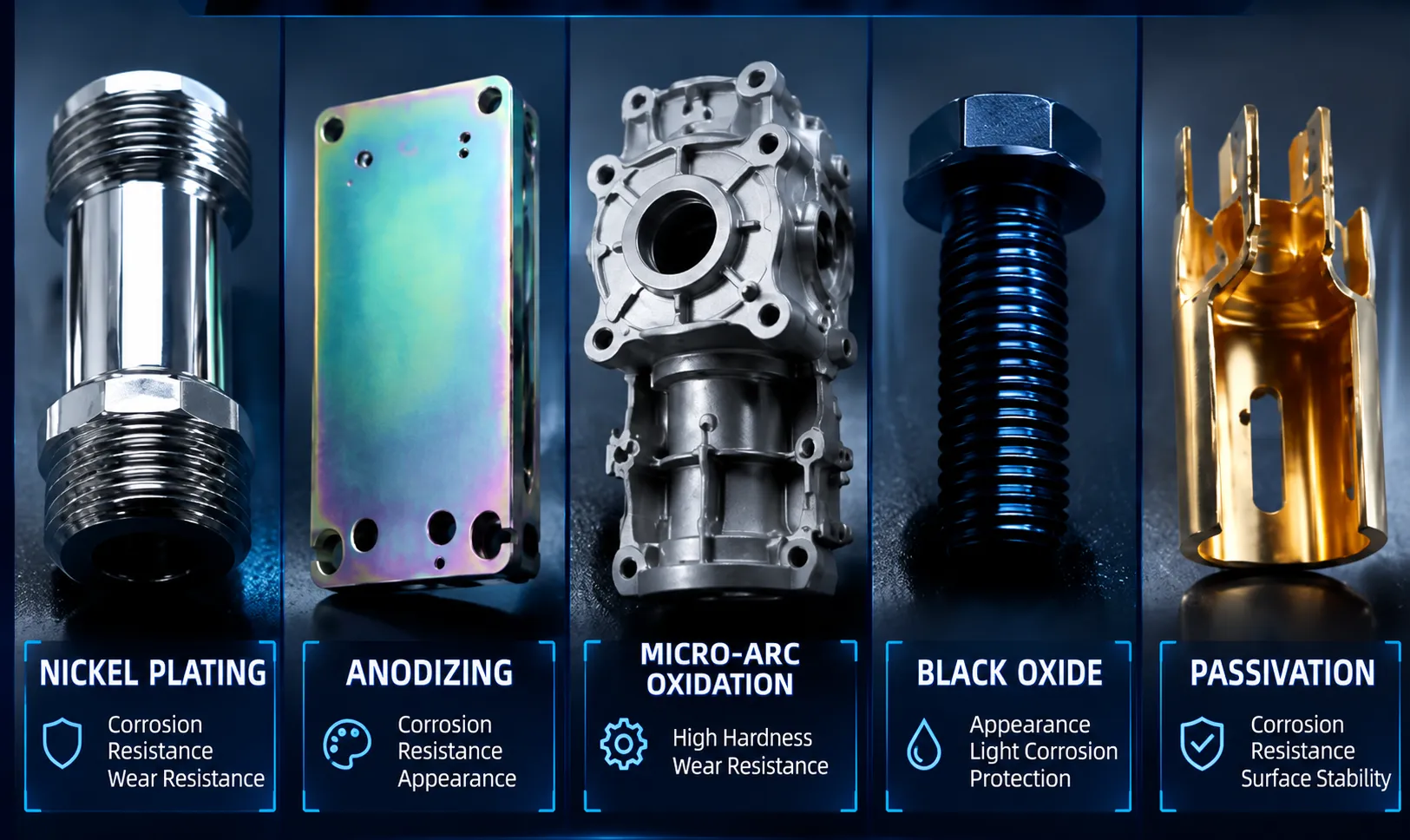
Figure 1. Common metal surface treatments and the primary surface properties they are designed to improve.
Each category works differently and solves different types of surface problems.
3.1 Plating: Adding Another Material to the Surface
Plating deposits another material onto the base metal.
Common examples include zinc plating, nickel plating, and chrome plating.
The purpose is to give the surface properties that the base material does not provide sufficiently on its own.
For example, zinc plating is widely used on carbon and low-alloy steels when economical corrosion protection is required. Nickel plating may be selected when corrosion resistance, wear performance, or appearance is more important.
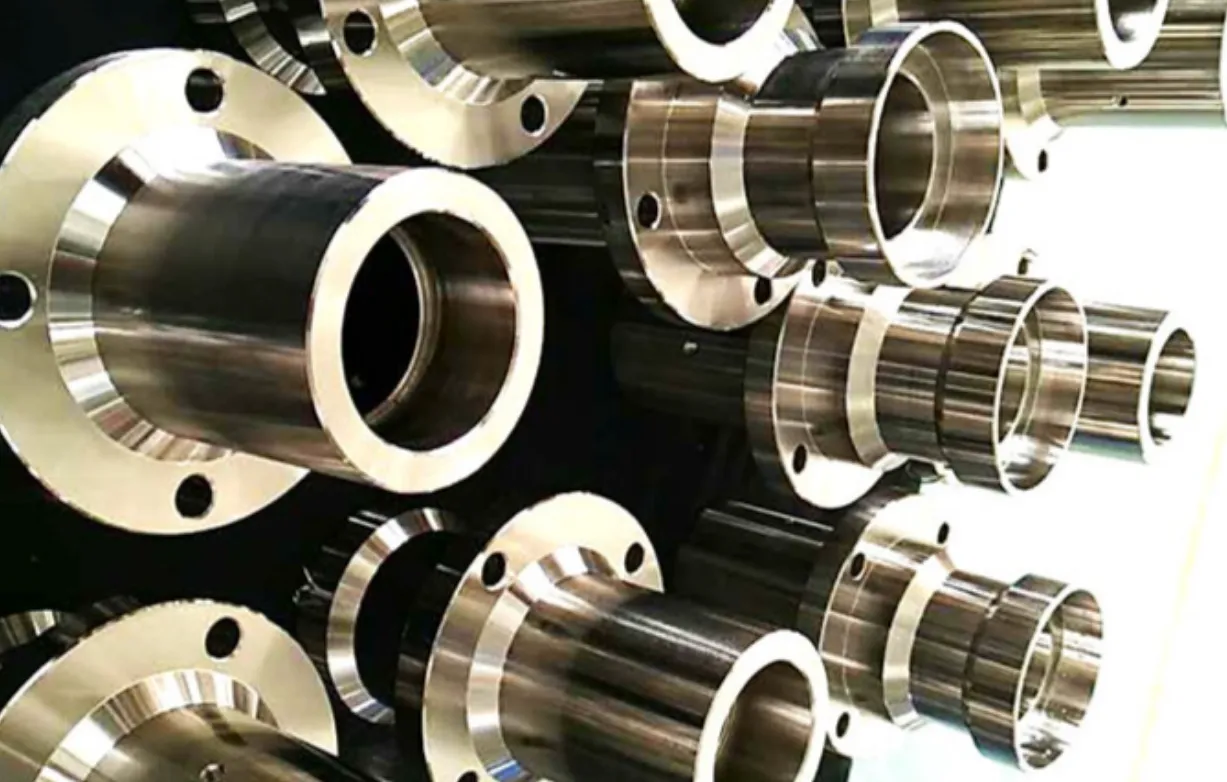
Figure 2. Nickel-plated precision metal components, illustrating the smooth metallic finish commonly associated with nickel plating.
However, specifying the coating material is only part of the engineering decision.
Adhesion
If surface preparation is inadequate, the deposited layer may blister, peel, or separate from the substrate.
Porosity
A coating can appear complete while still containing defects or pores that allow the surrounding environment to reach the base material.
Thickness distribution
Electroplating does not necessarily produce identical thickness on every feature. Edges, recesses, deep holes, and complex geometries can receive different amounts of deposited material.
Internal stress
The plating process may introduce stress into the coating, which can affect coating integrity and long-term performance.
Dimensional impact
Threads, precision holes, mating surfaces, and close-tolerance features may require coating allowances, masking, or additional dimensional control.
These considerations become increasingly important as component tolerances become tighter.
Why Is Nickel Plating on Magnesium More Difficult?
Magnesium is a useful example of why the base material cannot be separated from the finishing process.
Magnesium is highly reactive. Its surface can quickly form oxides and hydroxides that interfere with the interface required for reliable plating adhesion.
Nickel plating on magnesium therefore places significant demands on pretreatment and interface control.
If the nickel layer contains local defects and exposes the magnesium substrate, the electrochemical difference between the two materials can create unfavorable corrosion conditions.
The broader lesson is important:
The success of a coating depends not only on the coating itself, but also on the interface between the coating and the base material.
3.2 Chemical Conversion Coatings: Changing the Surface Chemistry
Not every surface treatment works by depositing another metal.
Chemical conversion treatments modify the original surface through a chemical reaction, creating a more stable surface layer.
Examples include passivation, black oxide or bluing, and certain conversion treatments for aluminum, magnesium, and copper alloys.
Depending on the material and process, these treatments can help reduce oxidation, improve corrosion behavior, provide temporary protection, or maintain functional properties such as electrical conductivity.
Because the converted layer is generally thin, chemical conversion processes may also be useful where dimensional impact must be minimized.
Passivation Does Not Always Mean the Same Thing
“Passivation” can cause confusion because the term does not describe exactly the same treatment for every material.
For stainless steel, passivation generally refers to chemical treatment used to remove surface contaminants such as free iron and support the restoration of the passive surface condition.
For zinc-plated components, passivation can refer to a post-treatment applied over the zinc coating.
These are not the same process.
This distinction matters when requirements move between designers, purchasing teams, machining suppliers, and surface treatment providers.
Writing only “passivation” on a drawing without sufficient material and process context may create ambiguity.
Where Does Black Oxide Fit?
Black oxide, also called bluing in some applications, is commonly used on carbon steel and certain alloy steels.
Its major advantages include a black appearance and very little dimensional impact because the resulting layer is extremely thin.
This makes it useful for tools, fixtures, and some small steel components.
However, black oxide has limited corrosion resistance on its own. Oil or sealing is commonly used to improve protection.
For components exposed to long-term humidity or outdoor conditions, black oxide should not automatically be treated as a heavy-duty corrosion solution.
3.3 Electrochemically Grown Oxide Layers: Anodizing and Micro-Arc Oxidation
Anodizing works differently from conventional plating.
Instead of depositing a separate metallic coating, an electrochemical process grows an oxide layer from the metal surface itself.
This type of treatment is especially important for aluminum and its alloys.
Standard Anodizing
Conventional anodizing is commonly selected when an aluminum component requires a combination of corrosion protection, improved surface durability, and decorative appearance.
It is widely used for machined housings, structural components, electronic products, equipment parts, and many other aluminum components.
Color can also be incorporated depending on the anodizing process.
Hard Anodizing
When wear resistance becomes more important, hard anodizing may be considered.
Compared with conventional decorative anodizing, hard anodizing is generally selected where a harder and more wear-resistant oxide surface is required.
However, thicker or harder does not automatically mean better.
The designer still needs to consider dimensions, mating features, threads, precision holes, and functional surfaces.
Micro-Arc Oxidation
Micro-arc oxidation, also known as plasma electrolytic oxidation in some contexts, is another electrochemical surface treatment.
It can form a thicker and harder ceramic-like oxide layer on materials such as aluminum, magnesium, and titanium, depending on the specific process.
It may be considered when greater surface hardness or wear performance is required.
Again, the application should drive the decision.
A more complex surface treatment is not automatically a better surface treatment.
Important: Anodizing Can Affect Electrical Conductivity
One of the most important considerations with anodized aluminum is electrical performance.
The anodic oxide layer is generally non-conductive.
That matters when a component contains:
- Grounding points
- Electrical contact surfaces
- Conductive mounting interfaces
- EMI-related contact areas
- Threads used as part of an electrical connection
For electronic components and enclosures, anodizing every surface without considering grounding and electrical contact areas can create a functional problem.
Depending on the design, engineers may consider selective masking, leaving designated contact areas untreated, or choosing a conductive conversion treatment where electrical conductivity must be retained.
This is a good example of why the surface finish should be selected based on function rather than appearance alone.
3.4 Functional Coatings: When Corrosion Is Not the Only Problem
Some surface treatments are selected for very specific functional requirements.
Examples include:
- Paint and powder coating
- E-coating
- Low-friction coatings
- Electrical insulating coatings
- High-temperature coatings
- Chemical-resistant coatings
- Wear-resistant functional coatings
Painting and powder coating are commonly used on equipment housings, cabinets, structural components, and other relatively large parts where both protection and appearance matter.
However, coverage should be considered around corners, deep holes, recesses, threads, mating surfaces, and other functional features. Masking may be required.
E-coating uses an electric field to deposit an organic coating and can provide more uniform coverage in recessed areas than conventional spraying in suitable applications.
It is frequently associated with batch-produced stamped, welded, and automotive components.
For small production volumes, however, the economics of E-coating can depend heavily on pretreatment requirements and production-line conditions.
Functional coatings also illustrate another important point:
Corrosion is not the only surface failure mechanism.
A part may fail because of friction, electrical leakage, temperature exposure, chemical attack, wear, or contamination.
The validation method should therefore reflect the actual operating environment.
4. Eight Common Surface Finishing Processes Compared
Now that the four main treatment categories are clear, individual processes become easier to compare.
| Process | Typical Materials | Main Purpose | Dimensional Impact | Key Consideration |
|---|---|---|---|---|
| Zinc Plating | Carbon / low-alloy steel | Corrosion protection | Low–moderate | Hydrogen embrittlement risk for some high-strength steels |
| Nickel Plating | Steel, copper, pretreated aluminum, etc. | Corrosion, wear, appearance | Moderate | Adhesion and thickness distribution |
| Black Oxide | Carbon / some alloy steels | Appearance, light protection | Very low | Limited outdoor corrosion protection |
| Anodizing | Aluminum / aluminum alloys | Corrosion, appearance, wear | Must be considered | Generally non-conductive |
| Painting / Powder Coating | Steel, aluminum, etc. | Protection and appearance | Relatively significant | Masking may be required |
| E-Coating | Suitable conductive substrates | Uniform protective coating | Process-dependent | Production volume affects economics |
| Carburizing + Quenching | Suitable low-carbon steels | Surface hardness, wear resistance | Distortion may occur | Heat treatment rather than coating |
| Passivation | Process/material dependent | Surface stability / corrosion performance | Usually very low | Specification terminology must be clear |
These eight processes are not eight interchangeable ways of achieving the same result.
They modify the surface differently and are intended to solve different problems.
5. How to Choose the Right Surface Finish for Your Part
Instead of starting with a list of finishing processes, use a six-step selection framework.
Step 1: Identify the Base Material
Start with the substrate.
Is the component made from steel, aluminum, stainless steel, magnesium, copper, titanium, or another material?
The substrate immediately eliminates some options and changes the difficulty of others.
A finish should never be specified independently of the base material.
Step 2: Define the Operating Environment
Determine where and how the component will operate.
Consider whether it will be used indoors or outdoors, experience high humidity, or be exposed to salt, chemicals, elevated temperatures, or contamination.
A finish that performs adequately in a dry indoor environment may not provide sufficient protection outdoors.
Step 3: Identify the Primary Failure Mode
What are you actually trying to prevent?
Is the main concern corrosion, wear, friction, oxidation, electrical failure, or cosmetic degradation?
Define the primary failure mode before selecting the process.
Step 4: Check Functional Requirements
Determine whether the surface must provide:
- Electrical conductivity
- Grounding
- Electrical insulation
- Low friction
- Chemical resistance
- High-temperature resistance
- A specific appearance
These requirements can immediately change the finishing strategy.
Step 5: Check Dimensional Requirements and Tolerance
Review critical features such as:
- Precision holes
- Tight-tolerance diameters
- Threads
- Bearing seats
- Press fits
- Sliding surfaces
- Mating faces
If the finishing process changes the effective dimension of these features, machining and finishing requirements should be planned together.
Step 6: Select the Surface Finish
Only after the material, environment, failure mode, functional requirements, and tolerance are understood should the most suitable process—or combination of processes—be selected.
For prototype and low-volume production, finishing cost, minimum batch requirements, pretreatment, masking, and fixturing should also be considered.
The decision path can therefore be summarized as:
Material → Environment → Failure Mode → Functional Requirement → Tolerance → Surface Finish
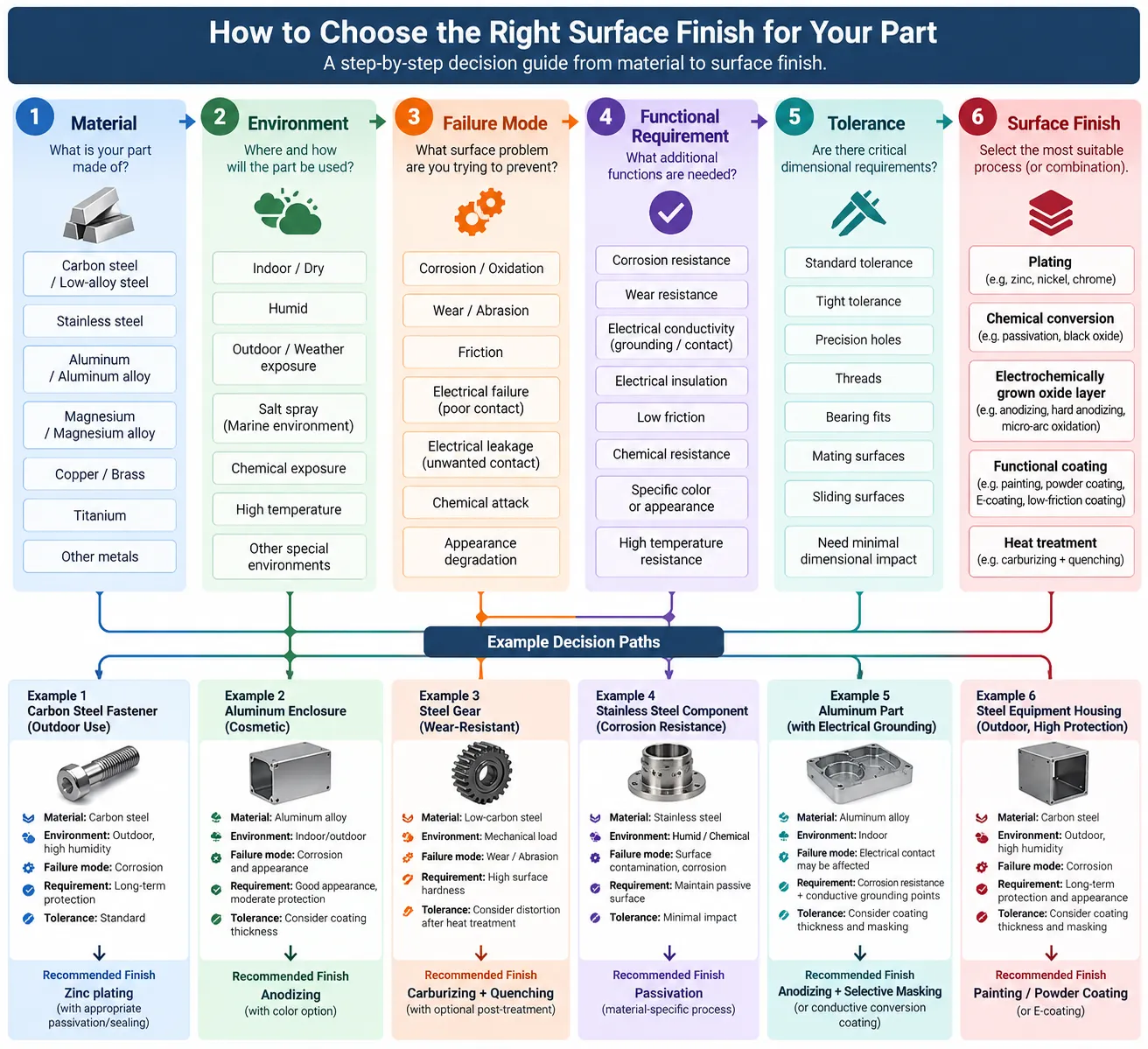
Figure 3. Engineering decision flow for selecting a metal surface finish based on material, environment, failure mode, functional requirements, and tolerance.
6. Surface Finishing and Tolerance: What Engineers Often Miss
Surface finishing becomes especially important when manufacturing precision CNC machined components.
A drawing may specify a tight tolerance on a hole, shaft, thread, or mating feature while also requiring plating, anodizing, coating, or another surface treatment.
Those requirements should not always be considered independently.
Coating Thickness Can Change Functional Dimensions
When a process adds material to a surface, the final functional dimensions can change.
A shaft may become larger.
A hole may become effectively smaller.
A thread may become tighter.
A mating interface may no longer fit as intended.
Even processes such as anodizing, where an oxide layer grows from the base material, need to be considered when tolerances are tight.
This is particularly important for:
- Bearing fits
- Press fits
- Precision bores
- Threaded connections
- Sealing surfaces
- Mating interfaces
Depending on the design, engineers may need to specify masking, finishing allowance, process-specific dimensional control, or inspection after finishing.
This leads to an important manufacturing principle:
Surface finishing should be considered during DFM—not after machining is complete.
A drawing should identify which dimensions apply before finishing, which apply after finishing, and which functional areas require special control.
7. Practical Surface Finishing Examples
Example 1: Outdoor Carbon Steel Component
If long-term corrosion protection is the main requirement, black oxide alone is generally not the appropriate solution.
Hot-dip galvanizing or a more robust protective coating system may be more suitable depending on the part and environment.
Example 2: Aluminum Part With Cosmetic Requirements
When appearance and corrosion resistance are both important, anodizing is a common option.
The required color, surface texture, and dimensional impact should be considered before the process is specified.
Example 3: Wear-Resistant Gear or Shaft
If the main failure mechanism is wear rather than corrosion, a surface-hardening treatment may be more relevant.
For suitable low-carbon steels, carburizing followed by quenching can create a hard surface while retaining a tougher interior.
The process can introduce distortion, so subsequent finishing operations may need to be considered.
Example 4: Indoor Steel Tool or Fixture
Black oxide may be appropriate where a black appearance and minimal dimensional change are desired.
Oil or sealing is normally used to improve corrosion protection.
However, the same solution should not automatically be transferred to an outdoor component.
Example 5: Aluminum Enclosure Requiring Grounding
If electrical grounding is critical, fully anodizing every contact surface may create a problem because the anodic layer is generally non-conductive.
Depending on the design, a conductive conversion treatment or selective masking strategy may be more appropriate.
These examples demonstrate why surface finishing decisions should begin with function and environment, not simply with the name or appearance of the process.
8. Common Surface Finishing Mistakes
Mistake 1: Choosing a Process Based Only on Appearance
“I want the component to be black” is not a complete surface finishing specification.
Black oxide, black anodizing, and black paint can produce similar visual outcomes while providing very different functional properties.
Color is only one requirement.
Mistake 2: Ignoring Coating Thickness
A part that meets tolerance before finishing does not necessarily meet tolerance after finishing.
Critical dimensions should be evaluated together with the selected process.
Mistake 3: Forgetting About Electrical Conductivity
This is particularly important for aluminum components.
A surface finish that improves corrosion resistance may simultaneously interfere with grounding or electrical contact.
Mistake 4: Specifying the Finish Without Considering the Base Material
The same process can behave differently on different substrates.
Material compatibility and pretreatment are part of the surface finishing decision.
Mistake 5: Treating Surface Finishing as the Final Cosmetic Step
For precision components, surface treatment should be considered together with material selection, machining tolerances, mating features, electrical requirements, and the operating environment.
In other words:
Surface finishing is part of engineering—not just decoration.
9. Frequently Asked Questions About Metal Surface Finishing
What Is the Best Surface Finish for Aluminum?
There is no single best finish for every aluminum part.
Anodizing is commonly considered when corrosion resistance, wear performance, or appearance is important. Hard anodizing may be more appropriate when increased wear resistance is required.
When electrical grounding or conductive contact is important, a conductive conversion treatment or selective masking strategy may be more suitable.
The correct choice depends on the part's functional requirements.
What Surface Treatment Is Best for Corrosion Resistance?
It depends on the base material and operating environment.
For carbon steel, zinc-based protection or suitable coating systems are common options. Aluminum may use anodizing or conversion treatments depending on the application. Stainless steel may use passivation where appropriate.
Rather than specifying only “corrosion resistant,” define the actual exposure conditions first.
Does Anodizing Change Part Dimensions?
Anodizing can affect functional dimensions and should therefore be considered when defining tight tolerances.
Precision holes, threads, bearing fits, and mating surfaces deserve particular attention.
Depending on the application, masking, machining allowance, or post-treatment dimensional verification may be required.
Is Black Oxide Good for Outdoor Parts?
Black oxide produces a very thin surface layer and has relatively little effect on dimensions, but its corrosion protection is limited.
It is commonly combined with oil or sealing.
For long-term exposure to humidity or outdoor environments, a more robust corrosion protection system should normally be considered.
What Is the Difference Between Anodizing and Passivation?
Anodizing and passivation are different surface treatment concepts.
Anodizing uses an electrochemical process to grow an oxide layer and is widely used on aluminum.
Passivation is a term whose meaning depends on the substrate and process. Stainless steel passivation, for example, is different from a passivation post-treatment applied to zinc-plated components.
How Do I Choose a Surface Finish for a CNC Machined Part?
Start by answering six questions:
- What is the base material?
- Where will the part operate?
- What is the main surface failure risk?
- What functional properties are required?
- Which dimensions are critical?
- Which surface process best balances these requirements with production volume and cost?
Answering these questions before selecting the finish can prevent many avoidable manufacturing problems.
10. Conclusion: Choose the Problem Before You Choose the Process
There is no single “best” metal surface finish.
There is only a finish that is better suited to a particular combination of material, environment, failure mode, tolerance, and functional requirements.
If corrosion is the problem, solve corrosion.
If wear is the problem, solve wear.
If grounding is critical, do not select a finish that unintentionally isolates the electrical contact surface.
And if the component has tight tolerances, do not wait until machining is complete to start thinking about coating thickness or dimensional changes.
The most reliable approach is to consider surface finishing together with material selection, machining, tolerances, mating features, electrical requirements, and assembly conditions.
Ultimately:
The purpose of surface finishing is to give the surface the properties that the base material alone cannot provide.
Need help choosing a surface treatment for a custom metal part? Send your drawing, material, and surface requirements for a manufacturability review.