Skip to main content Skip to footer
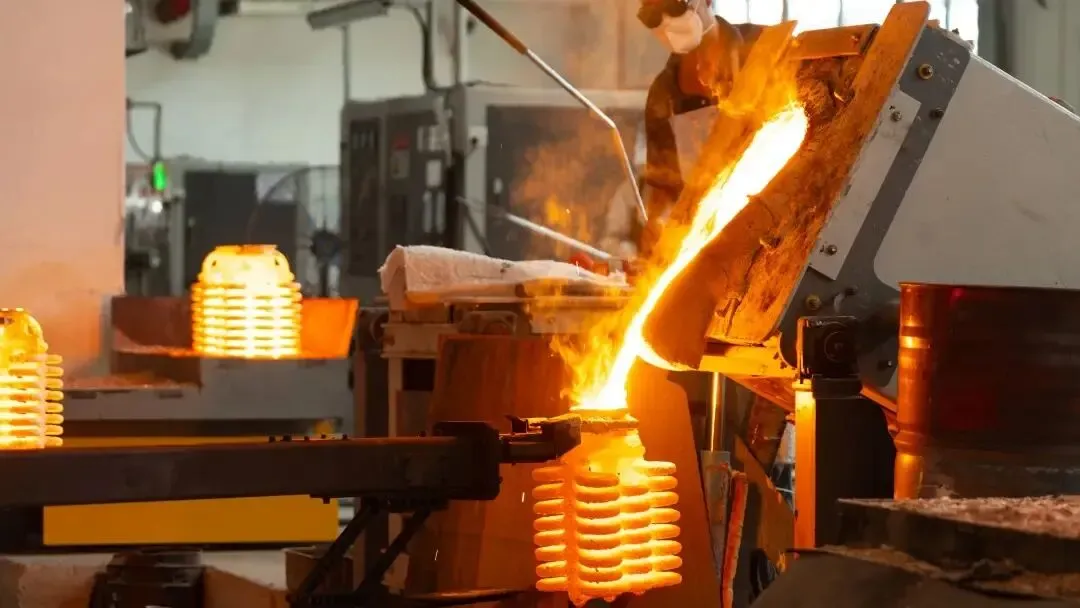
Investment casting, also known as lost wax casting, is a precision metal-forming process used to manufacture complex components with good dimensional accuracy, surface finish, and repeatability.
The basic principle is straightforward: a wax pattern is produced, coated with multiple layers of ceramic material, and then removed to create a hollow ceramic mold. Molten metal is poured into this cavity, allowed to solidify, and the ceramic shell is subsequently removed.
But producing a reliable investment casting involves much more than simply making a wax pattern and pouring metal.
Tooling design, wax pattern stability, shell building, dewaxing, shell firing, alloy chemistry, pouring conditions, heat treatment, dimensional inspection, non-destructive testing, and secondary CNC machining can all affect the final component.
This guide explains how the complete investment casting process works—and, more importantly, where quality needs to be controlled from raw material to final inspection.
What Is Investment Casting?
Investment casting is a manufacturing process in which a disposable pattern, traditionally made from wax, is used to create an expendable ceramic mold.
A wax pattern representing the component geometry is first produced. Multiple patterns can then be assembled onto a central sprue to form a wax tree.
The tree is repeatedly coated with ceramic slurry and refractory material. After sufficient ceramic layers have been built and dried, the wax is removed, leaving a hollow ceramic shell.
The shell is fired and prepared for pouring. Molten metal fills the cavity previously occupied by the wax. After solidification, the ceramic shell is removed and individual castings are separated from the gating system.
This process makes investment casting particularly useful for components involving:
- Complex three-dimensional geometry
- Difficult-to-machine features
- Relatively smooth as-cast surfaces
- Repeat production
- Reduced machining requirements
- Materials where excessive machining would be inefficient
Investment casting is therefore commonly described as a near-net-shape manufacturing process 1.
Instead of machining the entire component from a large block of material, manufacturers can cast the geometry close to its final shape and machine only the features that require tighter tolerances or specific functional surfaces.
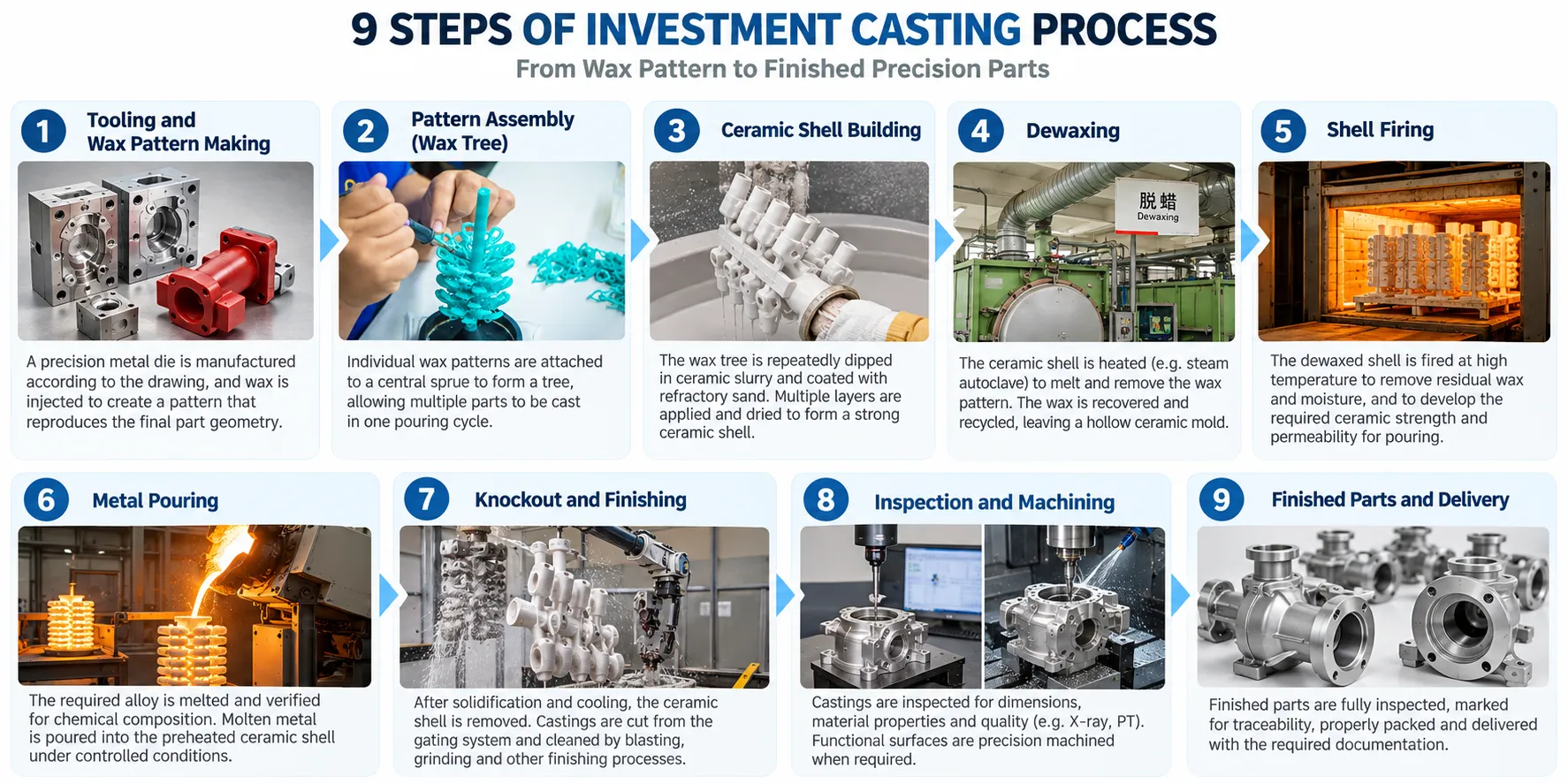
Figure 1. Nine key stages of the investment casting process, from tooling and wax pattern production to inspection and final delivery.
Why Is It Called Lost Wax Casting?
The term lost wax casting describes what happens to the temporary pattern during the process.
A wax version of the desired component is produced first.
Ceramic material is then built around the wax pattern. Once the shell has developed sufficient strength, the wax is removed.
The wax disappears, but the cavity it created remains.
Molten metal then fills this cavity and reproduces the geometry previously occupied by the wax.
In simple terms:
Wax Pattern → Ceramic Mold → Wax Removed → Molten Metal → Metal Casting
Although the basic lost-wax principle has a very long history, modern industrial investment casting has developed into a highly controlled manufacturing process capable of producing sophisticated engineering components.
How Does the Investment Casting Process Work?
The exact manufacturing route varies according to the alloy, component geometry, dimensions, production volume, and customer specifications.
However, a typical industrial investment casting process contains the following major stages.
1. Tooling Design and Manufacturing
For repeat production, the process normally begins with precision tooling used to produce the wax patterns.
Engineers review the part drawing and 3D model and determine how the pattern should be manufactured.
Tooling design may need to consider:
- Component geometry
- Expected process shrinkage
- Critical dimensions
- Wax injection behavior
- Gating arrangement
- Potential distortion
- Machining allowance
- Production repeatability
Once the tooling has been manufactured, trial wax patterns can be produced and evaluated before production proceeds.
This stage is important because dimensional problems introduced at the tooling or pattern stage may continue through the remaining casting process.
2. Wax Pattern Injection
Wax is injected into the tooling to produce a pattern representing the required casting geometry.
During production, appropriate process parameters need to be controlled to maintain pattern consistency.
After injection and cooling, the wax pattern can be inspected for characteristics such as:
- Visible defects
- Incomplete features
- Deformation
- Surface condition
- Critical dimensions
The objective is simple:
Detect variation before it becomes embedded in the casting process.
A good quality-control strategy therefore begins long before molten metal enters the ceramic shell.
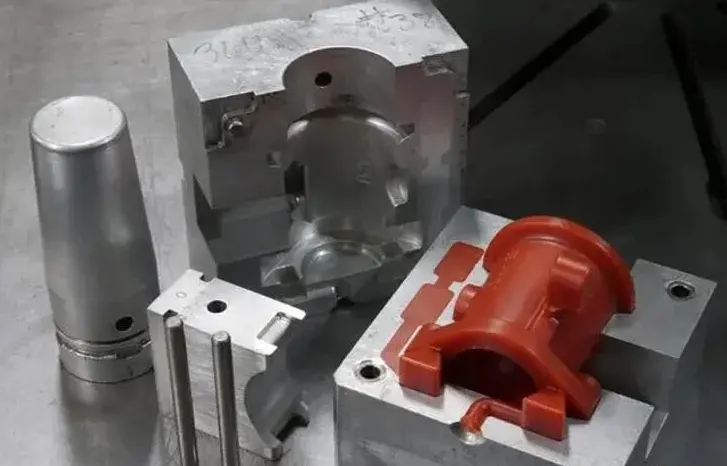
Figure 2. Precision tooling and a wax pattern used to reproduce the required casting geometry.
3. Wax Tree Assembly
Individual wax patterns are attached to a central sprue to create what is commonly called a wax tree or pattern tree.
This allows multiple components to be processed and poured as part of one assembly.
The sprue and gating system also create the path through which molten metal will eventually enter the individual casting cavities.
Before tree assembly, wax patterns should be checked and handled carefully to minimize deformation.
Gating design also requires engineering consideration because metal flow and solidification behavior can influence the final casting quality.
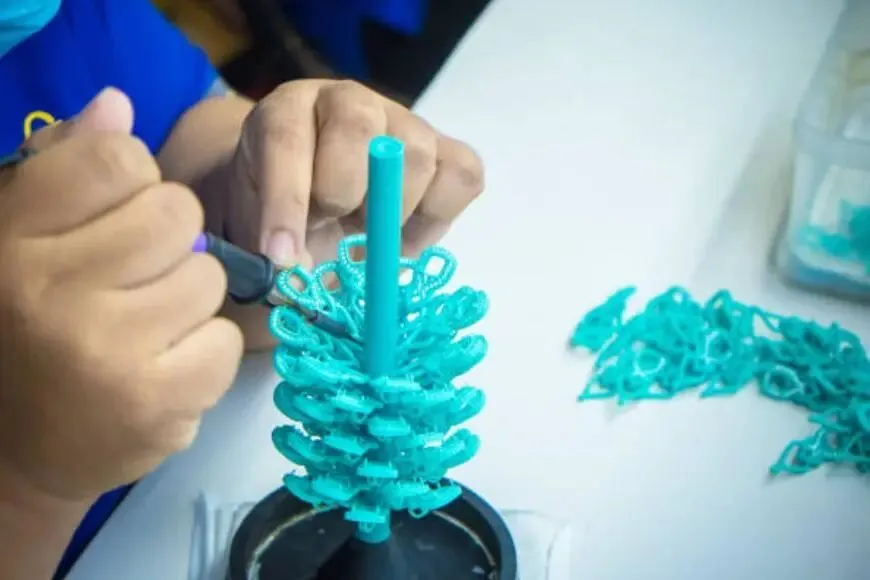
Figure 3. Individual wax patterns are assembled onto a central sprue to form a wax tree.
4. Ceramic Shell Building
Shell building is one of the most important stages of the investment casting process.
The wax tree is coated with a ceramic slurry and refractory material. Each layer is allowed to dry before the next layer is applied.
The sequence is repeated until a ceramic shell with sufficient strength has been formed.
Different layers perform different functions.
The first layer, often called the face coat, directly reproduces the wax surface and later comes into contact with molten metal.
Additional layers provide the strength required for subsequent handling, dewaxing, and pouring.
Important process variables can include:
- Slurry condition
- Refractory material
- Coating sequence
- Drying conditions
- Temperature and humidity
- Shell thickness
- Shell strength
This is why shell building should be treated as a controlled manufacturing process rather than simply a coating operation.
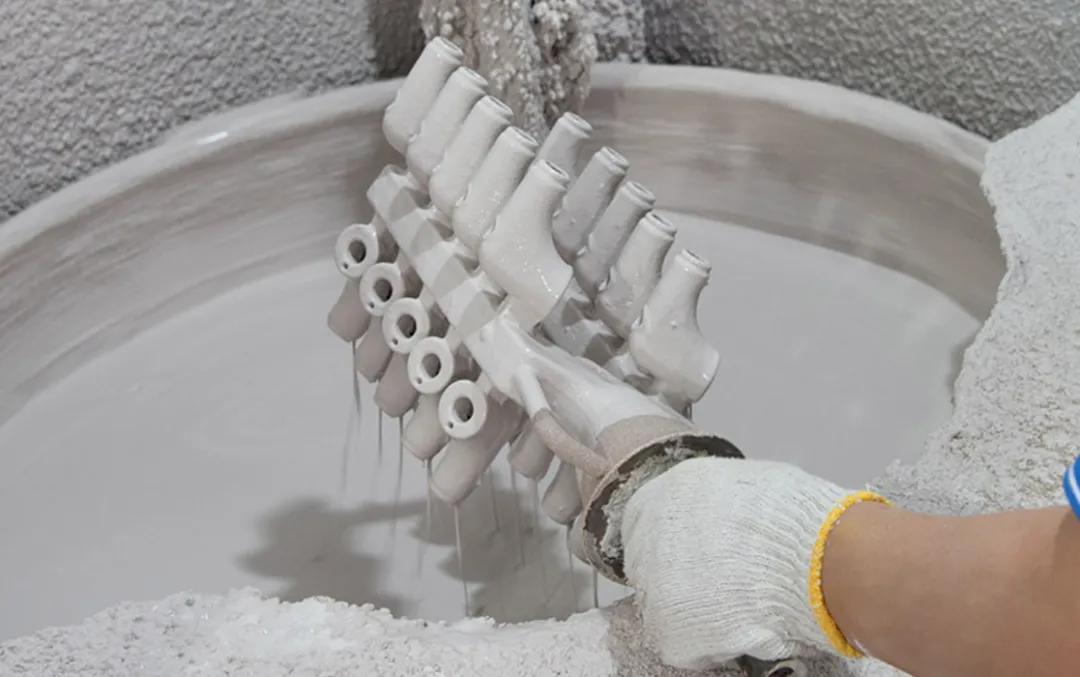
Figure 4. The wax tree is repeatedly coated with ceramic slurry and refractory material to build the shell.
Modern investment casting production may also use automated handling systems to improve process consistency, repeatability, and production efficiency during shell-making operations.
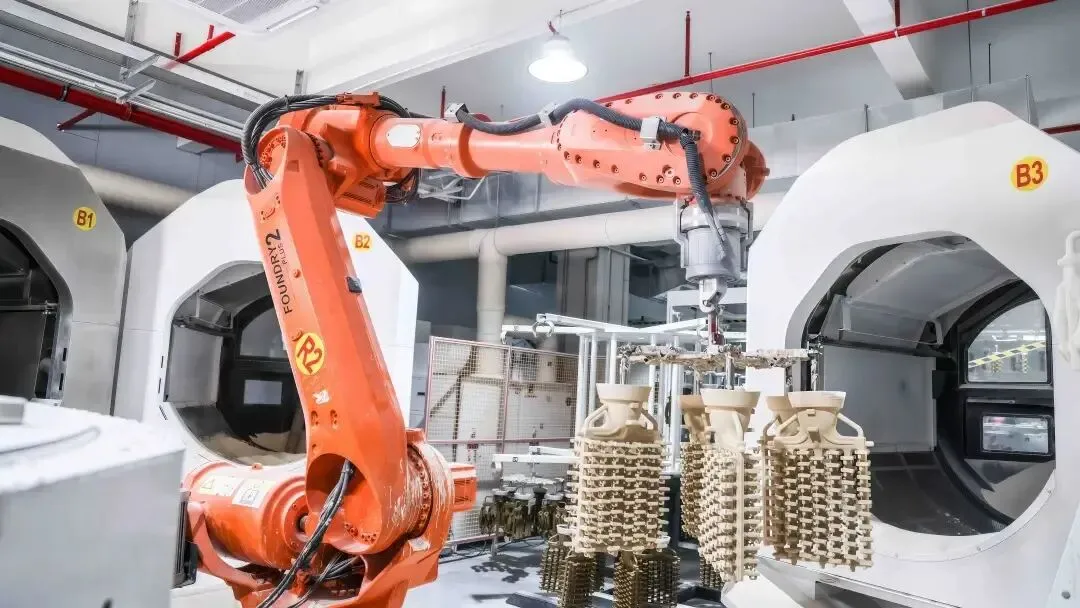
Figure 5. Automated handling systems can support repeatable ceramic shell processing in modern investment casting production.
5. Dewaxing
After the ceramic shell has developed sufficient strength, the wax pattern must be removed.
Heat is used to melt and remove the wax from inside the shell.
After dewaxing, the original wax pattern no longer exists.
What remains is a hollow ceramic cavity representing the geometry of the component.
This is the defining stage behind the name lost wax casting.
Dewaxing must be properly controlled because the ceramic shell needs to maintain its integrity while the wax is removed.
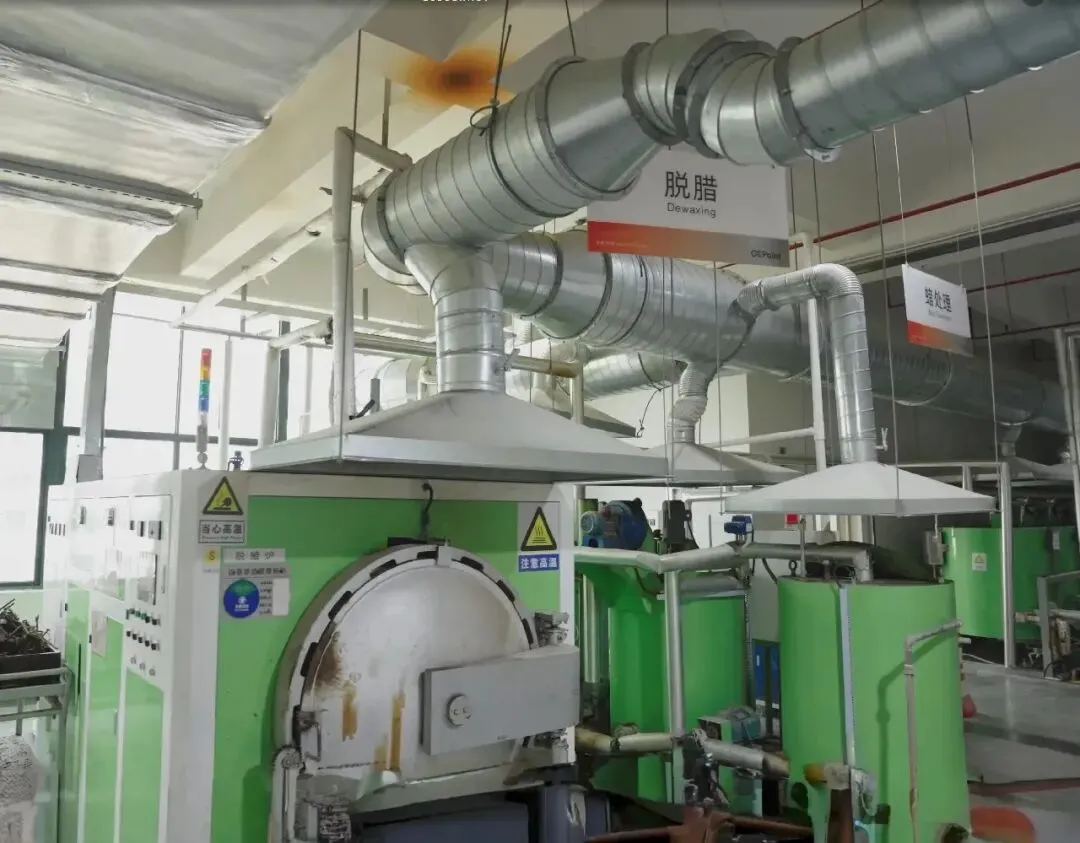
Figure 6. Dewaxing removes the temporary wax pattern and leaves the ceramic cavity required for metal casting.
6. Shell Firing and Preparation
After dewaxing, the ceramic shell undergoes controlled firing.
This operation helps remove residual wax and moisture and prepares the ceramic mold for metal pouring.
Firing parameters depend on factors such as:
- Shell system
- Alloy
- Casting geometry
- Foundry process
- Validated manufacturing procedure
The ceramic shell is subsequently prepared at an appropriate condition for pouring.
The objective is to provide a stable mold capable of receiving molten metal while supporting proper filling and solidification.
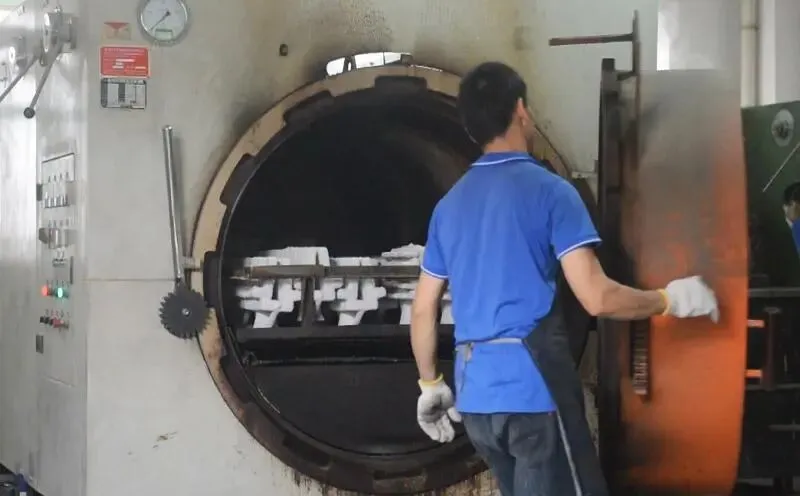
Figure 7. Ceramic shells are fired under controlled conditions before molten-metal pouring.
7. Melting and Metal Pouring
The specified alloy is melted and prepared for pouring.
This stage represents an important quality-control point.
Before pouring, manufacturers may verify alloy chemistry and confirm that the melt meets the required material specification.
Critical process variables can include:
- Alloy chemistry
- Melt condition
- Pouring temperature
- Shell condition
- Gating design
- Filling behavior
- Solidification behavior
Depending on the alloy and component requirements, additional atmosphere or melt-control methods may also be used.
Poor control at this stage can contribute to casting defects such as incomplete filling, inclusions, shrinkage, or porosity 2.
For this reason, reliable investment casting requires control of both material condition and process parameters, rather than relying only on final inspection.
Figure 8. Molten alloy is poured into prepared ceramic shells under controlled process conditions.
8. Cooling, Shell Removal and Cutting
After pouring, the metal is allowed to solidify and cool.
The ceramic shell is then removed and the cast components are separated from the gating system.
Further operations can include:
- Shell removal
- Blasting
- Gate cutting
- Grinding
- Burr removal
- Surface cleaning
- Preliminary visual inspection
At this point, the components begin to resemble the finished parts.
However, depending on the material and engineering requirements, additional processing may still be required.
9. Heat Treatment
Some investment cast components require heat treatment 3 to achieve the required metallurgical condition and mechanical properties.
The specific heat-treatment process depends on:
- Alloy
- Component requirements
- Applicable material specification
- Engineering drawing
- Validated manufacturing process
Process parameters and furnace records can be controlled and retained where required.
Components may also be checked for dimensional changes or distortion after heat treatment.
This illustrates an important principle:
Casting quality is not only about external appearance.
Material properties and metallurgical condition can be just as important as dimensions.
10. Inspection and Non-Destructive Testing
A finished casting may look acceptable externally while still containing internal or surface discontinuities that are difficult to detect visually.
For this reason, inspection methods should be selected according to component function, drawing requirements, and customer specifications.
Depending on the application, inspection may include:
- Visual inspection
- Dimensional inspection
- CMM measurement 4
- Chemical composition verification
- Mechanical testing
- Hardness testing
- Radiographic testing 5
- Dye penetrant testing 6
- Metallographic examination 7
- Leak testing
- Pressure testing
Not every component requires every inspection method.
The correct inspection plan should be based on risk, functional requirements, and the applicable specification.
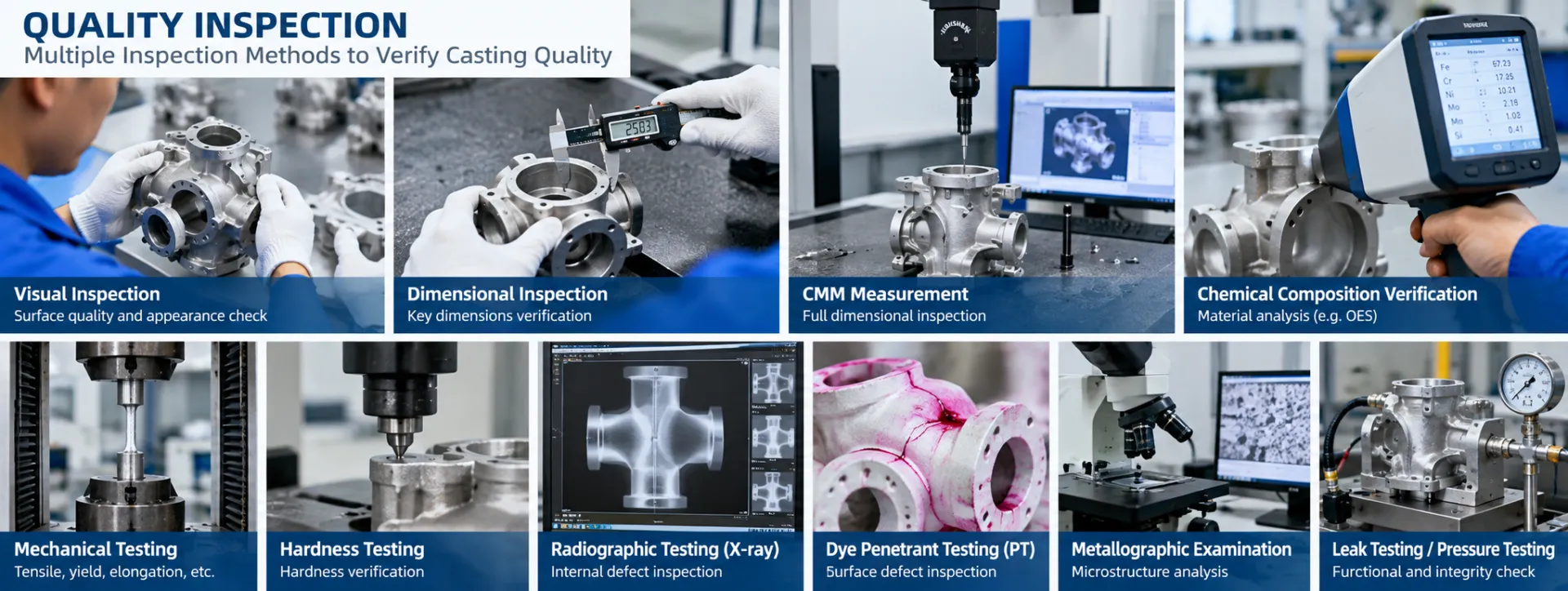
Figure 9. Multiple inspection methods help verify dimensional accuracy, material condition, surface integrity, and functional performance of investment castings.
First Article Inspection: Verify the Process Before Production
For new tooling, major process changes, or other defined production conditions, First Article Inspection (FAI) 8 can be used as an important quality gate.
Depending on project requirements, FAI may include:
- Complete dimensional verification
- CMM measurement
- Material verification
- Mechanical-property verification
- NDT
- Appearance inspection
- Machining verification
The purpose is not simply to inspect one component.
The more important objective is to verify that the manufacturing route is capable of producing the required component before full production proceeds.
This changes the quality philosophy from:
Produce first → Find defects later
to:
Verify first → Release production
11. CNC Machining After Investment Casting
The word precision in precision casting does not mean every feature should remain as-cast.
Investment casting is better understood as a near-net-shape process.
It creates complex geometry close to the final shape, reducing the amount of material that must be removed during secondary machining.
Critical functional features may still require CNC machining.
Typical examples include:
- Sealing surfaces
- Precision bores
- Bearing seats
- Threads
- Mounting faces
- Tight-tolerance holes
- Mating interfaces
- Critical datum surfaces
For many components, the most effective manufacturing strategy is therefore:
Cast the complex geometry. Machine the precision interfaces.
This can reduce machining compared with producing the entire component from solid material while maintaining tight control of the features that matter most to assembly and function.
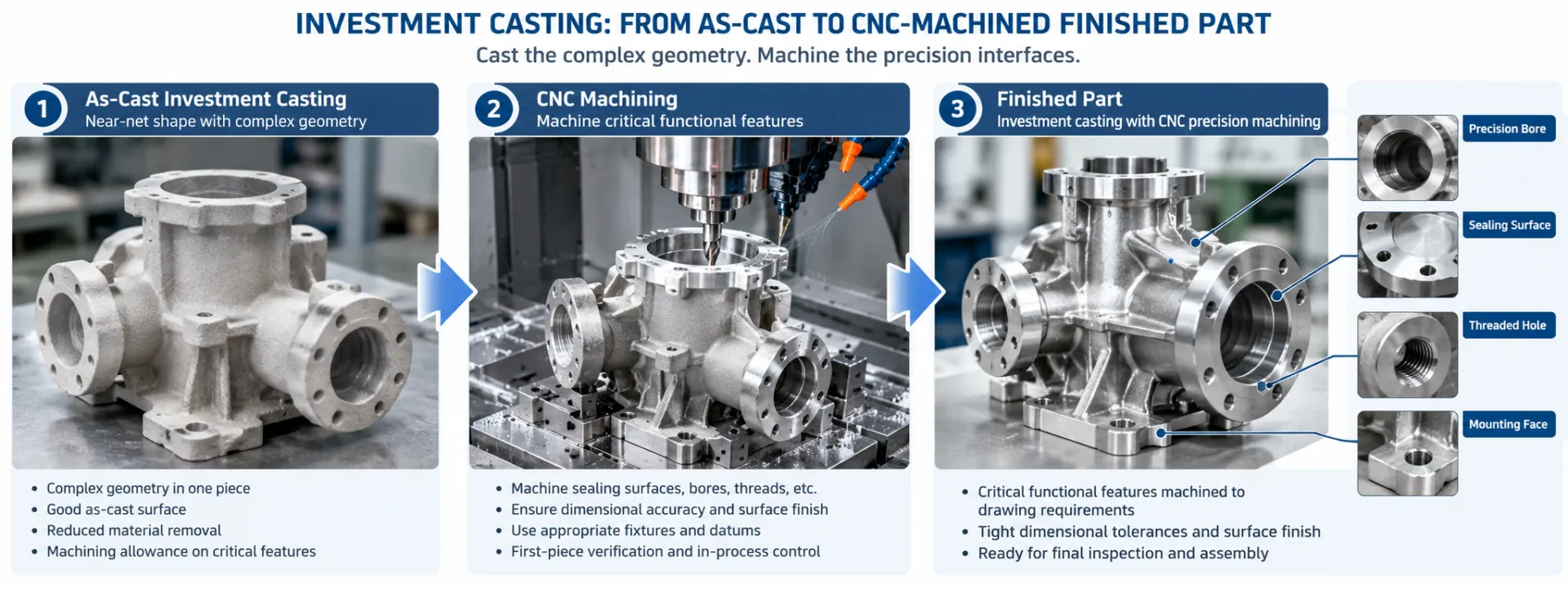
Figure 10. Investment casting creates the near-net geometry, while CNC machining finishes critical bores, sealing surfaces, threads, and mounting interfaces.
Why Combine Investment Casting with CNC Machining?
Casting and machining should not always be viewed as competing processes.
In many applications, they work better together.
Imagine a component with a complex external geometry, internal contours, and several precision mounting surfaces.
Machining the entire component from a solid billet could require significant material removal and long machining time.
Investment casting can first create the complex overall geometry.
CNC machining can then focus on the relatively small number of surfaces requiring high dimensional precision.
The manufacturing route becomes:
Investment Casting → Near-Net Shape → CNC Precision Finishing
For machined castings, engineering attention should be given to:
- Machining allowance
- Datum strategy
- Fixture design
- Casting variation
- Tool accessibility
- First-piece verification
- Final dimensional inspection
The casting and machining processes therefore need to be considered together during manufacturing planning, rather than as two unrelated operations.
What Are the Advantages of Investment Casting?
Investment casting can offer several important manufacturing advantages.
Complex Geometry
The process can reproduce intricate three-dimensional shapes that may be difficult or expensive to machine entirely from solid material.
This can be particularly useful for components with contours, transitions, and features with limited cutting-tool access.
Near-Net-Shape Manufacturing
Investment casting produces components relatively close to their final geometry.
This can reduce secondary machining and material removal.
For expensive materials or geometries requiring substantial stock removal, this can be an important manufacturing advantage.
Good Surface Quality
Because the ceramic shell reproduces the surface of the wax pattern, investment casting can achieve good as-cast surface quality.
Depending on component requirements, this may reduce subsequent finishing operations.
Repeatability
Once tooling and manufacturing parameters have been established and validated, investment casting is suitable for repeat production of complex components.
However, repeatability depends on controlling the complete process—not only the pouring operation.
No Conventional Mold Parting Line
The ceramic shell is built around the complete wax pattern.
Unlike conventional split molds, the process does not rely on a traditional mold parting surface around the component.
This provides additional design freedom for certain geometries.
Broad Material Capability
Investment casting can be used with a variety of engineering alloys.
Depending on foundry capability and application requirements, these may include different stainless steels 9, carbon and alloy steels, heat-resistant alloys, and other castable engineering materials.
Material selection should always be confirmed against the drawing, operating environment, and applicable specification.
What Are the Limitations of Investment Casting?
No manufacturing process is ideal for every component.
Investment casting also has limitations that should be considered during process selection.
Longer Process Chain
The complete route includes tooling, wax production, tree assembly, shell building, drying, dewaxing, firing, pouring, cleaning, and inspection.
This creates a longer process chain than some alternative manufacturing methods.
Tooling Investment
Repeat production generally requires dedicated tooling.
For very low quantities or components that are likely to undergo frequent design changes, the tooling investment should be evaluated carefully.
Shell Manufacturing Requires Process Control
Ceramic shell production involves multiple coating and drying operations.
Process conditions can influence shell quality and consistency.
Very Large Components Can Be Challenging
As component size and weight increase, shell handling, casting risk, and manufacturing economics may become more challenging.
Tight Features May Still Require CNC Machining
Investment casting cannot automatically replace precision machining on every functional feature.
Bores, sealing surfaces, threads, mounting surfaces, and assembly datums may still require secondary machining.
Therefore, process selection should consider the complete manufacturing route, not only the raw casting cost.
Common Investment Casting Risks—and How They Are Controlled
For engineering buyers, understanding the casting process is useful.
Understanding how manufacturing risk is controlled is even more important.
Porosity
Porosity can be influenced by several factors, including melt condition, gas content, shell preparation, gating, filling behavior, and solidification.
Depending on the component and material, controls can include:
- Material and chemistry verification
- Melt-process control
- Proper shell preparation
- Gating and venting optimization
- Controlled pouring
- Radiographic inspection where required
- Penetrant inspection of relevant surfaces
The objective should be to prevent and control risk throughout the process—not simply sort defective castings at final inspection.
Distortion
Complex castings can experience dimensional changes during pattern handling, shell processing, solidification, heat treatment, or subsequent operations.
Risk-control measures can include:
- Geometry review
- Wall-thickness consideration
- Wax-pattern inspection
- Shell-process control
- Appropriate support or fixturing
- Controlled heat treatment
- Approved straightening methods where applicable
- CMM dimensional verification
A useful engineering principle is:
Dimensional stability should be measured, not judged by appearance.
Machining Allowance
A casting can meet its general shape requirements and still become unusable if insufficient material remains on a critical surface for machining.
Machining allowance should therefore be considered before tooling and production.
For parts requiring secondary CNC operations, the engineering team should evaluate:
Casting datum → Machining datum → Available stock → Final tolerance
before batch machining begins.
Quality Control: Final Inspection Is Not Enough
One of the most important principles in precision investment casting is that quality cannot simply be inspected into the product at the end.
Quality needs to be controlled throughout the manufacturing process.
A robust control strategy may therefore include multiple quality gates:
Incoming Material
↓
Tooling Verification
↓
Wax Pattern Inspection
↓
Ceramic Shell Process Control
↓
Dewax & Shell Preparation
↓
Material / Melt Verification
↓
Controlled Pouring
↓
Post-Casting Operations
↓
First Article Inspection
↓
NDT Where Required
↓
CNC Machining
↓
Final Dimensional Inspection
↓
Traceability & Release
Supporting systems can also include:
This approach moves quality control upstream.
Instead of asking:
"Did the finished part pass?"
the better question is:
"Was each critical manufacturing stage controlled before the part moved to the next stage?"
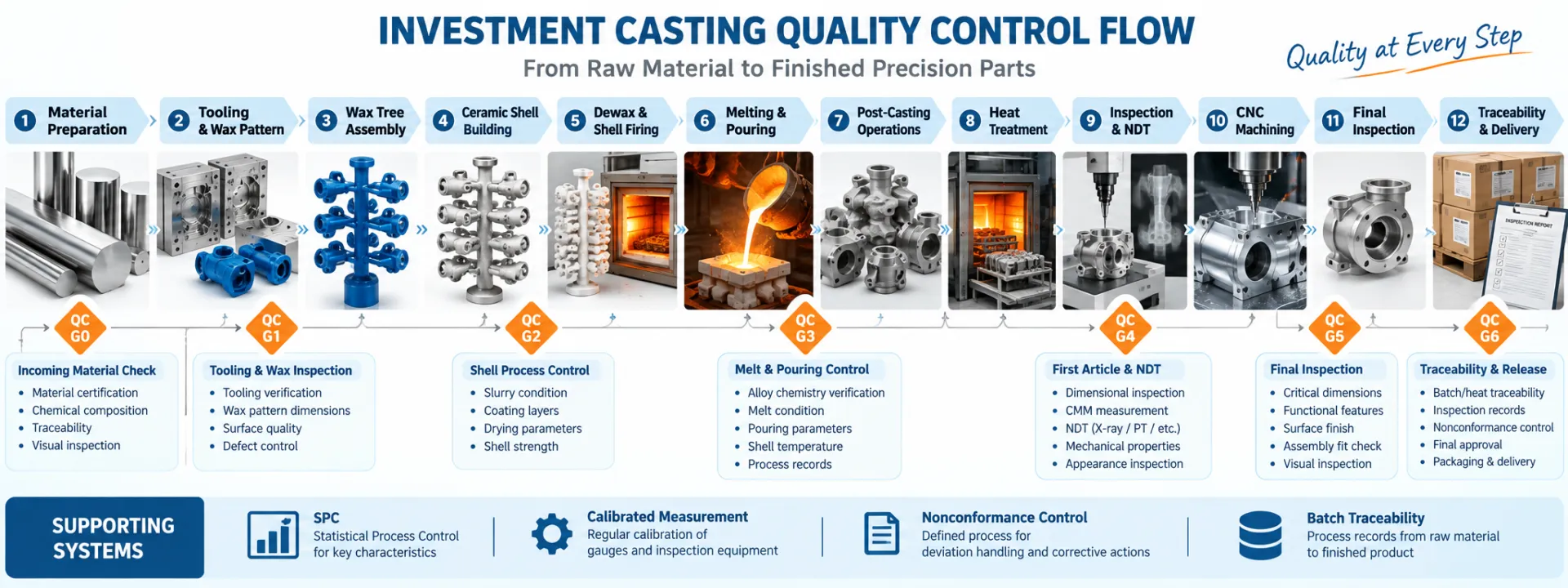
Figure 11. Quality is controlled throughout the investment casting process rather than relying only on final inspection.
Investment Casting vs. CNC Machining
Investment casting and CNC machining solve different manufacturing problems.
The right choice depends on the component.
For prototypes, very low quantities, or frequently changing designs, CNC machining from solid material can provide excellent flexibility because dedicated casting tooling may not be required.
For repeat production of complex components, however, machining everything from solid material can become inefficient.
Consider a component where a large percentage of the original billet would need to be removed simply to create the basic shape.
In that situation, a more efficient route may be:
Investment Casting → Near-Net Shape → CNC Finish Machining
This can be particularly attractive when the component has complex geometry but only a limited number of surfaces require very tight tolerances.
A practical product-development route can therefore be:
CNC Prototype → Design Validation → Evaluate Investment Casting for Repeat Production → CNC Machine Critical Features
The decision should consider:
- Geometry
- Material
- Tolerance requirements
- Production volume
- Tooling investment
- Machining time
- Material utilization
- Inspection requirements
- Total manufacturing cost
When Should You Consider Investment Casting?
Investment casting is worth evaluating when several of the following conditions apply:
- The component has complex three-dimensional geometry.
- Conventional cutting tools have limited access.
- Machining from solid requires substantial material removal.
- Multiple fabricated components could potentially be consolidated.
- Good as-cast surface quality is desirable.
- Repeat production is required.
- The material is expensive or difficult to machine.
- The component requires both complex cast geometry and precision-machined interfaces.
Conversely, a simple component with very low volume and easily machined geometry may not justify investment casting tooling.
The manufacturing process should therefore be selected after reviewing the drawing, rather than simply selecting casting or machining based on unit price.
Typical Investment Casting Applications
Investment casting is used across industries where components require a combination of complex geometry, material performance, and repeatability.
Aerospace and Aviation
Complex structural components, brackets, and other parts where geometry and material performance are important.
Energy and Power Equipment
Components such as impellers and other complex parts used in demanding operating environments.
Automotive
Complex mechanical components where repeatability and near-net-shape manufacturing can reduce subsequent machining.
Medical and Precision Equipment
Components requiring complex geometry, controlled surfaces, and reliable manufacturing.
Pumps and Valves
Impellers, valve components, and other fluid-control parts with complex shapes.
Industrial Equipment and Automation
Mechanical components, instrumentation parts, and equipment components requiring a combination of cast geometry and precision-machined interfaces.
The common denominator is not the industry.
It is the manufacturing challenge:
How can complex metal geometry be produced repeatedly without machining most of it from solid material?
How to Evaluate an Investment Casting Supplier
When sourcing an investment casting, asking only:
"Can you make this part?"
does not tell you very much about the manufacturing process behind the answer.
More useful questions include:
- How are wax-pattern dimensions controlled?
- How are shell-building and drying conditions managed?
- How is material chemistry verified?
- How are critical process parameters recorded?
- What NDT methods are available when required?
- How is first-article approval handled?
- Can the supplier manage secondary CNC machining?
- How are machining datums and critical dimensions controlled?
- Can inspection records be traced back to the relevant production batch?
These questions reveal much more about manufacturing capability than a machine list alone.
From Investment Casting to a Finished Precision Component
The most important takeaway is that investment casting should not be viewed as a single pouring operation.
It is a complete manufacturing system.
A precision component may pass through:
Tooling → Wax Pattern → Ceramic Shell → Metal Pouring → Post-Casting Processing → Inspection → CNC Machining → Final Verification
before it is ready for assembly.
For complex components, combining near-net-shape investment casting with precision CNC machining can reduce unnecessary material removal while maintaining tight control of critical functional features.
Our engineering team can review your drawing and evaluate:
- Casting feasibility
- Material requirements
- Critical dimensions
- Machining allowance
- CNC finishing requirements
- Inspection requirements
- Potential manufacturing risks
Need to Evaluate an Investment Casting Part?
If you are developing a precision metal component and are unsure whether investment casting, CNC machining, or a combination of both is the right manufacturing route, send us your drawing.
We can review the geometry, tolerance requirements, machining features, and inspection requirements before production.
Send Your Drawing for a Manufacturing Feasibility Review
Footnotes
1. Wikipedia's overview of near-net-shape manufacturing and how it reduces finishing costs. ↩︎
2. Wikipedia's breakdown of casting defect categories, including gas and shrinkage porosity. ↩︎
3. Xometry's guide to heat treatment processes, purposes, and effects on mechanical properties. ↩︎
4. Wikipedia's overview of coordinate-measuring machines and how they verify part geometry. ↩︎
5. ASNT's explanation of radiographic testing principles, techniques, and industry applications. ↩︎
6. ASNT's primer on liquid (dye) penetrant testing history, process, and capabilities. ↩︎
7. Total Materia's overview of metallographic examination for characterizing metal microstructure. ↩︎
8. Wikipedia's definition of First Article Inspection and its role in production validation. ↩︎
9. Wikipedia's overview of stainless steel composition, grades, and corrosion resistance. ↩︎
10. Siemens' explanation of statistical process control for monitoring manufacturing consistency. ↩︎