Skip to main content Skip to footer
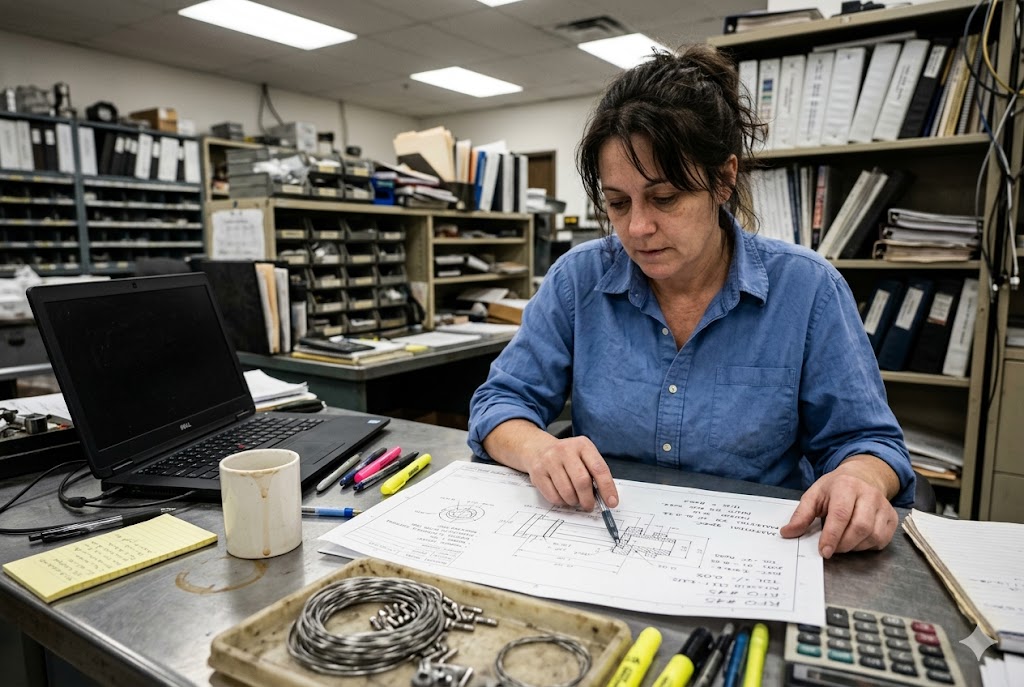
We handle sourcing requests for wire EDM parts 1 every week, and material specification questions come up more than almost anything else. Buyers assume the supplier will handle it — but the reality is more complicated than that.
Yes, a Chinese wire EDM supplier can often help source special-grade materials, but only with the right contractual controls. Without written material certification requirements, MTR traceability, and pre-machining verification, grade authenticity is assumed rather than confirmed. For critical applications, a customer-furnished material arrangement eliminates the risk entirely.
Here is what you need to know before you place that order.
How Long Does It Take a Chinese Supplier to Source a Non-Standard Alloy Grade?
Our team has coordinated hundreds of sourcing requests across China and Vietnam, and lead times for non-standard alloy grades vary more than most buyers expect. Planning ahead matters here.
For common tool steels like D2, H13, or P20, a Chinese supplier can typically source certified stock within 3 to 10 business days. Exotic grades such as M2 high-speed steel, CPM tool steels, or powder-metallurgy alloys may take 2 to 6 weeks, and certified mill-direct supply can take longer or may not be available domestically at all.
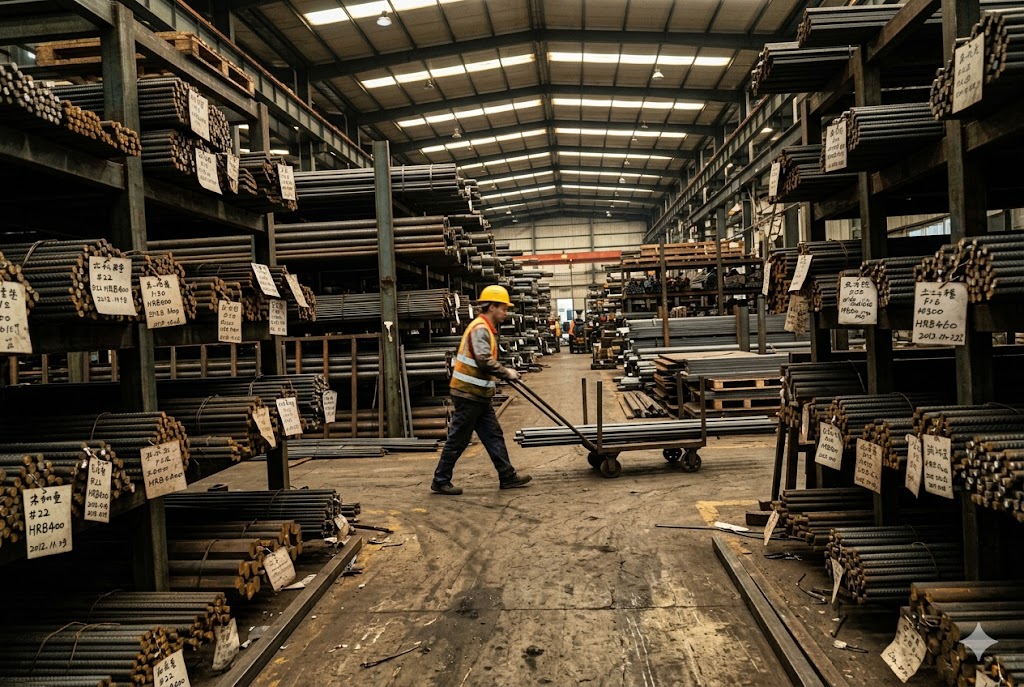
What drives lead time?
Two things control how fast a supplier can get your material: whether it is on the spot market and whether you need certified documentation.
The domestic Chinese steel distribution network is large. For mainstream grades, local traders carry stock. For non-standard grades, the supplier must contact a mill-affiliated distributor or place a mill order. Those take more time.
Certification adds another layer. A standard shop order may come with a basic material certificate. A proper Mill Test Report (MTR) 2 with heat number and chemical composition traceability requires the right source from the start.
Typical sourcing timelines by material category
| Material Category | Common Grades | Typical Lead Time | MTR Availability |
|---|---|---|---|
| Standard tool steel | D2, A2, O1, H13 | 3–7 business days | Usually available on request |
| Stainless & engineering steel | 316L, 17-4PH, 420 | 5–10 business days | Available from reputable distributors |
| High-speed steel | M2, M42 | 2–4 weeks | Requires pre-confirmation |
| Nickel superalloys | Inconel 718, Hastelloy C276 | 3–6 weeks | Mill-direct sourcing recommended |
| Carbide / PMG grades | CPM, powder-metallurgy tool steels | 4–8 weeks | Limited domestic stock; often import |
| Titanium alloys | Ti-6Al-4V, Grade 5 | 2–5 weeks | Available; specify AMS standard |
What buyers often miss
Suppliers default to the spot market for speed. If you do not specify the sourcing requirement upfront, the supplier will buy from the nearest available distributor. That is not always wrong — but it means grade authenticity depends on the distributor's reputation, not on any documented verification.
If your production schedule is tight, the honest answer is this: non-standard alloy sourcing should be confirmed before you finalize your production start date. Do not assume the material will be ready when machining is scheduled to begin.
Ask your supplier for a stock confirmation in writing before you issue the purchase order. A competent supplier will check availability and give you a realistic lead time. If they do not push back on an unrealistic timeline, that is a red flag.
When we help clients plan production in China or Vietnam, one of the first things we recommend is preparing a substitute list for any non-standard material specification. It is not a sign of weakness — it is good engineering practice.
Yes, providing a pre-approved material substitute list is strongly recommended. It gives your supplier a clear set of alternatives they can source domestically without guessing, prevents unauthorized substitutions, and keeps your project moving if the primary grade is unavailable. Without a substitute list, the supplier may choose a replacement on their own — and not tell you.
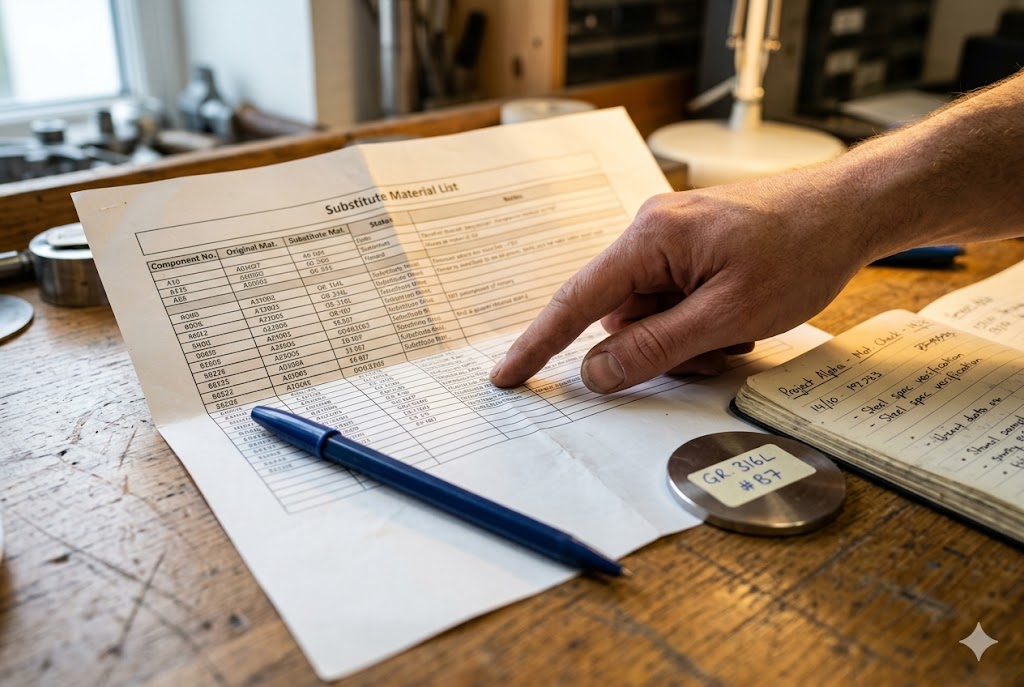
Why this matters more than buyers realize
The domestic Chinese distribution network does not carry every international grade. Some grades are simply not available in China with certified documentation. When a supplier cannot find your specified material, they face a choice: delay the order, tell you, or quietly substitute.
The third option happens more often than you would expect. EDM machining 3 is a non-contact process. A substitute material that has similar electrical conductivity and hardness will cut in a way that looks dimensionally correct — even if the metallurgy is wrong. The problem only surfaces downstream, during heat treatment, surface coating, or under service loading.
How to structure a substitute list
Your substitute list should specify the following:
| Field | What to Include |
|---|---|
| Primary grade | Exact designation (e.g., AISI D2, DIN 1.2379, JIS SKD11) |
| Approved substitutes | Up to 3 grades, in priority order |
| Minimum chemical requirements | Key alloy elements and ranges if critical |
| Condition requirement | Annealed, pre-hardened, or specific HRC range |
| Certification required | MTR with heat number, third-party XRF confirmation |
| Prohibited substitutes | Grades you have tested and rejected |
When you should not accept substitutes
Not every application allows substitution. If your part will go into a regulated end-use — aerospace tooling, medical device components, defense hardware — a substitute list may not be appropriate at all. In those cases, customer-furnished material (CFM) is the correct path. You source, certify, and ship the feedstock to your supplier. They process only.
If you are unsure whether your application allows substitution, work with your engineering team to define the substitution criteria first. Give the supplier a list that has already been approved internally, not one you created informally at the quoting stage.
Can My Supplier Source Bohler, Uddeholm, or Other European Tool Steel Brands in China?
Buyers sometimes specify Bohler or Uddeholm grades by brand name because they have trusted those materials in previous production runs. Our experience handling procurement in China tells us the answer is nuanced — and worth understanding carefully.
European tool steel brands like Bohler and Uddeholm do have authorized distributors in China, but availability varies by grade and region. Buyers should request the distributor's official authorization certificate to confirm they are purchasing genuine branded stock, not a domestic equivalent sold under the same trade name.
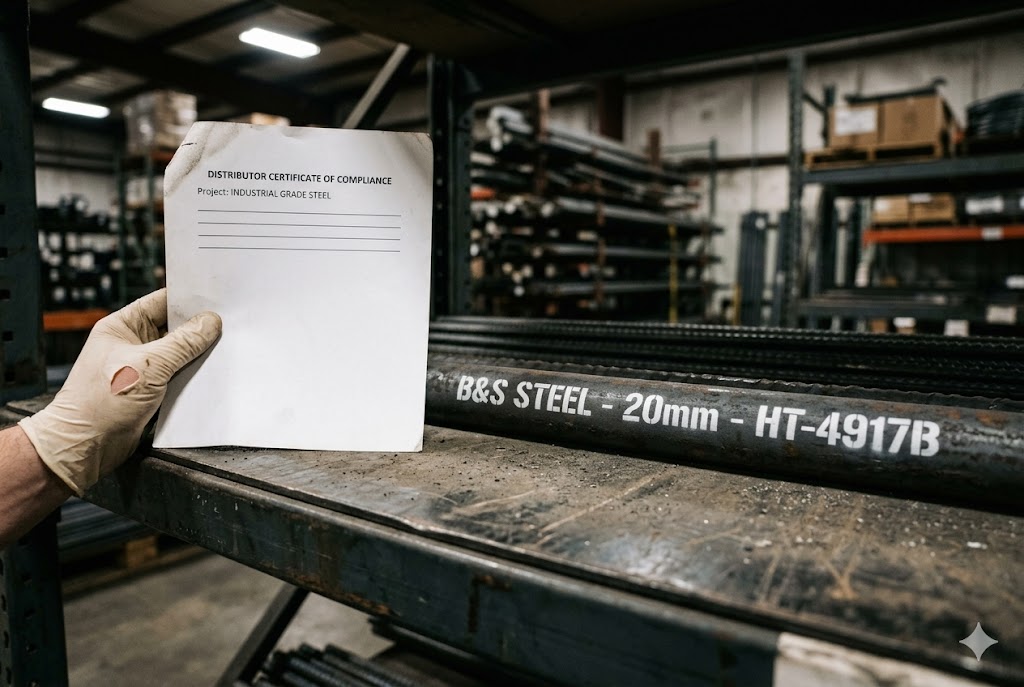
Authorized distribution in China
Both Bohler (now part of voestalpine) 4 and Uddeholm 5 maintain distribution networks in China through authorized trading partners. Major manufacturing hubs — Guangdong, Shanghai, Jiangsu, Zhejiang — generally have access to genuine branded stock through these channels.
The challenge is that the same trade name is sometimes used informally for domestic equivalent grades. A supplier who says they sourced "Bohler K110" may have purchased a legitimate Bohler product, a domestic DIN 1.2379 equivalent sold under a similar label, or something else entirely. Without documentation, you cannot tell from the part.
How to verify branded stock
| Verification Step | What to Request |
|---|---|
| Distributor authorization | Authorized dealer certificate from Bohler or Uddeholm |
| Mill Test Report | Heat number, chemical composition, mechanical properties |
| Product label or packaging photos | Brand logo, grade designation, heat number on bar or plate |
| Third-party XRF analysis | Spectrometric confirmation of alloy composition |
When domestic equivalents are acceptable
For many tooling and fixture applications, a certified domestic equivalent with a proper MTR is functionally equivalent to branded European steel. The brand specification often exists because of past experience, not a technical requirement that only that brand can satisfy.
If the brand specification comes from an engineering standard or customer requirement, do not substitute without written approval. If it is a buyer preference based on past experience, ask your supplier to provide a certified domestic equivalent with full documentation and have it independently tested before committing to full production.
Our team recommends contracting a third-party inspection company — SGS 6, Bureau Veritas 7, or TÜV all have offices in China's main manufacturing hubs — to conduct XRF alloy testing on the incoming material before machining begins. The cost is low relative to the risk of a material non-conformance discovered after the parts are finished.
How Do I Confirm the Sourced Special Material Meets My Specification Before Machining Starts?
This is the most important control point in the entire process. Once machining starts, material verification becomes destructive and expensive. Our quality process always places material confirmation before production approval — and we recommend you do the same.
To confirm special-grade material meets your specification before machining, require your supplier to submit the Mill Test Report with heat number traceability, and contract a third-party inspection company to perform XRF alloy testing on the incoming stock. Only release the material to production after both documents have been reviewed and accepted.
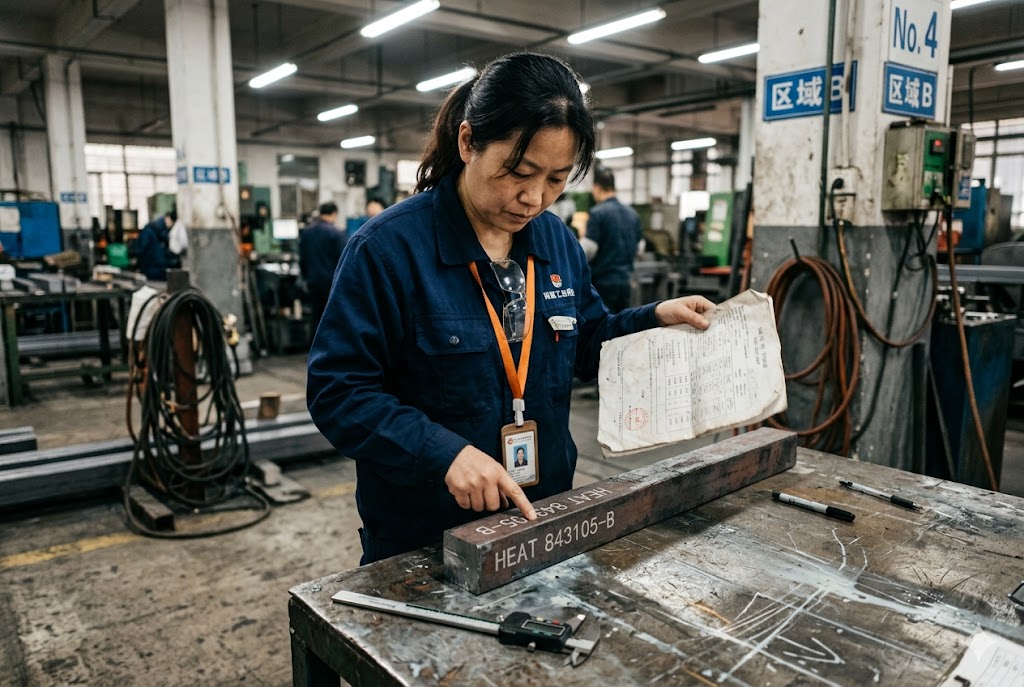
The pre-machining material gate
Think of material verification as a production gate. Nothing moves forward until the gate is cleared. This is standard practice in aerospace and medical manufacturing. It should be standard practice for any application where material non-conformance would cause downstream losses.
The gate has two steps: document review and physical testing.
Step 1: Document review
Request the following from your supplier before the material is moved to the machining floor:
- Mill Test Report (MTR) with heat number
- Chemical composition report showing all key alloying elements
- Mechanical properties data (hardness, tensile strength where applicable)
- Distributor's material certificate
- Photos of material label and packaging showing heat number
Cross-reference the heat number on the MTR with the heat number marked on the material. If they do not match, the document is not valid for that piece of stock.
Step 2: Physical verification
Document review alone is not sufficient for high-stakes applications. MTRs can be falsified or misapplied. Physical testing confirms what is actually in the material.
| Testing Method | What It Confirms | Cost Range | Turnaround |
|---|---|---|---|
| XRF (X-ray fluorescence) | Alloy composition, grade match | Low | Same day to 2 days |
| OES (optical emission spectrometry) | Full elemental analysis, more precise than XRF | Low–medium | 1–3 days |
| Hardness testing (Rockwell) | Pre-hardened condition verification | Very low | Same day |
| Ultrasonic testing | Internal defects, inclusions | Medium | 2–5 days |
XRF (X-ray fluorescence) 8 is the standard choice for composition verification. It is fast, non-destructive, and inexpensive. SGS, Bureau Veritas, and TÜV SÜD 9 all offer XRF services at inspection centers in China's main manufacturing hubs.
Structuring this in your purchase contract
Do not rely on verbal agreements. Your purchase order or supply contract should state:
- The supplier must submit the MTR before production begins.
- Material release is subject to buyer review and written approval.
- Third-party XRF testing is a contract requirement for all exotic or non-standard alloys.
- Material substitution without prior written buyer approval is a contract breach.
- Financial liability for non-conforming material rests with the supplier if they sourced it; with the buyer if the buyer furnished it.
If you are working with a sourcing partner or trading company rather than directly with the EDM shop, make sure your contract flows these obligations down to the actual manufacturer. A contractual requirement that stops at the trading company level does not protect you. Referencing internationally recognized ASTM material standards 10 in your contract language gives both parties an unambiguous technical baseline for acceptance criteria.
Conclusion
Sourcing special-grade materials through a Chinese wire EDM supplier is possible — but it requires active management. Require MTRs, mandate pre-machining verification, and use written contracts that assign accountability. When the stakes are high, furnish the material yourself.
Footnotes
1. Overview of wire electrical discharge machining: process, capabilities, and material considerations. ↩︎
2. Explanation of Mill Test Reports and how heat number traceability works for certified metals. ↩︎
3. Technical detail on wire EDM as a non-contact machining process and its material interaction. ↩︎
4. voestalpine High Performance Metals — official home of Bohler tool steel grades and global distribution. ↩︎
5. Uddeholm official site — premium tool steel manufacturer with global authorized distributor network. ↩︎
6. SGS material testing services — independent alloy composition and XRF testing worldwide. ↩︎
7. Bureau Veritas inspection services — third-party material verification and supplier audits globally. ↩︎
8. Wikipedia entry on X-ray fluorescence: how XRF identifies elemental alloy composition non-destructively. ↩︎
9. TÜV SÜD testing services — independent laboratory testing including metals and material verification. ↩︎
10. ASTM International standards and publications — reference for material acceptance criteria in contracts. ↩︎