Skip to main content Skip to footer
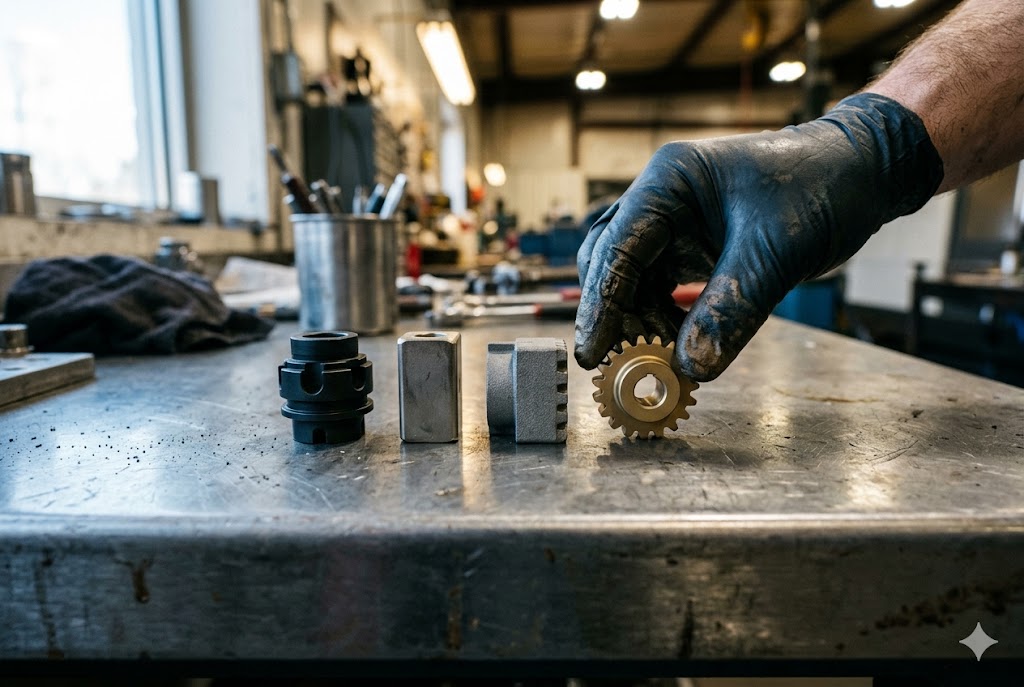
Every week, we see EDM parts arrive at the coating shop and get rejected — not because the machining was off, but because nobody addressed the recast layer first. That thin, thermally damaged zone on every wire-cut surface is the root cause of more coating failures than most buyers ever trace back to the source.
The four most common surface treatments for wire EDM parts are anodizing, electroless nickel plating, phosphating, and black oxide. Each serves a different purpose: anodizing protects aluminum, electroless nickel adds wear resistance, phosphating suits steel tooling, and black oxide minimizes dimensional change on tight-tolerance parts.
Choosing the wrong one — or skipping the prep work — costs money. Here is what you need to know before you specify anything on your drawing.
Which Surface Treatment Offers the Best Corrosion Protection for Steel Wire EDM Parts?
Steel EDM parts corrode fast in humid storage or aggressive service environments. We have shipped parts that passed final inspection, only to hear from clients three months later that rust had formed under the coating — almost always a prep problem, not a plating problem.
For steel wire EDM parts, electroless nickel plating with high phosphorus content (10–13% P) provides the strongest corrosion protection among common options. The amorphous, non-magnetic deposit resists oxidation and pitting, and the uniform conformal coating covers complex EDM geometries without skipping internal features.

Why Electroless Nickel Outperforms the Alternatives on Steel
Electroless nickel (EN) deposits a Ni-P alloy layer 1 without relying on electrical current. This matters enormously for EDM parts, which often have tight internal slots, blind pockets, and irregular geometries. Electroplating follows current density — it builds up on edges and starves recesses. Electroless nickel does not. It covers every surface uniformly at 12–25 µm, which is why it is the default choice for precision components.
Phosphorus content drives the functional outcome. Here is a quick breakdown:
| Phosphorus Content | Range | Key Characteristic |
|---|---|---|
| Low-P | 1–4% | High hardness, good solderability |
| Mid-P | 5–9% | Balanced hardness and corrosion resistance |
| High-P | 10–13% | Maximum corrosion resistance, amorphous deposit |
For corrosion protection specifically, high-P EN is the right call. The amorphous microstructure has no grain boundaries — and grain boundaries are where corrosion starts.
The Recast Layer Problem
Here is what many suppliers skip: wire EDM leaves a recast layer 2 on every cut surface. This layer is porous, oxidized, and chemically different from the base metal. It is typically 1–25 µm thick, depending on discharge energy and the number of skim passes.
If you plate over a recast layer, the coating adhesion fails. Electroless nickel is particularly unforgiving here — the contaminated surface traps fluids and prevents uniform bonding. The fix is not optional: recast removal via skim cuts, electrochemical polishing, or acid etching must happen before any coating is applied. A responsible supplier will have this in their process sheet. If yours does not mention it, ask.
What About Black Oxide and Phosphating?
Both black oxide and phosphating offer far less corrosion protection than EN on steel. Black oxide (hot alkaline blackening) 3 converts the iron surface to magnetite (Fe₃O₄) at 140–150°C. The coating is only 1–2 µm thick. Without an oil or wax seal applied after the bath, it provides almost no barrier against moisture. With a seal, it gets you modest protection — adequate for indoor storage and light service, not for harsh environments.
Manganese phosphating 4 provides wear resistance and oil retention, but its corrosion protection is similarly limited unless combined with a follow-on treatment. Neither process can match the barrier performance of a 12–25 µm EN deposit.
Stainless Steel EDM Parts: A Different Problem
Standard phosphating and black oxide do not work on stainless. The passive chromium oxide layer on stainless steel resists the phosphoric acid reaction, and standard hot black oxide baths cannot convert a chromium-stabilized surface. If you need black oxide on stainless EDM parts, the supplier must use a sulfur-activated bath at reduced temperature (115–135°C). The adhesion and corrosion performance will be different from carbon steel results — specify and test accordingly.
Does Anodizing Affect the Final Dimensions of Aluminum Wire EDM Parts Significantly?
Aluminum is the most common non-ferrous material we see in precision EDM work — housings, fixture plates, aerospace brackets. Anodizing is almost always specified, and almost always, the dimensional question comes up too late in the process.
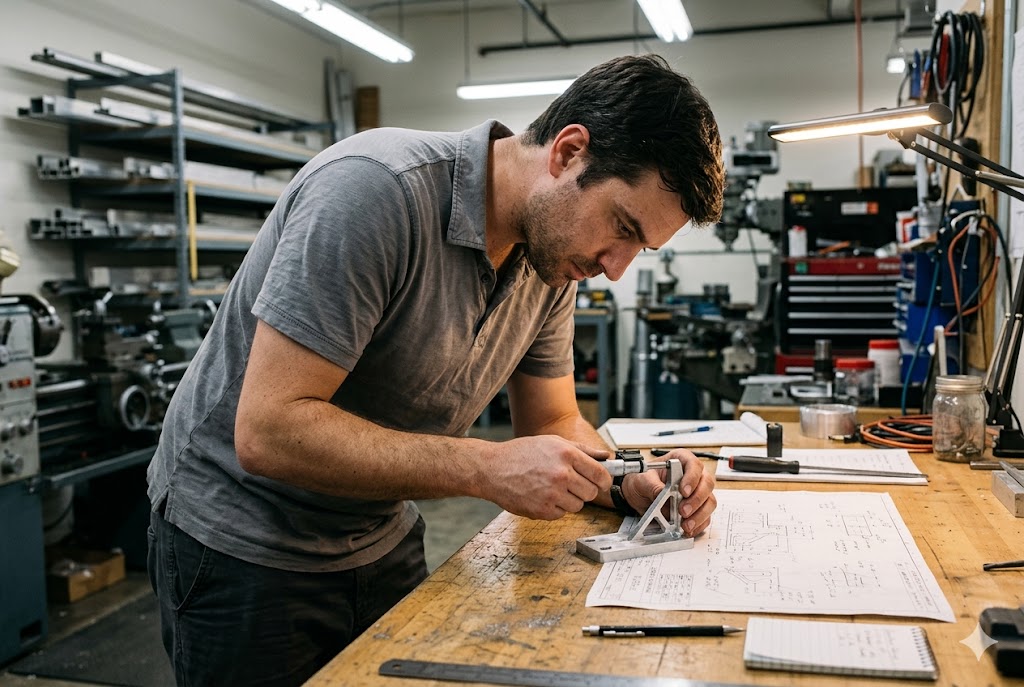
Anodizing does affect the dimensions of aluminum wire EDM parts, but the impact is manageable if accounted for at the design stage. Type II anodizing typically adds 5–25 µm total per surface (roughly half penetrates into the base metal), while hard anodize (Type III) can add 25–75 µm per surface — both require drawing-level compensation on tight-tolerance features.
How Anodizing Grows on Aluminum
Anodizing is an electrochemical conversion process 5. It does not deposit a foreign material on top of the aluminum — it converts the surface aluminum into aluminum oxide. Roughly half the coating grows outward; the other half penetrates inward into the base metal.
For a Type II anodize 6 with a total thickness of 10 µm, you gain approximately 5 µm outward per surface. On a shaft diameter, that is 10 µm of total growth (5 µm on each side). For most features with tolerances of ±0.1 mm or wider, this is insignificant. For EDM-cut slots, bore diameters, or mating faces with tolerances tighter than ±0.025 mm, it must be compensated.
| Anodize Type | Typical Thickness | Dimensional Growth per Surface | Common Use |
|---|---|---|---|
| Type II (standard) | 5–25 µm | ~half of thickness | General protection, color |
| Type III (hard) | 25–75 µm | ~half of thickness | Wear resistance, aerospace |
| Type IIB (thin film) | 2–8 µm | ~half of thickness | Tight-tolerance parts |
The Pre-Existing Oxide Problem on Titanium EDM Parts
This is less commonly known: wire EDM on titanium can generate an anodic oxide film during the cutting process itself — a few nanometers to several hundred nanometers thick — from the ionized dielectric field. If you then send titanium EDM parts for anodizing without accounting for this pre-existing layer, you risk inconsistent coating thickness and adhesion failure at the cut surfaces. The pre-existing oxide must be stripped and controlled before anodizing begins.
Surface Roughness and Post-Anodize Finish
Wire EDM surfaces typically come off the machine at Ra 0.8–1.6 µm. Anodizing follows the base surface topography — it does not fill or smooth roughness. If your application requires Ra < 0.4 µm after coating, you need EDM skim passes or an intermediate electrochemical polish before anodizing. Write the Ra requirement at the final coated surface on your drawing, not at the machined surface. These are different numbers.
Specifying Anodizing on EDM Drawings
When we review client drawings for anodized aluminum EDM parts, we flag three things: the anodize type (II vs. III), the specified thickness range, and whether critical dimensions are called out as pre- or post-coat. If the drawing says nothing about coating compensation, the machinist will hit the nominal dimension at the machined stage, and the part will be out of tolerance after anodizing. This is a fixable problem — it just needs to be addressed before the purchase order is placed.
How Do I Choose Between Electroless Nickel Plating and Hard Chrome for Wear Resistance?
Wear resistance is one of the most common functional requirements we see specified on EDM tooling — punches, dies, forming tools, and mold inserts. Both electroless nickel and hard chrome are credible options, but they are not interchangeable, and the tradeoffs matter.
Electroless nickel plating and hard chrome differ in geometry coverage, hardness, and post-treatment requirements. Hard chrome reaches 900–1100 HV and suits high-load sliding wear but builds unevenly on complex EDM geometries. Electroless nickel covers uniformly at 500–700 HV (as-plated), increasing to 900–1100 HV after heat treatment, and is preferred for intricate EDM parts.
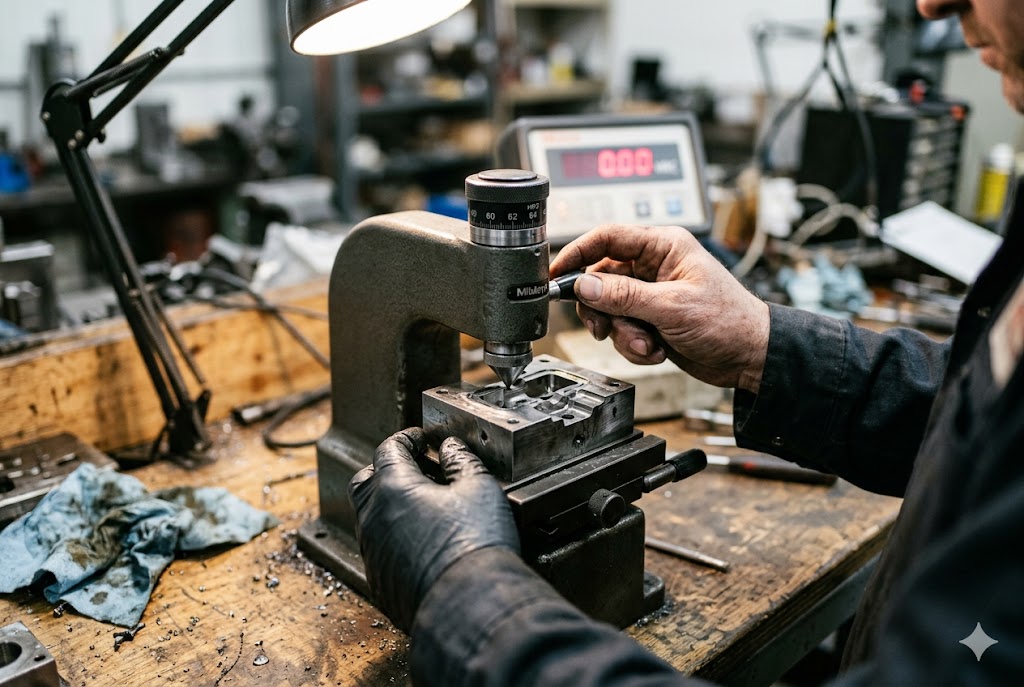
Hardness Comparison
Hard chrome 7 is deposited via electroplating at hardness values of 900–1100 HV as-deposited — no post-bake required. Electroless nickel as-plated sits at 500–700 HV. To reach comparable hardness, it requires a heat treatment bake 8 at approximately 400°C (750°F) for 1–2 hours, which precipitates Ni₃P and drives hardness up to 900–1100 HV.
| Property | Hard Chrome | Electroless Nickel (as-plated) | Electroless Nickel (post-bake) |
|---|---|---|---|
| Hardness (HV) | 900–1100 | 500–700 | 900–1100 |
| Deposit uniformity | Poor on complex geometry | Excellent (conformal) | Excellent (conformal) |
| Thickness range | 10–250 µm | 12–25 µm typical | 12–25 µm typical |
| Post-treatment needed | No | Optional for max hardness | Yes (400°C bake) |
| Applies to stainless | Yes | Yes | Yes |
The Tool Steel Tempering Problem
Here is the issue that trips up EDM tool applications most often. Many hardened tool steels — D2, H13, M2 — were tempered at temperatures between 150°C and 350°C 9 after hardening. The standard EN hardening bake at 400°C exceeds these tempering temperatures. Running the bake at that temperature will cause dimensional distortion and hardness loss in the substrate, not just in the coating.
The solution is to confirm the base material's tempering temperature before specifying post-plate heat treatment. If the bake temperature would exceed the tempering threshold, either skip the bake and accept lower coating hardness, or specify the bake at a confirmed safe temperature for that specific alloy and heat treat condition. This has to be written into the purchase order, not left to the plating shop to figure out.
Geometry Coverage: Where Hard Chrome Fails
Hard chrome follows electrical current. On a flat or simple cylindrical surface, this is not a problem. On the complex internal features, blind slots, and re-entrant geometries that wire EDM routinely produces, current density distribution becomes uneven. Hard chrome builds up on exposed edges and outside corners while leaving recesses undertreated. For EDM-cut tooling with fine internal features, this is a serious problem.
Electroless nickel does not follow current — it is an autocatalytic chemical reaction. It deposits at the same rate everywhere the part is submerged, regardless of geometry complexity. For anything other than a simple shape, EN is the technically correct choice.
What Surface Treatment Is Most Compatible With Tight Dimensional Tolerances on EDM Parts?
Tight tolerances are the whole point of wire EDM. Customers come to us specifically because they need ±0.005 mm or better, and they cannot afford to lose that precision in the coating stage. We have seen parts machined to spec, coated, and then scrapped — not because of machining error, but because nobody planned for coating growth.
Black oxide (hot alkaline blackening) is the most dimensionally compatible surface treatment for tight-tolerance wire EDM parts. The coating converts the iron surface to magnetite at 1–2 µm total thickness — negligible dimensional impact — while electroless nickel at 12–25 µm and anodizing at 5–75 µm require explicit drawing compensation on features with tolerances tighter than ±0.025 mm.
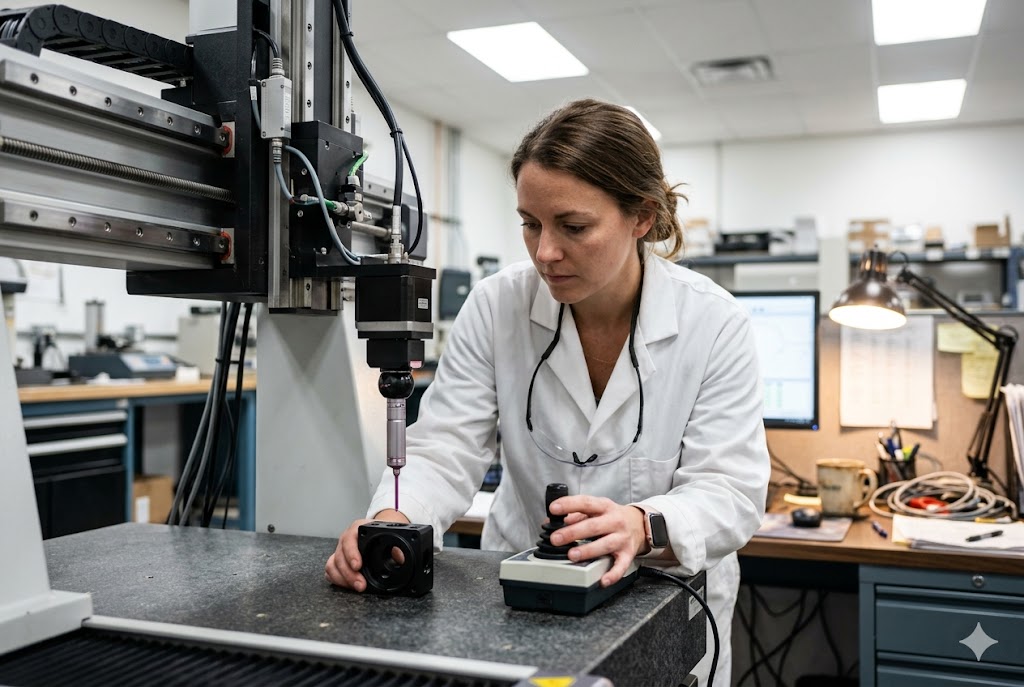
Coating Thickness vs. Tolerance Budget
The relationship between coating thickness and tolerance is straightforward: if the coating grows on a surface, it consumes tolerance budget. Here is a direct comparison:
| Surface Treatment | Coating Thickness | Dimensional Impact per Surface | Suitable for ≤±0.01 mm tolerances? |
|---|---|---|---|
| Black oxide | 1–2 µm | ~1 µm | Yes |
| Phosphating (manganese) | Conversion; ~5–15 g/m² | Negligible | Yes |
| Electroless nickel | 12–25 µm | 12–25 µm | Only with drawing compensation |
| Type II anodize | 5–25 µm | ~2.5–12.5 µm | Only with drawing compensation |
| Hard chrome | 10–250 µm | 10–250 µm | Only with drawing compensation |
Black oxide and manganese phosphating are both conversion coatings — they react with the base metal surface rather than depositing a separate layer. Their dimensional impact is essentially zero. This makes them the default choices when coating growth would consume the tolerance budget and drawing compensation is not feasible.
When Electroless Nickel Is Still the Right Answer
Sometimes you need wear resistance or corrosion protection that black oxide cannot provide, even on a tight-tolerance part. In that case, electroless nickel can still work — but only if the drawing is written correctly.
The approach is to specify the machined dimension with compensation for the expected EN deposit. If your target bore diameter is 10.000 mm and EN will add 0.020 mm per surface (0.040 mm total on diameter), you machine the bore to 10.040 mm and plate to final size. This works, but it requires close communication between the machining supplier and the plating shop, and it must be stated explicitly in both the drawing notes and the purchase order.
Supplier Risk: Skipped Oil Seals on Black Oxide
One thing we flag specifically for clients sourcing from Chinese supply chains: black oxide and phosphating are both low-cost, low-visibility processes. The final oil or wax seal applied after a black oxide bath is what provides most of the corrosion protection — without it, the coating is decorative. Suppliers can skip this step and the part looks identical at incoming inspection.
The same applies to manganese phosphating: coating weight can be reduced below specification without any visible indicator. Do not specify "black oxide finish" or "phosphated per drawing" and leave it there. Specify the coating weight in g/m² for phosphating, the required salt spray performance in hours per ASTM B117 10, and the oil seal type by name. These are the terms that create contractual accountability.
Setting Up Pre-Production Hold Points
For any tight-tolerance EDM part with a surface treatment requirement, we recommend establishing MTC (material traceability) and coating spec acceptance as named hold points in the purchase order. The coating specification — type, thickness range, post-treatment, seal type — should be confirmed and signed off before production starts, not reviewed at incoming inspection when the parts are already in your warehouse.
Conclusion
Surface treatment for wire EDM parts is not an afterthought — it starts at the drawing stage. Get the recast layer addressed, match the treatment to the base material and functional requirement, and write the coating specification into your purchase order with enough detail to be enforceable.
Footnotes
1. ASTM B733 standard defining electroless nickel-phosphorus coating classifications and phosphorus content requirements. ↩︎
2. Guide to electropolishing methods for removing the EDM recast layer from precision parts. ↩︎
3. Overview of the black oxide conversion coating process and its corrosion protection limits. ↩︎
4. Details on manganese phosphate coatings for wear resistance and oil retention on steel parts. ↩︎
5. Explanation of MIL-A-8625 anodizing types and how anodic coatings form on aluminum. ↩︎
6. Guide to Type II sulfuric acid anodizing thickness ranges and dimensional effects. ↩︎
7. Overview of hard chrome plating hardness, applications, and geometry limitations. ↩︎
8. Forum discussion on electroless nickel heat treatment and Ni₃P hardness development. ↩︎
9. Reference guide to D2 tool steel tempering temperatures and resulting hardness values. ↩︎
10. Q-Lab overview of the ASTM B117 salt spray test for corrosion resistance. ↩︎