Skip to main content Skip to footer
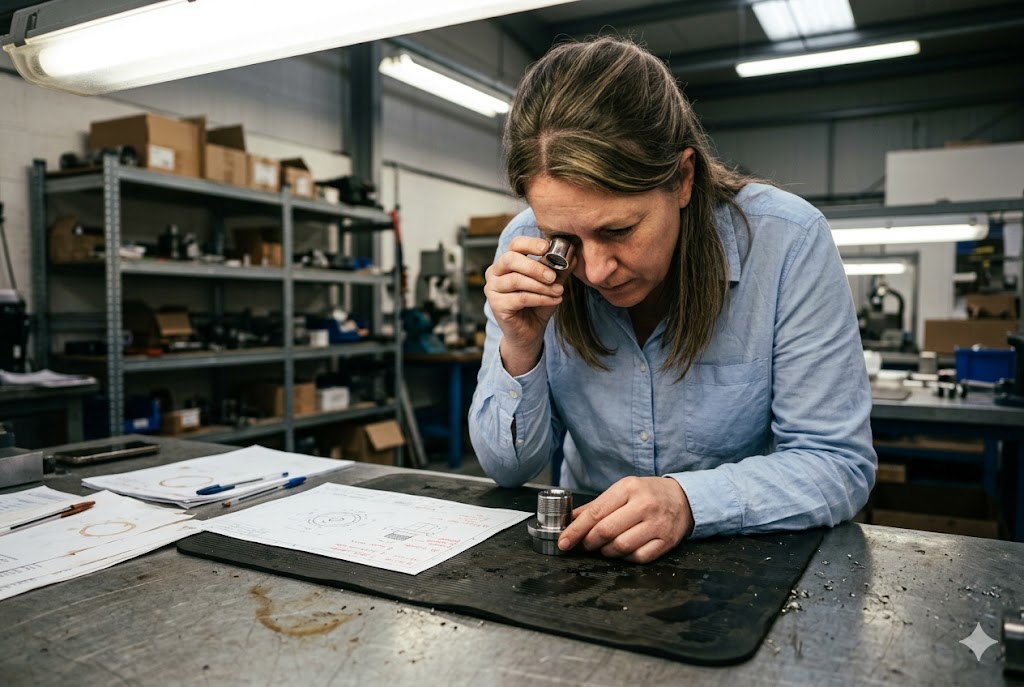
Every week, parts come through our workflow that were wire EDM 1'd with precision — tight tolerances, clean edges, beautiful surface finish — only to show dimensional drift weeks later in the customer's assembly. The process looks cold and controlled, but the physics underneath it are not. Understanding what wire EDM actually does to your material is the first step to deciding what to do after.
Wire EDM introduces residual tensile stress through localized thermal cycling at the cut surface. Whether post-process stress relief is required depends on material type, discharge energy, number of skim cuts applied, and whether the part is fatigue-critical. For most precision tool steel parts with multiple skim cuts, formal stress relief annealing is optional but sometimes advisable.
The sections below break this down by material, process parameter, drawing specification, and real-world dimensional risk. Read through all four before making a decision on your next purchase order.
What Residual Stresses Does Wire EDM Introduce, and How Do They Affect Part Stability?
Wire EDM feels like a clean, non-contact process — no chips, no cutting force, no visible heat. But the spark itself is a thermal event, and that changes everything about the surface layer of your part.
Wire EDM generates intense localized heat at the cut surface. This melts and re-solidifies a thin surface layer called the recast layer, which carries tensile residual stress. That stress can reduce fatigue life, initiate surface microcracks, and cause dimensional movement if the part later experiences additional loading or thermal cycling.
The Recast Layer and Heat-Affected Zone
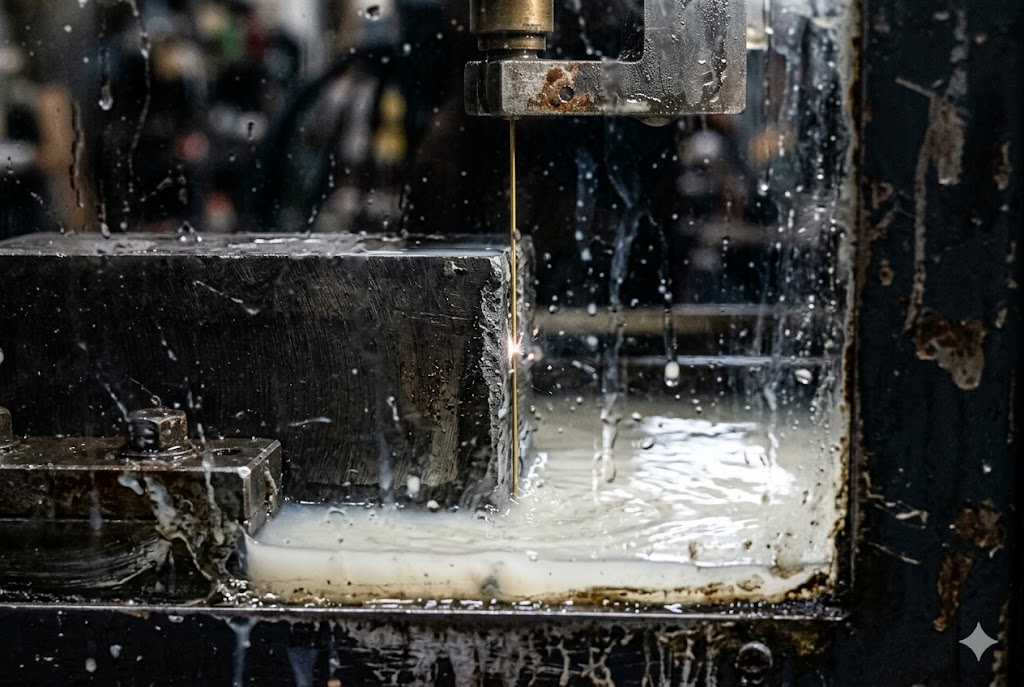
When a wire EDM spark fires, it melts a tiny volume of workpiece material. The surrounding material and the dielectric fluid quench this melt almost instantly. The result is a re-solidified surface layer — the recast layer 2 — and below it, a heat-affected zone (HAZ) 3 where the base material structure was altered by thermal exposure without fully melting.
Both zones carry stress. The recast layer carries tensile residual stress 4 because the re-solidified material wants to contract but is constrained by the surrounding bulk. The HAZ has a more complex stress gradient depending on the base material's prior condition.
How Discharge Energy Determines HAZ Depth
The depth of these zones is not fixed. It scales directly with discharge energy — the energy per spark pulse.
| Pass Type | Approximate HAZ Depth | Recast Layer Thickness |
|---|---|---|
| Roughing cut (high energy) | ~0.038 mm (0.0015 in) | ~0.025 mm (0.001 in) |
| First skim cut | ~0.008 mm (0.0003 in) | ~0.005 mm (0.0002 in) |
| Second skim cut | ~0.003 mm (0.0001 in) | ~0.002 mm (0.00008 in) |
A part that receives only a roughing cut carries a meaningfully thicker stress zone than one finished with two skim passes. This is not a minor difference. It directly affects whether downstream stress relief is warranted.
What the Stress Does to Your Part
Residual tensile stress at the surface does three things, depending on application:
- Dimensional instability. If stress is asymmetric — heavier on one side due to cut path geometry — the part can bow or warp subtly over time, especially after stress from service loads compounds it.
- Surface microcracking. In hardened steels, tensile stress in the recast layer can initiate fine intergranular cracks. These are often invisible until the part is in service.
- Reduced fatigue life. Compressive stress at a surface resists fatigue crack 5 initiation. Tensile stress does the opposite. For any part under cyclic loading, an EDM-finished surface is a weaker surface than a ground one, unless the stress state is managed.
The HAZ depth and stress magnitude are manageable with good process parameters. They are not unavoidable. The question is whether your current purchase order specifies the controls to manage them.
Which Materials Benefit Most from Post-EDM Stress Relief Heat Treatment?
Not every material responds the same way to wire EDM. The risk profile is determined by the material's prior thermal history, its microstructure, and how the EDM-induced stress interacts with both.
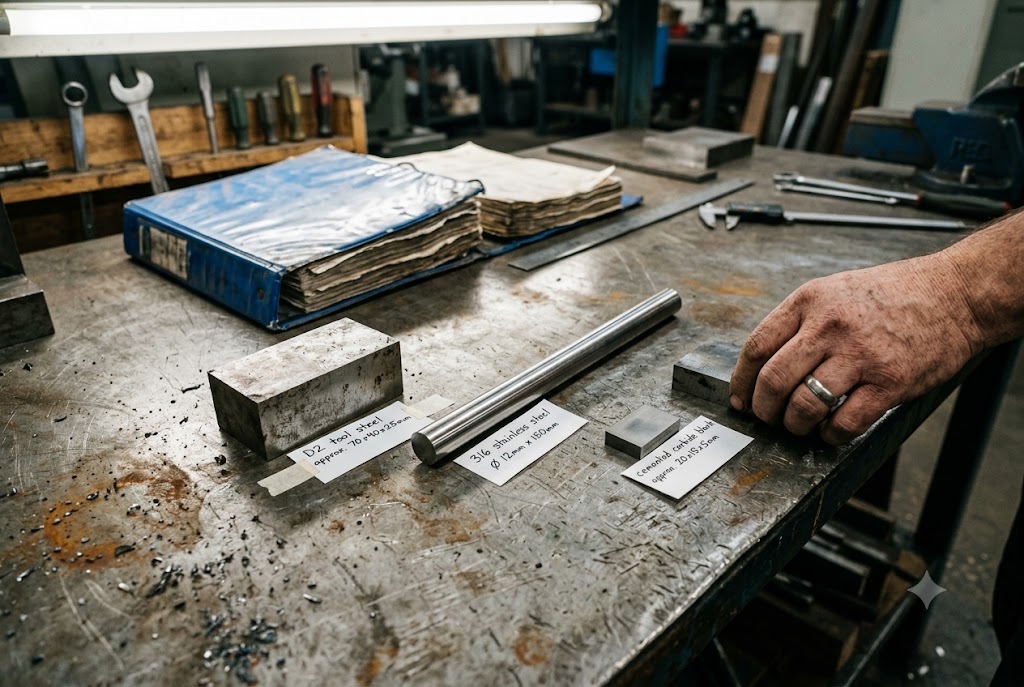
Hardened tool steels, high-carbon steels, and martensitic stainless steels carry the highest risk after wire EDM. Pre-existing tensile stress from quench hardening adds directly to EDM-induced stress, making surface cracking and dimensional instability more likely. These materials benefit most from a low-temperature re-temper or stress relief anneal after wire EDM.
High-Risk Materials
The materials below are the ones where post-EDM stress relief provides the most meaningful benefit.
| Material | Risk Factor | Recommended Treatment |
|---|---|---|
| D2 tool steel 6 (hardened) | High pre-existing quench stress + tensile EDM stress = cracking risk | Low-temp re-temper at 150–175°C |
| H13 tool steel (hardened) | Same mechanism; common in tooling and dies | Re-temper at 20°C below original tempering temperature |
| 440C martensitic stainless | Brittle in as-quenched state; EDM HAZ can crack | Stress relief before and/or after EDM |
| High-carbon bearing steels | Martensite 7 is stress-sensitive | Re-temper recommended for precision components |
| 4140 / 4340 alloy steel (hardened) | Moderately high risk depending on hardness level | Re-temper for fatigue-critical parts |
The critical point with hardened steels: the workpiece arrives at EDM with pre-existing compressive and tensile stress from the heat treatment process. Wire EDM adds a new tensile stress at the surface. The two interact. If the net stress at any point exceeds the material's cohesive strength — especially at grain boundaries — cracking occurs. This is not a low-probability edge case. It is a known failure mode.
Lower-Risk Materials
Not every material demands a thermal treatment after EDM.
Annealed or normalized low-carbon steels, aluminum alloys, and titanium alloys carry lower risk because they have less pre-existing stress and more ductility to accommodate the EDM-induced stress gradient. For these materials, multiple skim cuts are usually sufficient.
Carbide (tungsten carbide / cobalt) is a special case. The recast layer in carbide is extremely thin — often below 5 µm — and its composition closely resembles the bulk material. Carbide is also brittle, which means cracking is possible, but thermal stress relief can itself cause issues if the cobalt binder phase is affected. Any heat treatment protocol for carbide must be validated against the specific grade.
Inconel and Nickel Superalloys
Inconel 718 8 and similar superalloys behave differently from tool steels. The recast layer in Inconel 718 can be as thin as 6 µm, and the microstructure within that layer closely resembles the base alloy. For aerospace applications, post-EDM treatment protocols are material-specifically validated — blanket stress relief procedures designed for hardened steel are not appropriate here. If you're sourcing Inconel 718 EDM parts for aerospace, the heat treatment requirement must be specified explicitly with reference to the applicable process specification.
How Do I Specify Stress Relief Requirements on My Technical Drawing or Work Order?
Most dimensional problems traced back to wire EDM are not caused by bad machining. They are caused by ambiguous or absent specifications. If your drawing does not state the requirement, no supplier is obligated to apply it.
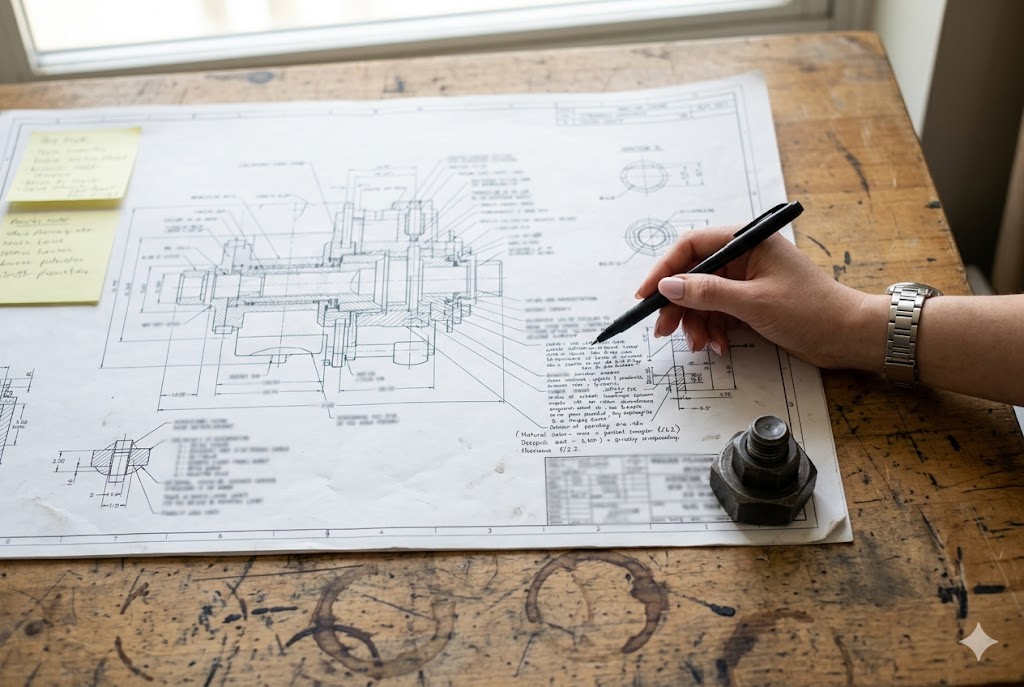
Stress relief requirements for wire EDM parts should be specified directly on the technical drawing or purchase order as a named pre-production or post-process hold point. The specification should state the treatment temperature, soak time, cooling rate, and applicable standard. General notes are not enforceable unless referenced contractually.
What to Write on the Drawing
Vague notes fail. "Heat treat as required" or "stress relieve if needed" are not specifications — they transfer the decision to the supplier without accountability. Here is how to write it clearly.
For a post-EDM low-temperature re-temper on hardened D2 tool steel:
POST-EDM STRESS RELIEF REQUIRED: Re-temper at 150°C ± 10°C for 2 hours minimum. Air cool. Perform after final EDM operation and before final dimensional inspection.
For a pre-EDM stress relief on rough-machined hardened blanks:
PRE-EDM STRESS RELIEF REQUIRED: Perform at 175°C ± 10°C for 3 hours prior to EDM operation. Confirm with heat treat record before proceeding.
Purchase Order Language
The drawing note defines the requirement. The PO language enforces it as a hold point.
| PO Element | Example Language |
|---|---|
| Hold point designation | "Stress relief is a mandatory pre-production hold point. Supplier shall submit heat treat record and soak log before proceeding to EDM operation." |
| Documentation requirement | "Furnace chart, temperature log, and operator sign-off required. Records to be retained for 5 years and provided with shipment." |
| Inspection trigger | "Final dimensional inspection to be performed after stress relief is complete. Dimensions taken before completion of stress relief are not acceptable for FAI records." |
Reference Standards
If your buyer or end customer requires compliance to a specific standard, name it explicitly.
- AMS 2759 — General heat treatment 9 for steel parts (aerospace)
- MIL-H-6875 — Heat treatment of steel (military/defense)
- ASTM A228 / A229 — Wire steel specifications with associated heat treatment guidance
- Customer-specific process specs — Many Tier 1 aerospace and defense customers have proprietary process specifications that supersede general standards
Naming the standard on the drawing eliminates ambiguity about temperature tolerances, soak time minimums, and required documentation format.
Does Skipping Post-EDM Stress Relief Cause Dimensional Drift During My Application?
This is the practical question most buyers want answered directly. The answer depends on what you are asking the part to do.
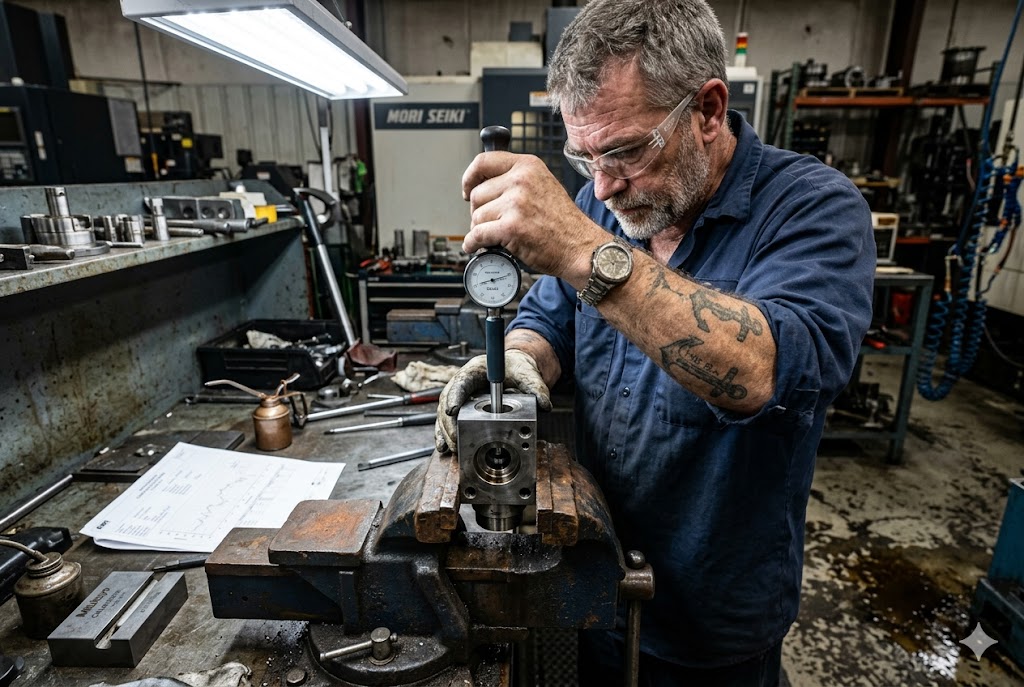
Skipping post-EDM stress relief does not automatically cause dimensional drift. The risk depends on application load type, operating temperature, material, HAZ depth, and whether multiple skim cuts were used. For static, low-stress applications with skim-cut finishes, drift is unlikely. For fatigue-critical, thermally cycled, or precision-fit parts, unrelieved stress is a measurable risk factor.
When Skipping Is Acceptable
Modern wire EDM machines with proper skim cut programs reduce the HAZ to depths that are functionally negligible for most tooling and fixture applications. A second skim cut can bring HAZ depth down to approximately 0.003 mm. For a punch or die in a stamping tool, that residual stress will not cause visible dimensional movement under normal service conditions.
Skipping stress relief is also acceptable when:
- The material is low-carbon or annealed stock with no pre-existing thermal stress
- The part is not under cyclic loading
- Tolerances are ±0.02 mm or looser
- The part will not be exposed to elevated service temperatures
When Skipping Creates Real Risk
The situation changes for specific application categories.
| Application Type | Risk of Dimensional Drift Without Stress Relief | Recommendation |
|---|---|---|
| Fatigue-critical aerospace structures | High | Post-EDM re-temper required; often specification-mandated |
| High-cycle tooling (punches, forming dies) | Moderate to high | Re-temper recommended; extends tool life |
| Precision gauges and inspection fixtures | Moderate | Pre- and post-EDM stress relief for highest stability |
| Hydraulic valve spools and tight-clearance bores | Moderate | Evaluate based on diametral tolerance and press-fit requirements |
| General structural brackets (low cycle) | Low | Multiple skim cuts usually sufficient |
| Prototype and non-critical jigs | Low | No treatment typically needed |
Pre-Machining Stress Relief: Often More Important Than Post-EDM
One factor that is consistently underspecified is pre-EDM stress relief. When a hardened blank is rough-machined before EDM, the rough machining process itself creates and releases internal stress. If the blank goes directly to EDM without a stabilizing thermal treatment, the EDM operation releases additional bulk stress as material is removed — causing the part to move during the cut.
Leaving a connecting tab to the parent material until the final EDM pass is a process-level control that helps manage this. It keeps the part constrained while the majority of material is removed, reducing the stress release that causes movement. But this is a machining strategy decision, not a substitute for heat treatment when the application genuinely requires it.
Vibration Stress Relief as an Alternative
For complex parts where a full thermal cycle risks distorting tight-tolerance features, vibration stress relief (VSR) 10 is worth considering. VSR applies resonant vibration to the workpiece to redistribute peak residual stress without temperature change. It does not achieve the same peak stress reduction as thermal annealing, but for many tooling applications it is sufficient — and it eliminates the risk of distortion from thermal gradient effects during oven cycling.
VSR is not yet a mainstream option at most Chinese factories. If you are evaluating suppliers for a VSR-treated EDM part, ask specifically whether they have the equipment and whether they can provide a pre- and post-treatment stress measurement report.
Conclusion
Wire EDM is a precision process, but it is not a stress-free one. The decision to specify post-EDM stress relief comes down to material, discharge energy, skim cut count, and application criticality. Put the requirement on the drawing, name the standard, and make it a hold point in the purchase order — that is the only way to make it enforceable.
Footnotes
1. Overview of wire EDM as a spark-erosion process for precision metal cutting. ↩︎
2. Peer-reviewed study on recast layer formation mechanisms and influencing factors in EDM. ↩︎
3. Explanation of the heat-affected zone and how thermal exposure alters base material properties. ↩︎
4. Materials science overview of residual stress formation, types, and structural consequences. ↩︎
5. How cyclic loading initiates and propagates fatigue cracks in metal components. ↩︎
6. Applied study of EDM process performance on D2 tool steel with varied electrode designs. ↩︎
7. Crystal structure and stress-sensitivity of martensite in hardened carbon and alloy steels. ↩︎
8. Properties and machining considerations for Inconel nickel superalloys including EDM applications. ↩︎
9. Reference guide for heat treating processes including stress relieving and tempering of steel parts. ↩︎
10. Non-thermal vibratory stress relief method for improving dimensional stability in precision metalwork. ↩︎