Skip to main content Skip to footer
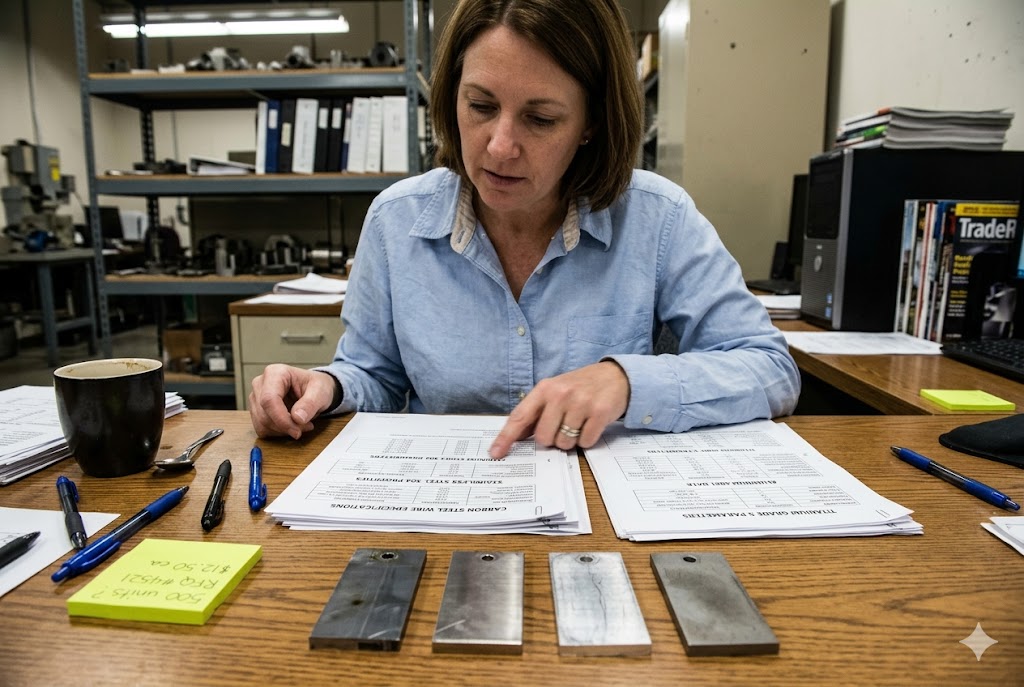
Every time we quote a wire EDM job, the first question we ask is: what material? It changes everything — speed, cost, wire type, and the risk of scrapping a part.
Wire EDM machines all four metals differently. Aluminum cuts fastest due to high conductivity. Carbon steel is predictable and cost-effective. Stainless steel cuts slower and risks microcracking. Titanium is the most process-intensive, requiring reduced energy, aggressive flushing, and recast layer removal to protect part integrity.
If you are sourcing wire EDM parts and want to avoid delivery delays or quality failures, understanding these differences helps you ask the right questions before placing an order.
Does Stainless Steel Cause More Wire Breakage Than Carbon Steel in Wire EDM?
Stainless steel behaves differently on the wire EDM machine from the moment you hit start. Our team has seen far more parameter adjustments — and more wire breaks — on stainless jobs than on comparable carbon steel runs.
Stainless steel does increase the risk of wire breakage compared to carbon steel in wire EDM. Its lower electrical conductivity means more discharge energy per cut, which raises wire temperature. Without zinc-coated or diffusion-annealed wire and tighter flushing control, breakage rates climb significantly on austenitic grades.
Why Conductivity Matters in Wire EDM
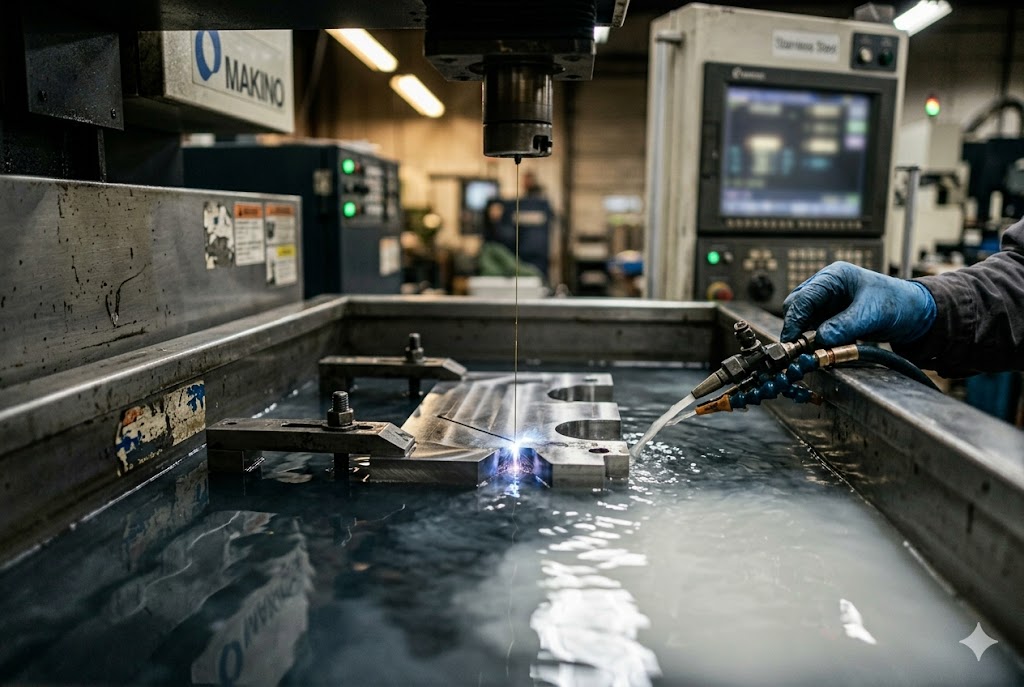
Wire EDM removes material through rapid electrical discharges 1 between the wire and the workpiece. The faster the workpiece conducts electricity and dissipates heat, the easier the process runs. Carbon steel sits in a comfortable middle range. Stainless steel — especially austenitic grades like 304 and 316 — has noticeably lower electrical conductivity. This forces the machine to deliver more energy per discharge to maintain the same removal rate.
More energy means more heat. More heat means the wire itself is under greater thermal stress. Standard brass wire handles carbon steel well. On stainless, it reaches its limit sooner.
The Work Hardening Problem
Stainless steel also work-hardens under mechanical stress. This is exactly why wire EDM is often the preferred machining method for stainless in the first place — materials that display extreme work hardening during mechanical machining, such as titanium and austenitic stainless steels, are strong candidates for EDM 2. EDM sidesteps that. But it introduces its own thermal challenge: the recast layer on stainless steel is harder and more adherent than on carbon steel. If discharge settings are too aggressive, thermal stress in this layer leads to microcracking.
Carbon Steel vs. Stainless Steel: Key EDM Differences
| Parameter | Carbon Steel | Stainless Steel (Austenitic) |
|---|---|---|
| Electrical conductivity | Medium-high | Low-medium |
| Typical cutting speed | Fast | Slow to medium |
| Wire breakage risk | Low | Medium to high |
| Recast layer hardness | Moderate | Hard, adherent |
| Recommended wire type | Standard brass | Zinc-coated or diffusion-annealed |
| Microcracking risk | Low | Medium (thermal stress) |
Practical Parameter Control
To reduce wire breakage on stainless, experienced operators drop peak discharge current, increase flushing pressure, and switch to zinc-coated wire. Zinc-coated wire withstands higher flushing temperatures before fracturing 3, which allows better thermal management at the cut zone. This is a material-specific adjustment — settings that work on carbon steel cannot simply be copied to a stainless job.
Carbon steel, by contrast, allows wider parameter ranges. It cuts fast, generates heat that dielectric flushing handles well, and does not punish minor setting deviations as harshly. For high-volume runs where cycle time matters, carbon steel is easier to optimize.
One important note: carbon steel EDM parts used in fatigue-critical applications still need recast layer removal. The recast layer on carbon steel, while softer than on stainless, is structurally dangerous under cyclic loading. Finish skim passes or abrasive post-processing are required for these parts.
Why Is Aluminum Harder to Achieve Tight Tolerances on With Wire EDM Than Steel?
Aluminum surprises a lot of buyers. It machines faster than any of the other three materials, yet it is harder to hold the tightest tolerances over a long production run. We see this consistently when comparing aluminum jobs to carbon steel jobs of similar complexity.
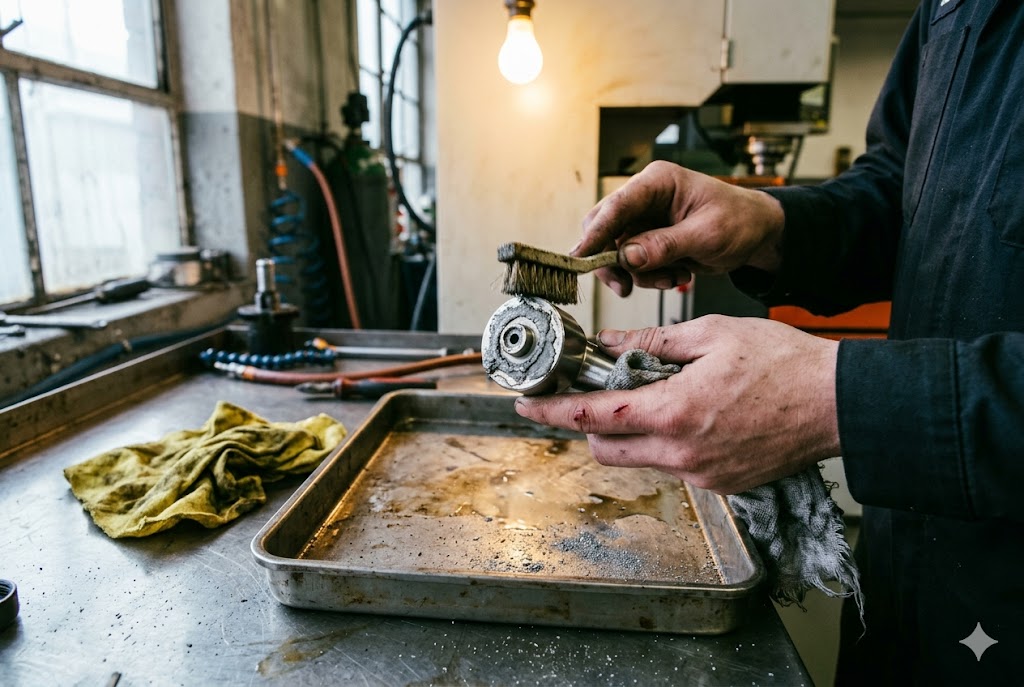
Aluminum is harder to hold tight tolerances on in wire EDM because its low melting point produces soft, sticky recast debris that contaminates wire guides and flushing nozzles faster than steel debris does. This guide contamination causes dimensional drift over long runs unless guides are cleaned at shorter intervals than a comparable steel job requires.
Aluminum Cuts Fast — But That Creates Its Own Problem
Aluminum has high electrical and thermal conductivity. Sparks form quickly, heat dissipates rapidly, and material removal rates are the highest of these four metals. For short runs or simple profiles, aluminum is easy to work with.
The problem appears on long production runs and very tight tolerances. Using wire EDM on aluminum requires careful attention: proper flushing and filtration are essential since aluminum debris can build up quickly, potentially shorting the machine or affecting surface quality 4. Aluminum debris clings to wire guides and flushing nozzles.
Guide Contamination and Dimensional Drift
As guides become contaminated, wire positioning becomes less precise. On a freshly cleaned machine cutting aluminum, you can achieve excellent results. As the run continues without cleaning, dimensional scatter increases. Parts cut at the start of the run may be within tolerance. Parts cut hours later may not be.
On a comparable steel run, this contamination accumulates more slowly. Steel jobs can run longer between guide cleaning intervals without the same dimensional drift risk.
Tolerance Comparison Across Materials
| Material | Achievable Tolerance (EDM) | Primary Tolerance Risk | Guide Cleaning Frequency |
|---|---|---|---|
| Aluminum | ±0.001 mm (short runs) | Debris contamination over time | High — shorter intervals |
| Carbon steel | ±0.005–0.010 mm | Thermal distortion, recast variability | Standard |
| Stainless steel | ±0.005–0.015 mm | Recast layer variability, microcracking | Standard to high |
| Titanium | ±0.010–0.020 mm | Heat concentration, recast thickness | High — aggressive flushing |
Flushing Management Is Critical
The answer to aluminum's debris problem is careful flushing management and shorter cleaning intervals. Changing dielectric filters regularly keeps contamination from causing unstable cutting conditions 5. Operators who treat aluminum like steel — and skip guide inspections — will see tolerance failures accumulate quietly through a production run.
For high-precision aluminum parts, the best practice is to set a defined cleaning interval based on the number of parts or hours cut, not just on visible signs of contamination. By the time contamination is visually obvious, dimensional accuracy may already be degraded.
When Aluminum EDM Makes Sense
Despite the tolerance management challenges, aluminum remains the most cost-effective EDM material for many applications. Its fast cutting speed reduces machine time per part significantly. For parts where tolerances are in the ±0.01 mm range rather than the extreme end, aluminum is straightforward and economical. The tight-tolerance challenges are real but manageable with disciplined process control.
How Does Titanium's Low Electrical Conductivity Affect Wire EDM Cutting Parameters?
Titanium is the most demanding material we process in wire EDM. Low electrical conductivity is only part of the story — it is the combination of low conductivity and extremely low thermal conductivity that makes titanium uniquely difficult.
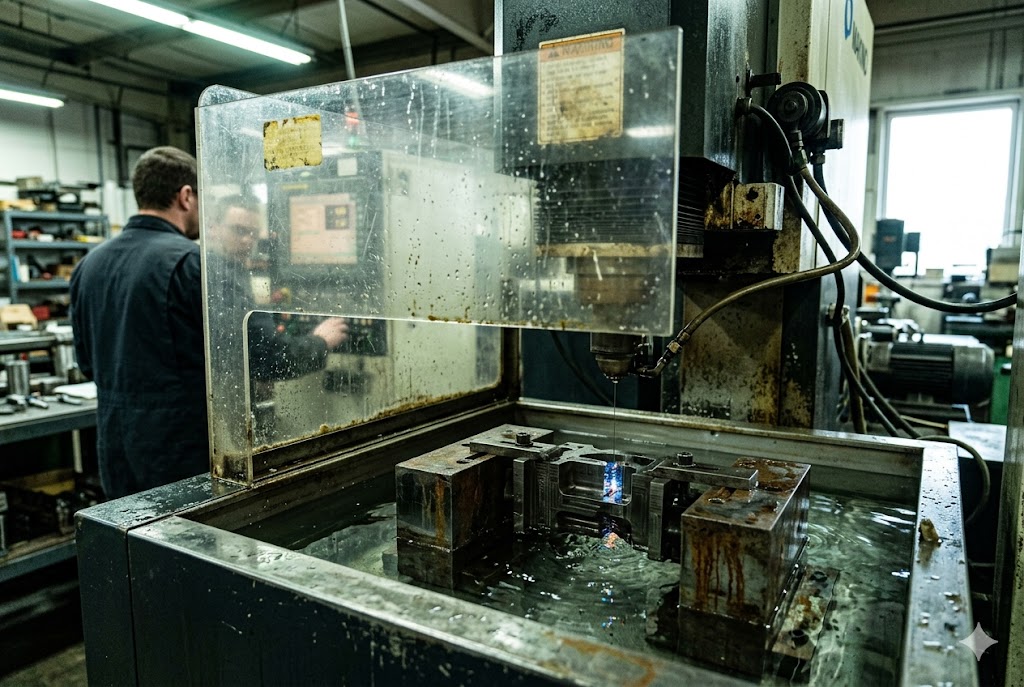
Titanium's thermal conductivity is roughly six times lower than steel's, causing heat to concentrate in the cutting zone rather than dissipate into the bulk material. This forces operators to use reduced spark energy, slower feed rates, and aggressive deionized water flushing to prevent microcracking, recast layer thickening, and structural thermal damage.
Heat Stays Where It Is Generated
In steel and aluminum, heat generated by discharges spreads away from the cut zone quickly. The bulk material absorbs it. In titanium, heat has nowhere to go. Titanium alloys typically fall within the thermal conductivity range of 6 to 22 W/m-K — much lower than aluminum alloys at 120 to 200 W/m-K or mild steel at 45 to 60 W/m-K 6. This has serious consequences.
First, the recast layer — the thin zone of resolidified material left at the cut surface — becomes thicker and less consistent. A thicker recast layer means higher dimensional variability and a surface that behaves differently from the bulk material.
Second, extreme local heat concentration promotes microcracking. The formation of TiC and TiO₂ in the recast layer, depending on the type of dielectric used, adds further surface integrity challenges 7. This is why deionized water is not just preferred for titanium EDM — it is mandatory. Carbon steel and stainless steel tolerate a wider range of dielectric conditions. Titanium does not.
Mandatory Parameter Adjustments for Titanium
| Parameter | Steel (Typical) | Titanium (Required) |
|---|---|---|
| Peak discharge current | Standard | Reduced |
| Feed rate | Standard | Slower |
| Dielectric fluid | Deionized water or EDM oil | Deionized water only |
| Flushing pressure | Standard | Aggressive |
| Wire type | Brass (carbon steel) | Zinc-coated or diffusion-annealed |
| Post-machining treatment | Oxidation protection (carbon steel) | Recast removal + surface passivation |
The Recast Layer Problem for End-Use Applications
For aerospace and medical implant applications — which are common end uses for titanium wire EDM parts — the recast layer is a serious concern. Research on wire EDM of Ti-6Al-4V found that machined surfaces consist of a multi-layered recast structure with cracks, holes, and traces of wire electrode material 8. In a fatigue-loading environment, this is a failure waiting to happen.
Recast removal and surface passivation are near-mandatory post-processing steps for these applications. This adds cost and lead time, but skipping them creates structural risk that no responsible manufacturer or buyer should accept.
Why Titanium EDM Costs More
The combination of factors — slower feed rates, strict dielectric requirements, aggressive flushing, zinc-coated wire, and mandatory post-processing — means titanium wire EDM jobs take longer and cost more per part than the same geometry cut in carbon steel or aluminum. For buyers sourcing titanium parts, this cost premium is real and justified by the process demands.
Understanding this helps set realistic expectations during quoting and avoids surprises when the final price is higher than a similar part in a different material.
Which Alloy Is the Most Cost-Effective to Wire EDM Machine for High-Volume Orders?
When we receive a high-volume wire EDM inquiry, the material choice is one of the first things we review with the client. Cost per part is driven by machine time, wire consumption, reject rate, and post-processing requirements — and all four of those factors change significantly by material.
For high-volume wire EDM orders, carbon steel is generally the most cost-effective material. It cuts at high speed with predictable parameters, uses standard brass wire, generates manageable heat, and requires only basic post-processing. Aluminum is faster per cut but adds guide maintenance cost. Stainless and titanium both increase cycle time and consumable costs.

Breaking Down the Cost Drivers
Machine time per part is the largest cost factor in wire EDM. It is directly tied to cutting speed, which is driven by material conductivity and the discharge energy the machine can apply without damaging the part or breaking the wire.
Aluminum cuts the fastest in pure material removal terms. But as discussed above, its guide contamination issue means more frequent cleaning stops on long runs. For very high-volume orders, this maintenance overhead narrows aluminum's speed advantage.
Carbon steel cuts fast, runs stably, and demands fewer process interruptions. Brass wire — the standard choice for carbon steel — provides a good balance of electrical conductivity and cutting performance 9. For high-volume production, stability and predictability often matter more than peak cutting speed.
Cost Comparison by Material
| Material | Relative Cutting Speed | Wire Type Cost | Post-Processing Required | Relative Cost per Part (High Volume) |
|---|---|---|---|---|
| Aluminum | Fastest | Standard brass | Minimal (except guide cleaning) | Low to medium |
| Carbon steel | Fast | Standard brass | Recast removal (fatigue parts only) | Low |
| Stainless steel | Slow to medium | Zinc-coated (premium) | Recast inspection | Medium to high |
| Titanium | Slowest | Zinc-coated (premium) | Recast removal + passivation (mandatory) | High |
Where Aluminum Can Win on Cost
For parts that do not require the tightest tolerances and where run lengths are moderate, aluminum can be cost-competitive with or even cheaper than carbon steel. Fast cutting speed reduces machine time per part enough to offset the cleaning overhead. The break-even point depends on part complexity, required tolerance, and run length.
Wire guide maintenance — specifically guide wear — is the most common source of positional drift on sub-±0.005 mm work 10. For very high-volume orders with tight tolerances and minimal tolerance for in-run dimensional drift, carbon steel is a safer and often cheaper choice when total cost — including rejects and rework — is counted.
Stainless and Titanium: When Cost Is Secondary
Stainless steel and titanium are chosen for performance requirements, not cost. Corrosion resistance drives stainless steel selection. Strength-to-weight ratio and biocompatibility drive titanium selection. When these properties are required, the higher EDM cost is a given.
For buyers who have flexibility on material and are optimizing for cost on high-volume mechanical parts, the conversation should start with carbon steel and consider aluminum as a secondary option based on the specific geometry and tolerance requirements.
Conclusion
Material choice drives wire EDM cost, quality, and lead time more than almost any other variable. Carbon steel is the most cost-effective for high-volume work. Aluminum is fast but demands careful flushing management. Stainless steel requires premium wire and controlled settings. Titanium is the most demanding and expensive of all four.
Footnotes
1. How electrical conductivity and thermal properties shape wire EDM cutting stability and surface quality across materials. ↩︎
2. Overview of EDM types and why work-hardening materials like austenitic stainless steel are prime EDM candidates. ↩︎
3. Guide to EDM wire properties including why zinc content improves flushing temperature tolerance in demanding cuts. ↩︎
4. Practical guidance on flushing, filtration, and parameter control when wire EDM machining aluminum. ↩︎
5. Why regular dielectric filter changes prevent contamination-driven instability in wire EDM production runs. ↩︎
6. Thermal conductivity data for titanium, aluminum, and steel, and its direct impact on EDM cutting zone heat buildup. ↩︎
7. Review of EDM challenges with titanium alloys including recast layer chemistry, wire breakage, and dielectric effects. ↩︎
8. Study on Ti-6Al-4V wire EDM surfaces revealing multi-layered recast structure with cracks and electrode material traces. ↩︎
9. Comprehensive wire EDM resource covering wire types, design considerations, and material-specific performance trade-offs. ↩︎
10. Wire EDM tolerance guide covering guide wear as the leading cause of positional drift in precision sub-±0.005 mm work. ↩︎